INVENTING compact cars that pack excitement, approachability, and convenience into small bodies at affordable prices have always been the Daihatsu way since the company’s founding in 1907.
That hasn’t change for the company as shown at this year’s Japan Mobility Show (JMS 2025).
Inspired by its own history, the company which is Perodua’s technical partner, doubled down on kei car concepts, a Japanese category of small vehicles, as a major part of its “Daihatsumei” themed showcase.
Daihatsu’s intention is to simply showcase the flexibility that comes with compact mobility in today’s market.
With the right application these mini machines could easily fulfill the intended role it was made for.
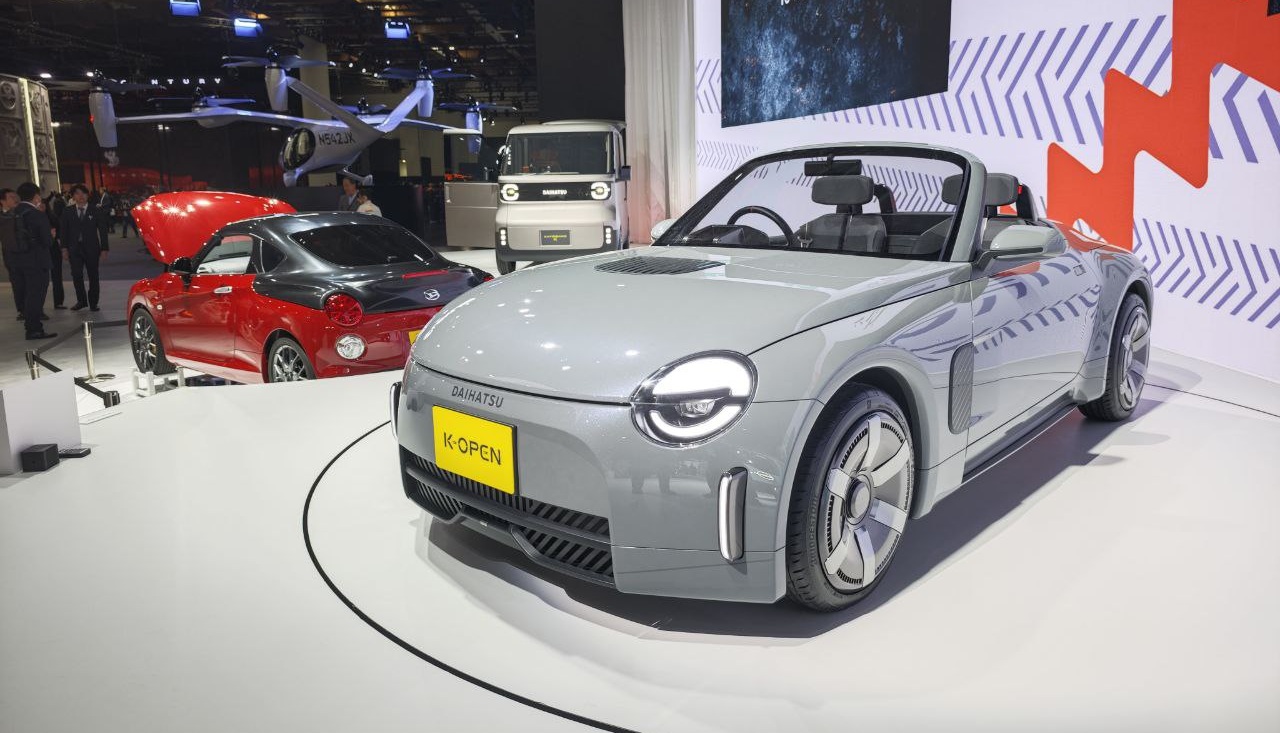
K-Open
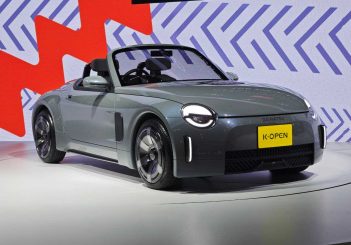
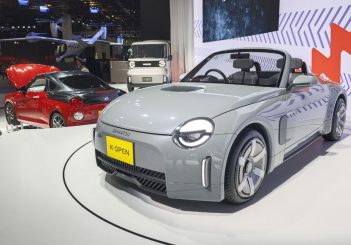
Split into both normal and a running prototype model the K-Open concept is clearly inspired, wordplay and design, by the brand’s popular two-door convertible Copen kei car range.
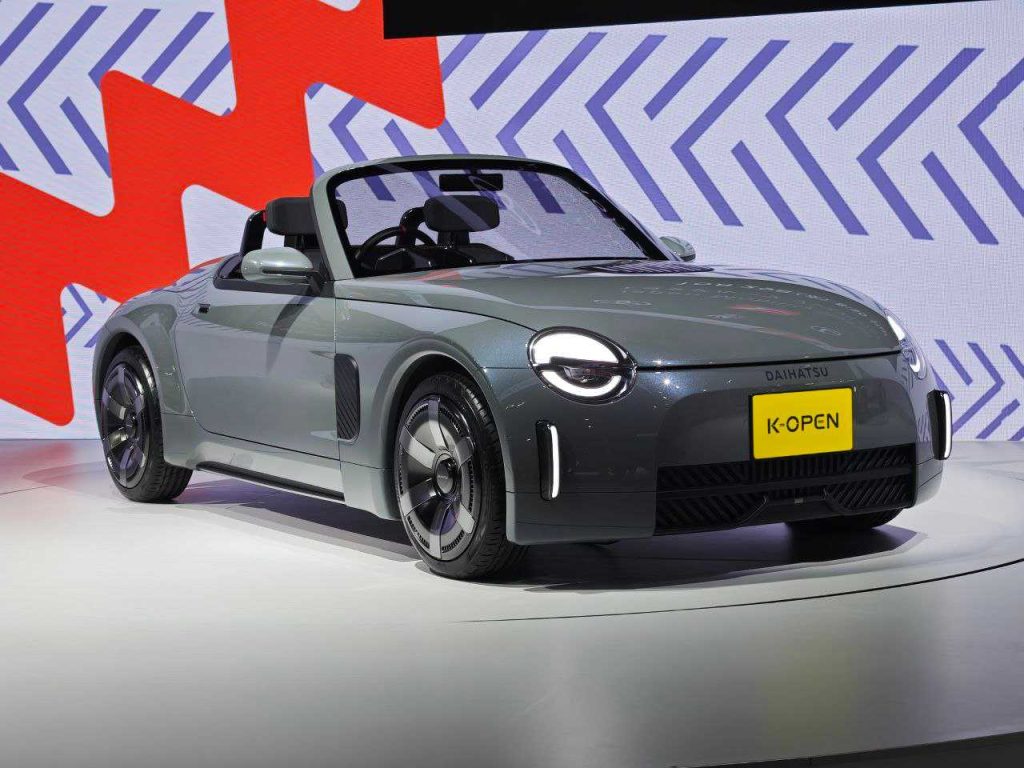
Inheriting the spirit of the open road the internal combustion front-engine and rear-wheel-drive model is all about the excitement and joy of light comfort open-air driving.
The two-seater is only 3,395mm in length with a height of 1,230mm and is 1,475mm wide.
The car has a 2,265mm wheelbase.
The other variant on display, which is the running prototype pre-production study vehicle, focuses on a more planted and sportier drive experience by honing in qualities such as it being lightweight, having a low centre of gravity, and prioritising optimal weight distribution.
Almost the entire layout and feature of this model is similar except for it being 10mm lower and having a 35mm shorter wheelbase.
Midget X
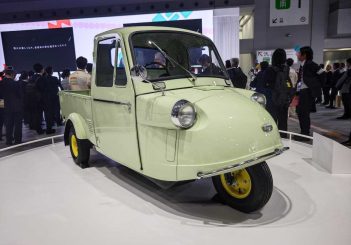
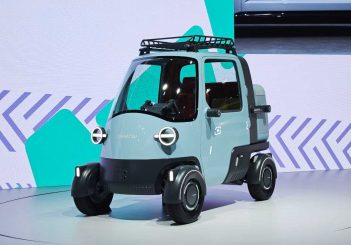
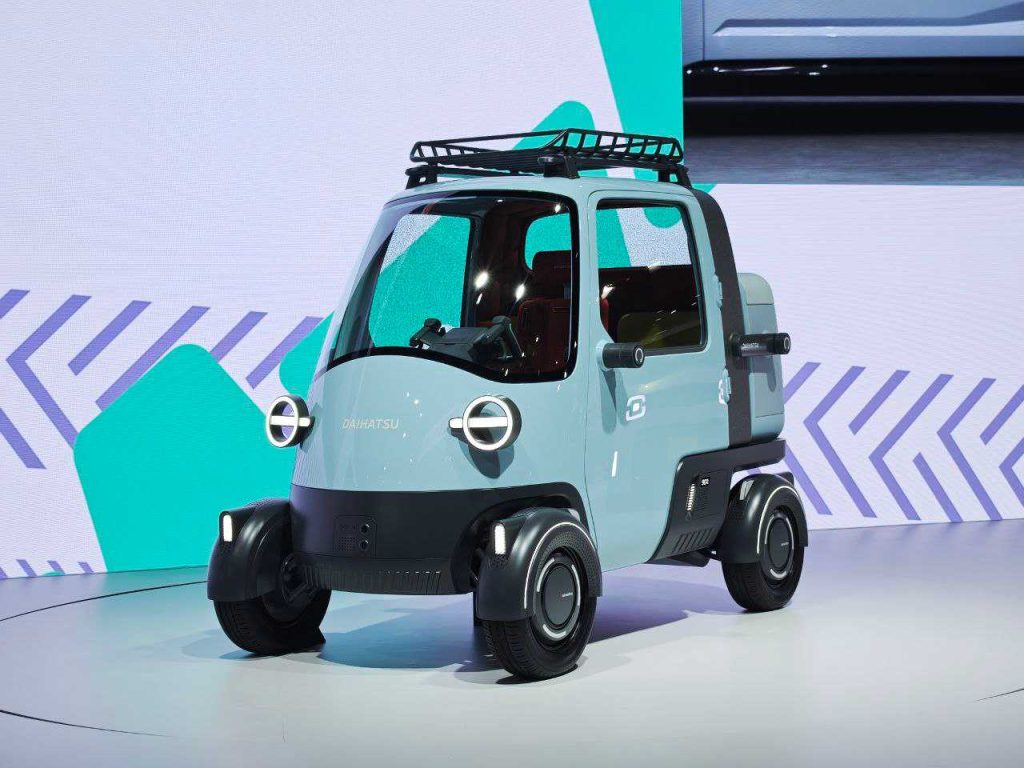
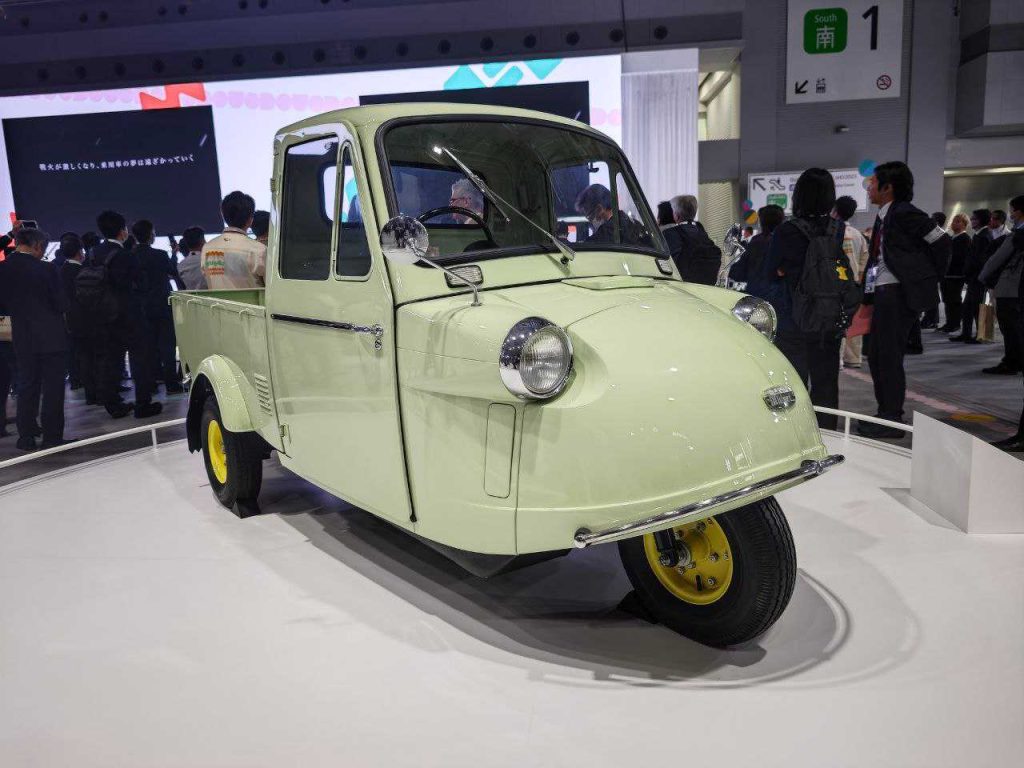
Most eye-catching was the Daihatsu Midget that was on display alongside the new Midget X concept battery electric vehicle (BEV).
The first Midget from 1957 was a single seater mini-truck with three wheels that wouldn’t surprise anyone for how out of place it’ll stand out in today’s market.
In pure innovative fashion Daihatsu took the spirit of the first generation model and invented the Midget X out of it which in all honestly makes for an extremely practical cargo-less transportation in today’s world.
The key element of the new four-wheeled electric machine with a seating capacity of up to three people (or a 1+2 seat arrangement) is how convenient and accessible it is given its small size.
The model only has a 1,600mm wheelbase with a length of 2,200mm, 1,295mm in width and is 1,680mm tall.
Daihatsu calls it a new mobility solution at the perfect size. Smaller than a mini vehicle it is easier to handle and offers more peace of mind than a bicycle.
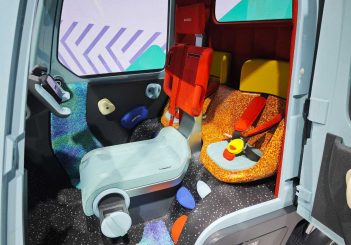
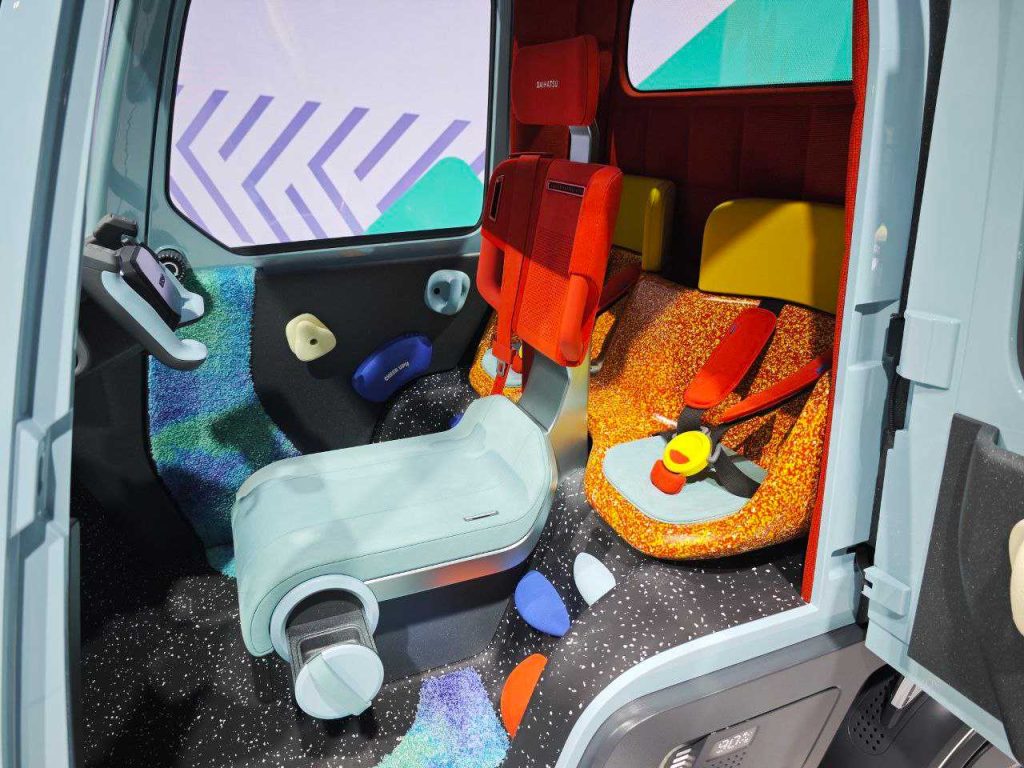
The 1+2 seat arrangement amplifies passenger together-ness by its close proximity and it has a variety of deck configurations to suit the needs of the user.
It also adopts front-opening doors for easy entry and exit to accommodate the vehicle’s small size.
K-Vision
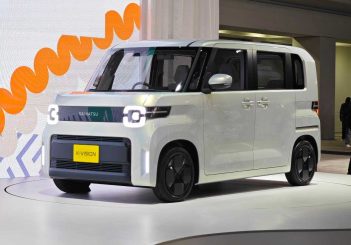
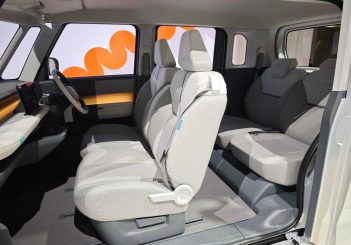
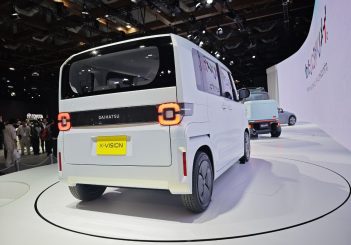
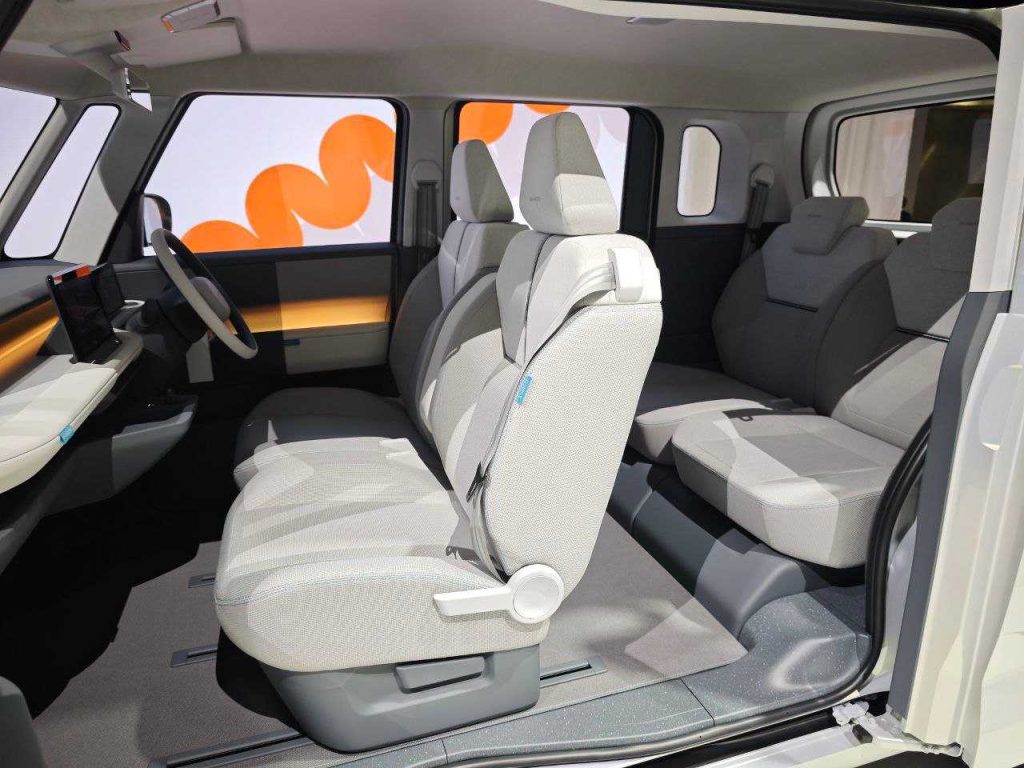
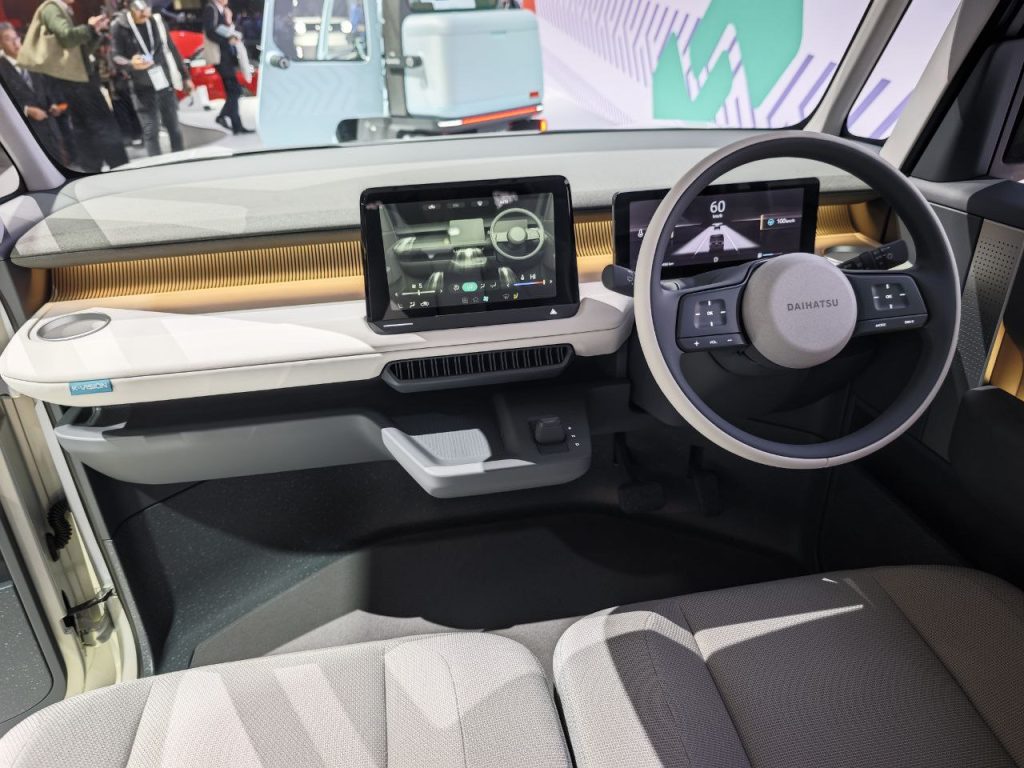
From a technical and practical standpoint the four-seater K-Vision is possibly the most impressive and progressive model of Daihatsu’s showcase line-up.
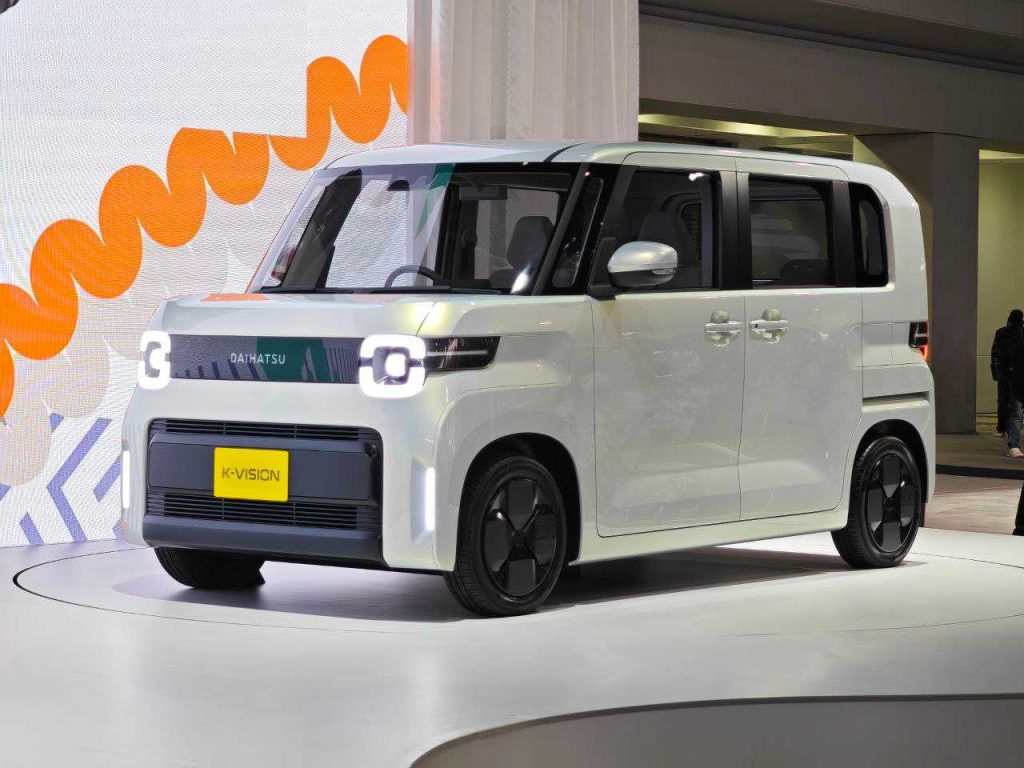
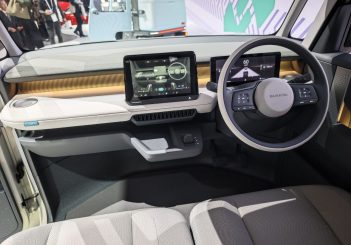
From the onset the car was designed to be intuitive with its simple cockpit area made easy-to-understand and navigate.
Convenience of accessibility to its spacious interior is supported by sliding doors on both sides.
With a 2,460mm wheelbase the kei car is 1,680mm tall, 1,475mm wide and 3,395mm long.
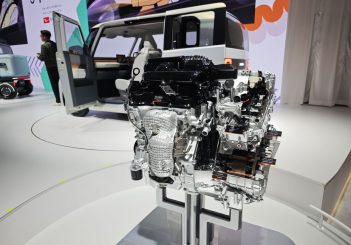
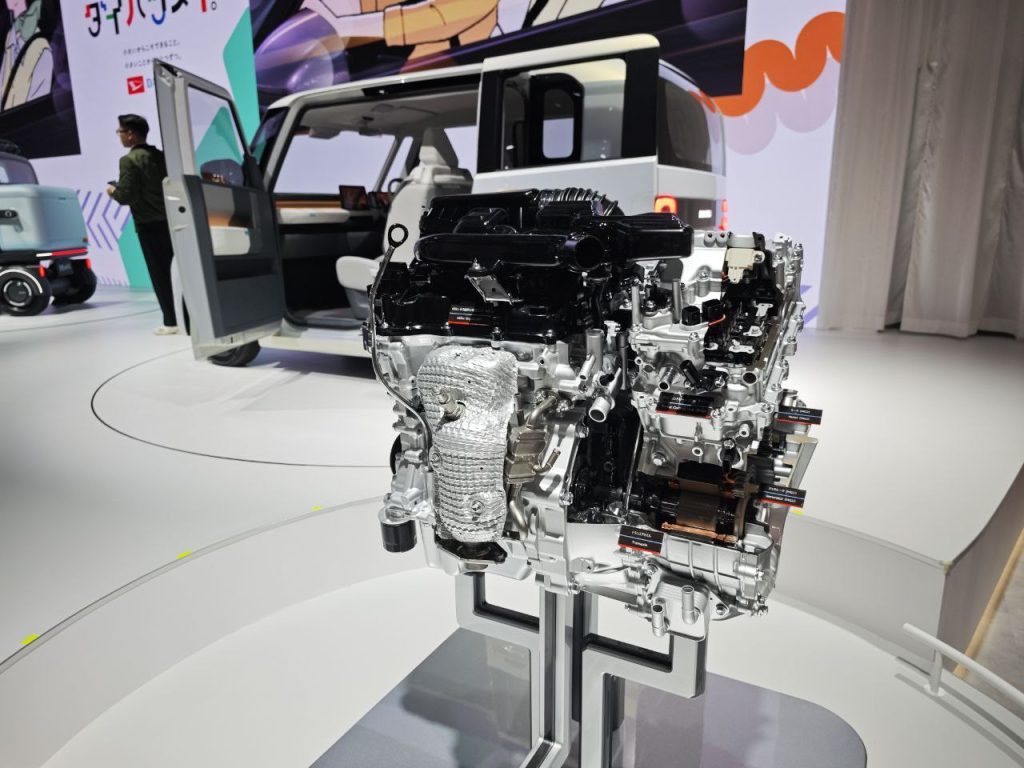
Hidden beneath its straightforward demeanor lies a newly- developed compact (for mini vehicles) e-Smart hybrid system that was made popular in the Rocky hybrid electric vehicle (HEV).
By design the motor and engine are coaxially connected while the PCU is integrated with the electromechanical transaxle.
It is a setup that is tailored towards a small and lightweight design which is suitable for mini vehicle dimensions.
Daihatsu says the 100% motor operation system allows for an improved 20% fuel efficiency compared to conventional engine and Continuously Variable Transmission (CVT) powertrains.
In the event of a disaster the system is also incorporated with an external power supply whose capacity is large enough to ensure sufficient energy for approximately four days.
The former figures are of Daihatsu’s researched estimated values based on simulations comparing with conventional powertrains, while the latter’s estimated operating time is gauged based on a full fuel tank with power supplied at 400W while stationary.
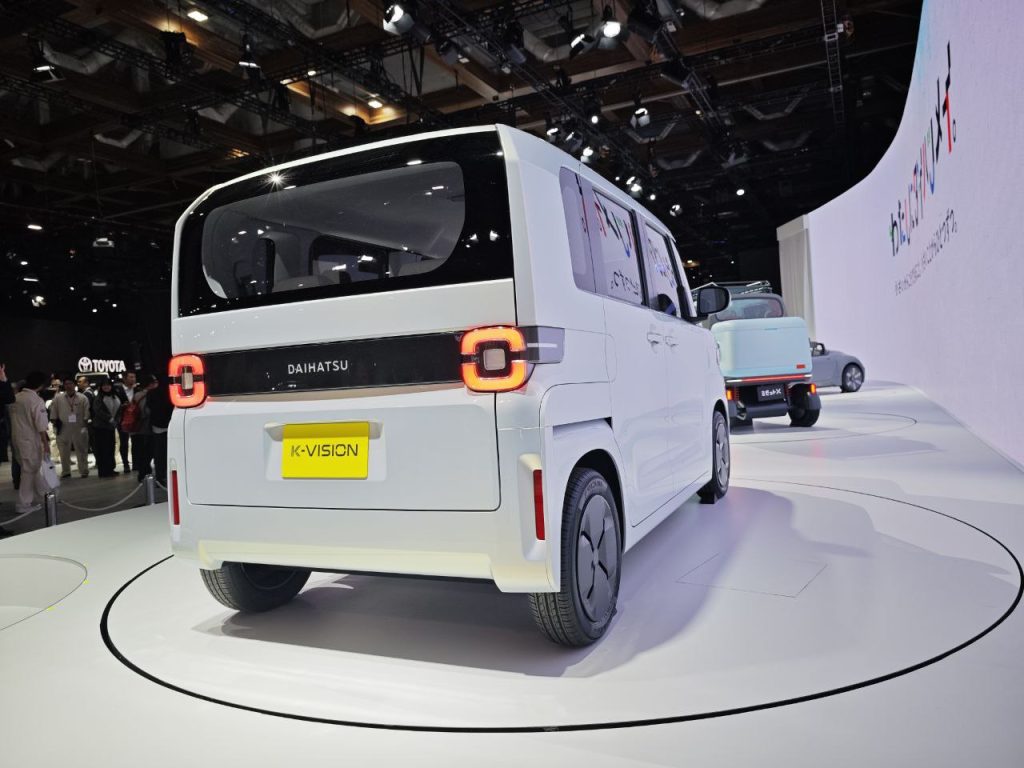
Said system is then mounted onto the next-generation Daihatsu New Global Architecture (DNGA) modular car platform designed with future electrification in mind.
The core emphasis is on delivering a quiet yet powerful motor-driven performance as per-electrification, outstanding environmental performance, and external power supply.
All of this while retaining the same usage capabilities as conventional vehicles with no charging required.
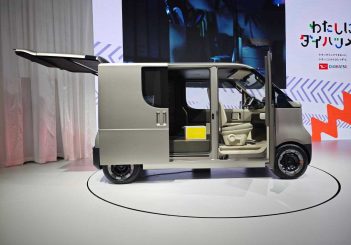
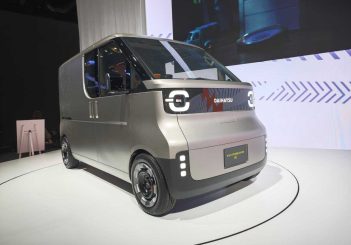
Kayoibako-K
The smallest model in Toyota’s Kayoibako series is potentially the most versatile of Daihatsu’s showcased model.
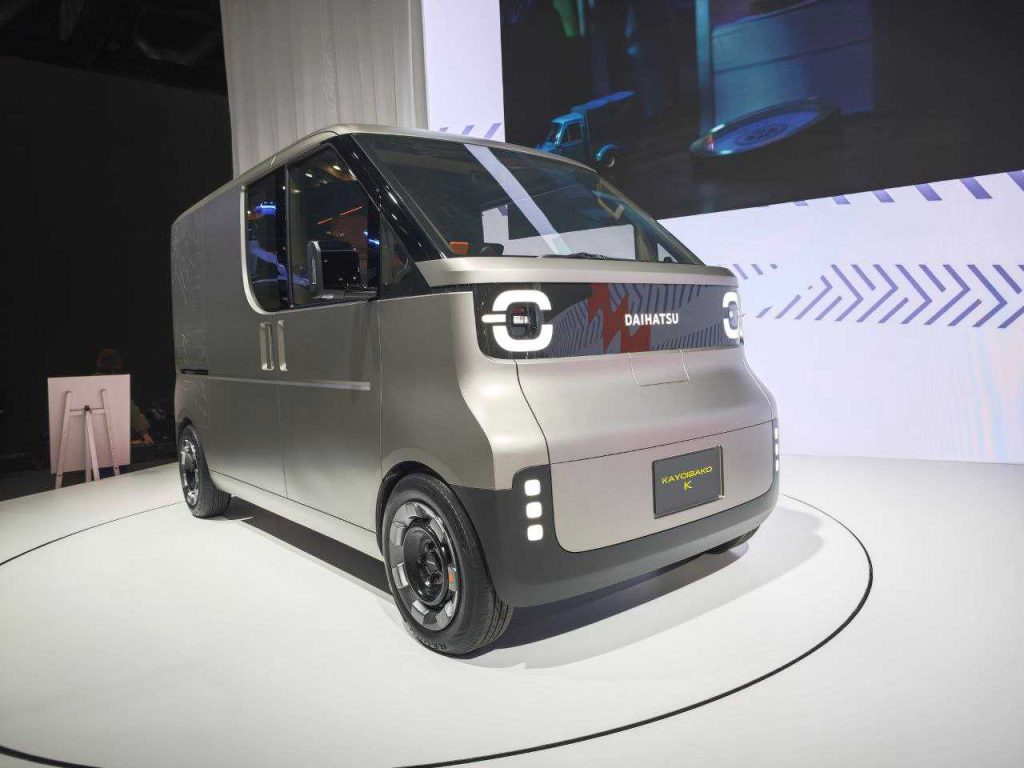
The BEV Kayoibako-K is deemed the smallest mini vehicle in a new generation of mini vehicle-sized commercial vehicles.
It is 1,475mm wide with a height of 1,885mm and length at 3,395mm. It has a 2,550mm wheelbase size.
Its primary specialisation is in last mile support especially to local communities given the model’s flexible usage that is unique to mini vehicles.
Integrating the latest in AI technology allows the Kayoibako-K to be tailored for remote functions too.
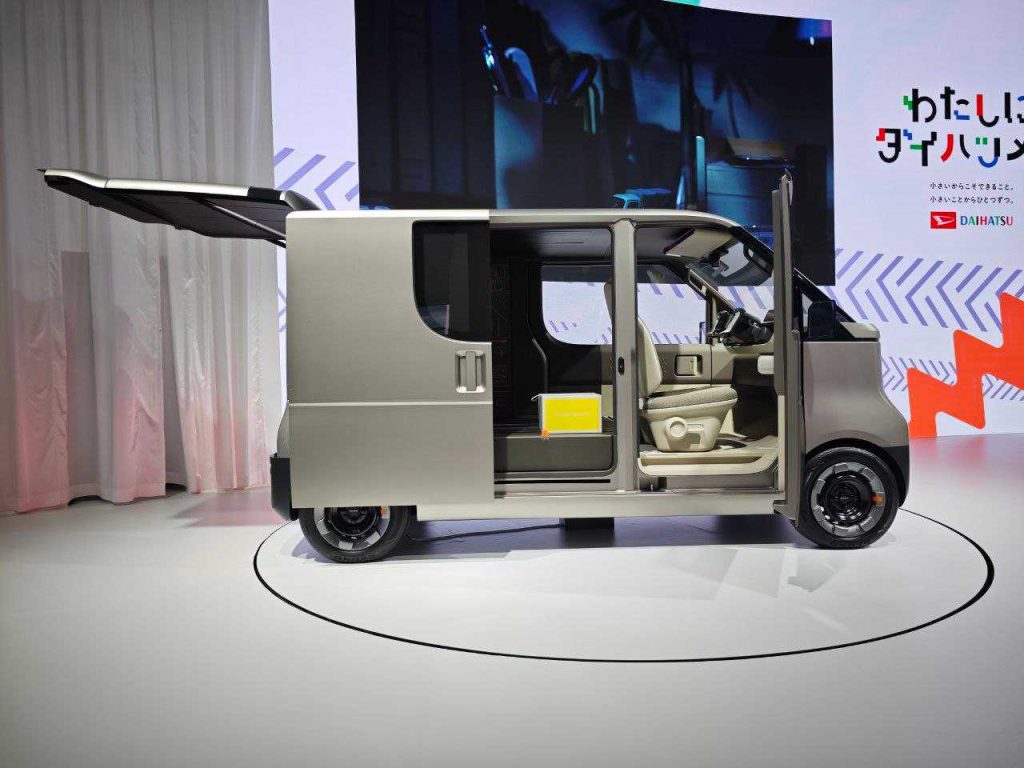
Through the integration with data centres, the model can be summoned and directed via fully autonomous driving.
Its multi-functional capabilities enable drivers to carry out a host of errands such as parcel delivery and act as a new device-based support for monitoring elderly residents in local communities.
e-Atrai
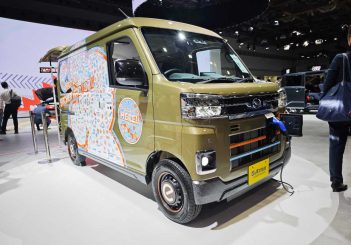
Wrapping up the showcase is the e-Atrai sticker factory which is possibly a culmination of everything that Daihatsu was showcasing with a touch of personal twist.
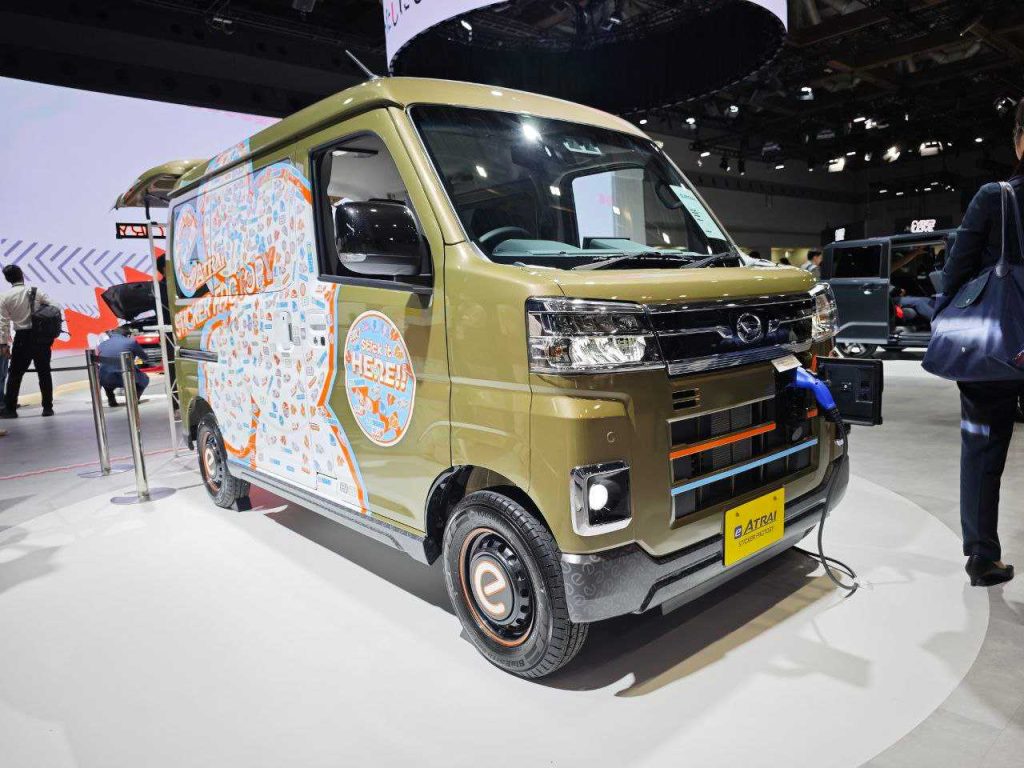
Made to ferry up to four passengers, the particular focus on the BEV model’s interior and exterior design serves to highlight the passenger car-like equipment and quality put into a mini commercial vehicle to support last-mile delivery.
This particular e-Atria model at the show was designed to print concept car stickers on-site as gifts to visitors.
It has a cruising range of approximately 200km (depending on usage conditions) when used as a mini commercial vehicle and adopts an external power supply function for emergencies.
Rear-wheel drive and low center of gravity were given focus for more stability even when the model is loaded.
User-friendly comfort features include power sliding doors on each side while its exterior and interior design focuses on quality that also encompasses chrome accents.
Dimension-wise the 2,450mm wheelbase model is 3,395mm in length with a height of 1,890mm and 1,475mm in width.