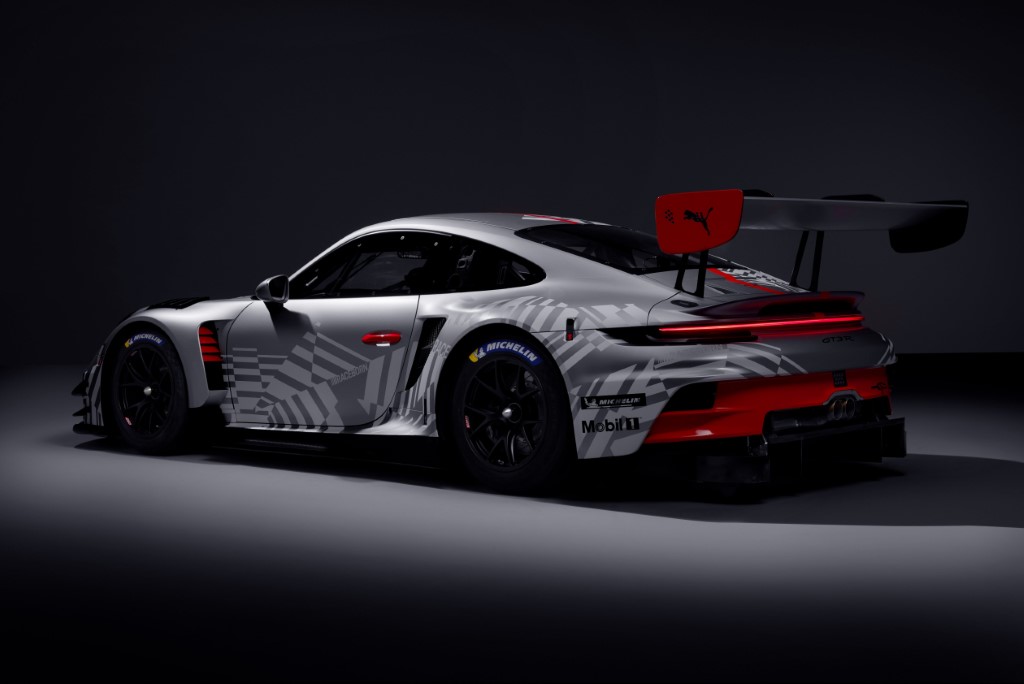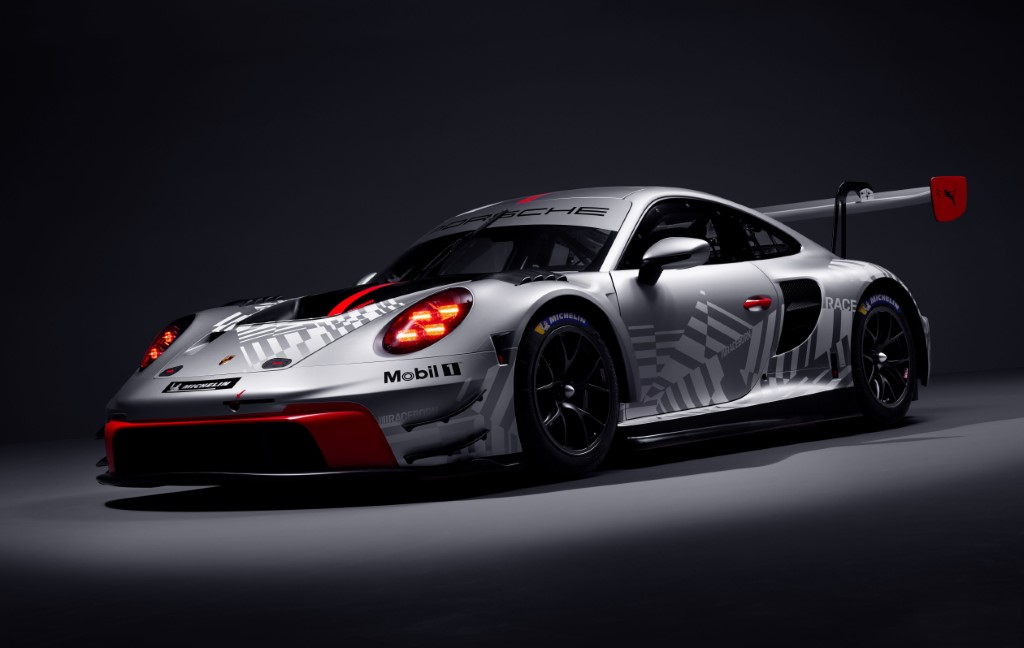
ATLANTA: Porsche is set to launch the next version of the successful 911 GT3 R for the 2026 season.
The new GT3 race car incorporates a range of detailed improvements including revised aerodynamics.
Since its debut at the start of 2023, the current Porsche 911 GT3 R has built an impressive track record, with numerous victories and titles from more than 500 race starts worldwide.
This season, the 557 hp (416 kW) Porsche 911 GT3 R remained unbeaten at the French classic again.
The newly evolved race car, refined by Porsche Motorsport in numerous key areas, now follows in the footsteps of its highly successful predecessor.
The 4.2-liter flat-six engine, which delivers up to 557 hp (416 kW) depending on its Balance of Performance (BoP) classification, and the drivetrain of the current 911 GT3 R remain largely unchanged.
For existing vehicles based on the 911 generation 992, Porsche Motorsport will offer update kits.
The upgrades can then be installed on existing Type 992 911 GT3 R examples.
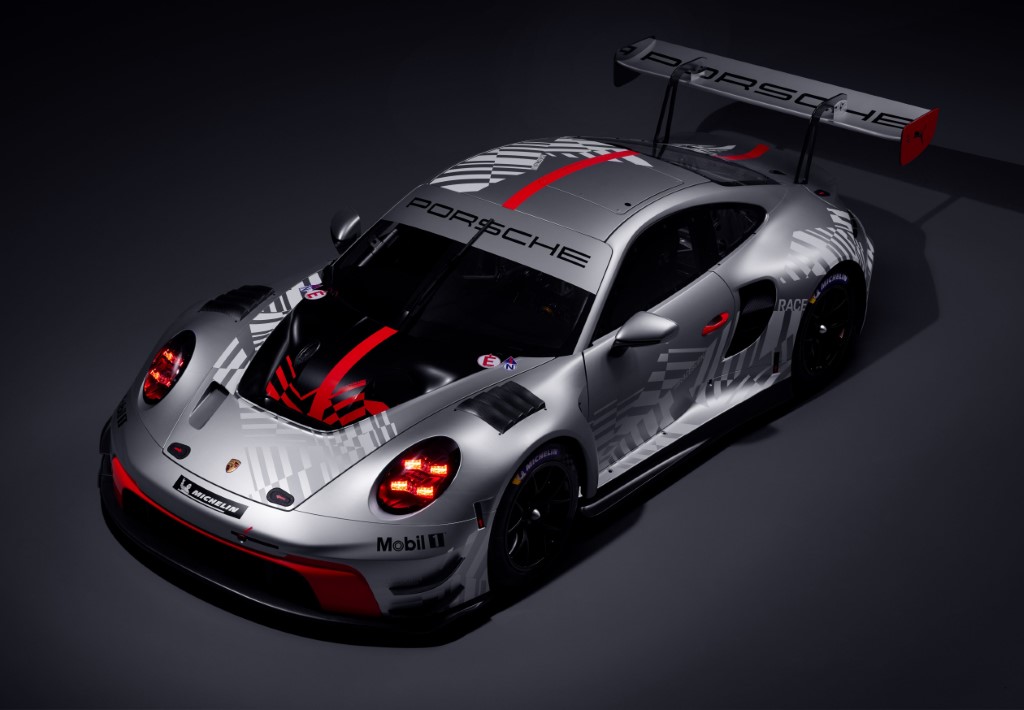
The primary focus of the evolution was on the suspension and aerodynamics, with the goal of achieving an even more balanced handling and improved drivability – particularly for non-professional drivers – even under variable conditions.
The most striking visual feature of the new 911 GT3 R is the addition of ventiducts on the upper side of the front wheel arches.
These so-called “louvres” significantly contribute to improved aerodynamics.
Coupled with the optimized kinematics of the double wishbone front suspension, which provides an anti-dive effect by enhancing force resistance, the louvres help to counteract front-end compression during deceleration, thereby maintaining aerodynamic balance.
This reduces the tendency of the car to tilt forward during braking, also known as pitch sensitivity.
As a result, the new 911 GT3 R offers more precise and predictable braking behavior, improving overall control.
At the rear, the swan-neck rear wing is equipped with a four-millimeter Gurney flap.
This generates additional aerodynamic downforce and broadens the scope for aerodynamic balance adjustments.

The underbody is fully enclosed and reinforced at the rear. Simultaneously, modified kinematics of the multi-link rear axle increase the anti-squat effect, reducing rear-end compression under hard acceleration.
This improves dynamic load distribution between the axles.
In combination with an adapted fifth-generation Bosch racing ABS, these enhancements result in more balanced handling.
The electrohydraulic power steering system now features additional fluid cooling, optimizing its thermal performance and ensuring consistent steering forces, even on demanding circuits such as the Nürburgring Nordschleife.
New ceramic wheel bearings enhance robustness and durability, while modified centering pins simplify the installation of drive shafts.
These are now cooled independent of the brake cooling via their own air supply directly through NACA ducts in the side skirts.
This improves their stability on high-speed tracks such as Monza or Le Castellet, where low ride height is critical.
At the same time, the rear brake cooling system can be adjusted more precisely – an important feature for circuits like Daytona.
A modified driver air vent ensures consistent air circulation within the cockpit, even during long-distance races.