WHEN Honda first introduced the Africa Twin lineage nearly three decades ago, the goal was simple –
build a motorcycle that could genuinely do it all.
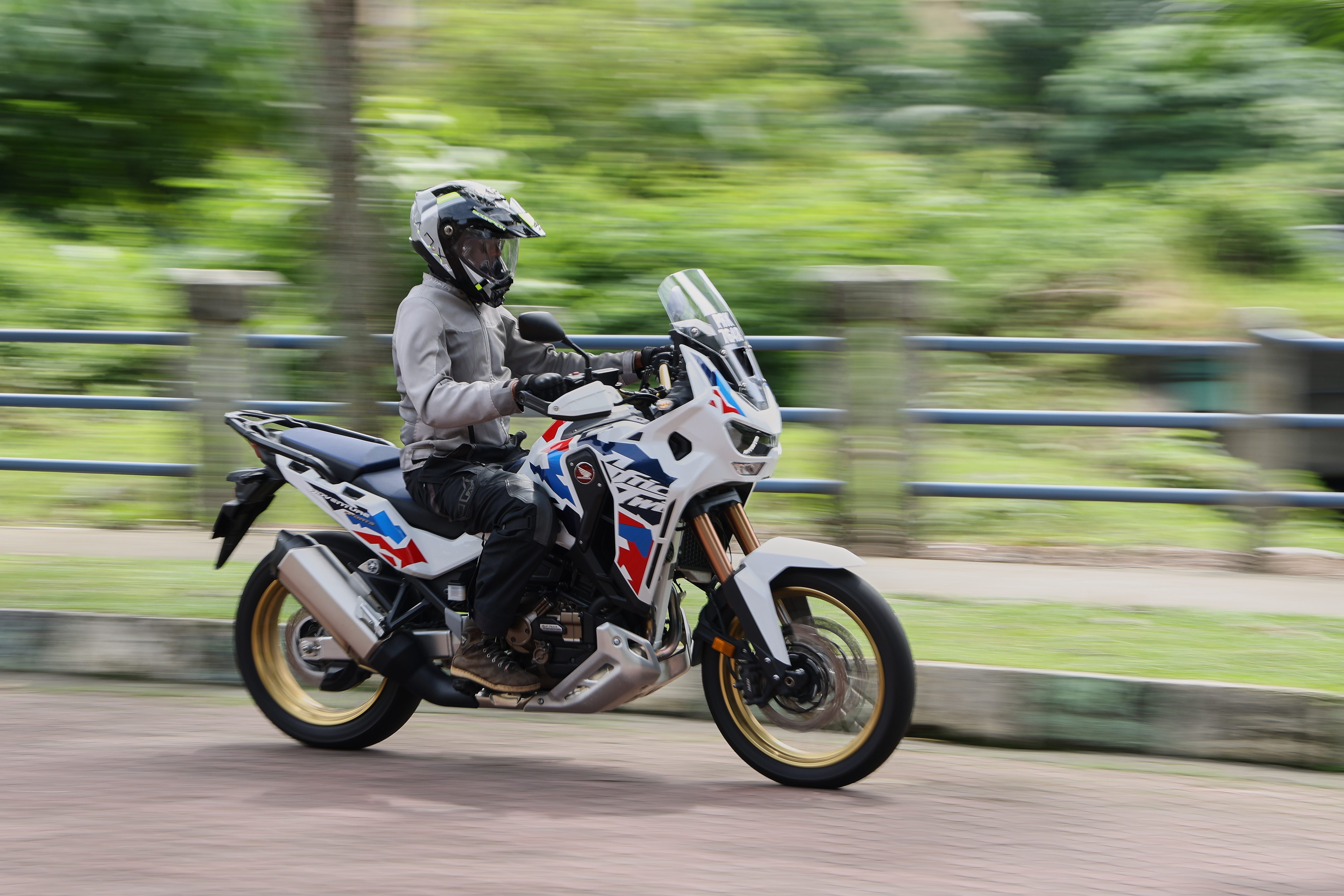
Riding the 2025 Honda Africa Twin Adventure Sports ES , I can feel that philosophy still very much intact.
After spending proper time with the bike across highways, hills, tight corners, traffic, and night riding, what stood out to me most is how carefully Honda has refined the experience rather than chasing reinvention.
The Africa Twin Adventure Sports ES is the fully loaded, long-distance touring version of the standard Africa Twin.
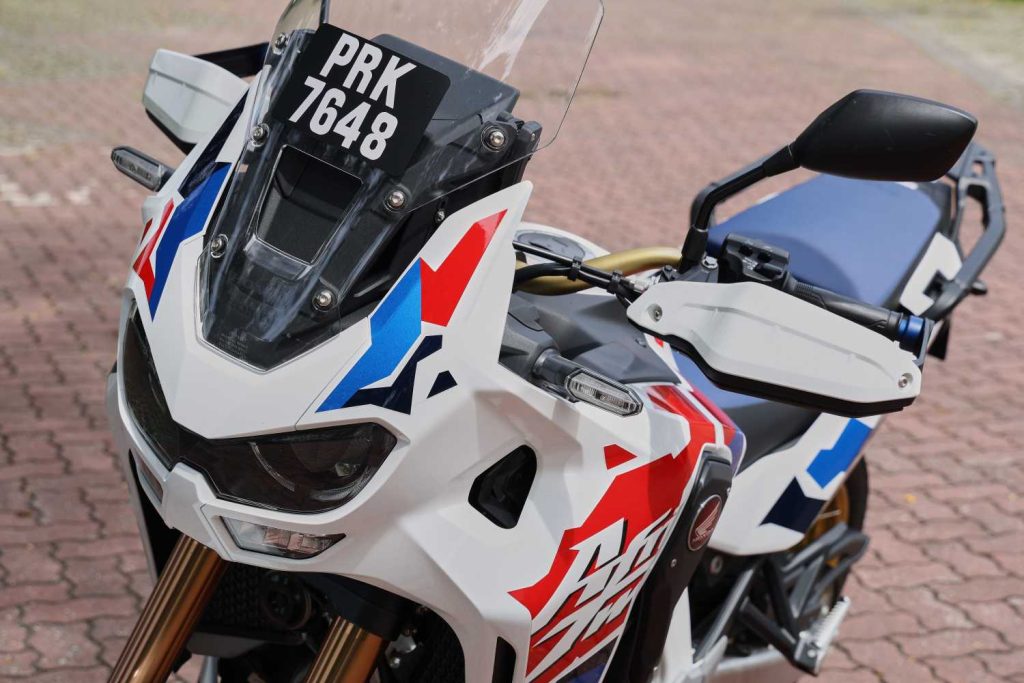
The first thing I noticed was how familiar yet purposeful the Africa Twin Adventure Sports ES still looks.
I like that Honda hasn’t tried to over-style it.
The tall stance, slim midsection, and rally-inspired front end immediately communicate intent.
The updated LED lighting sharpens the look without straying from the bike’s rugged identity.
Up close, I appreciated how functional everything feels.
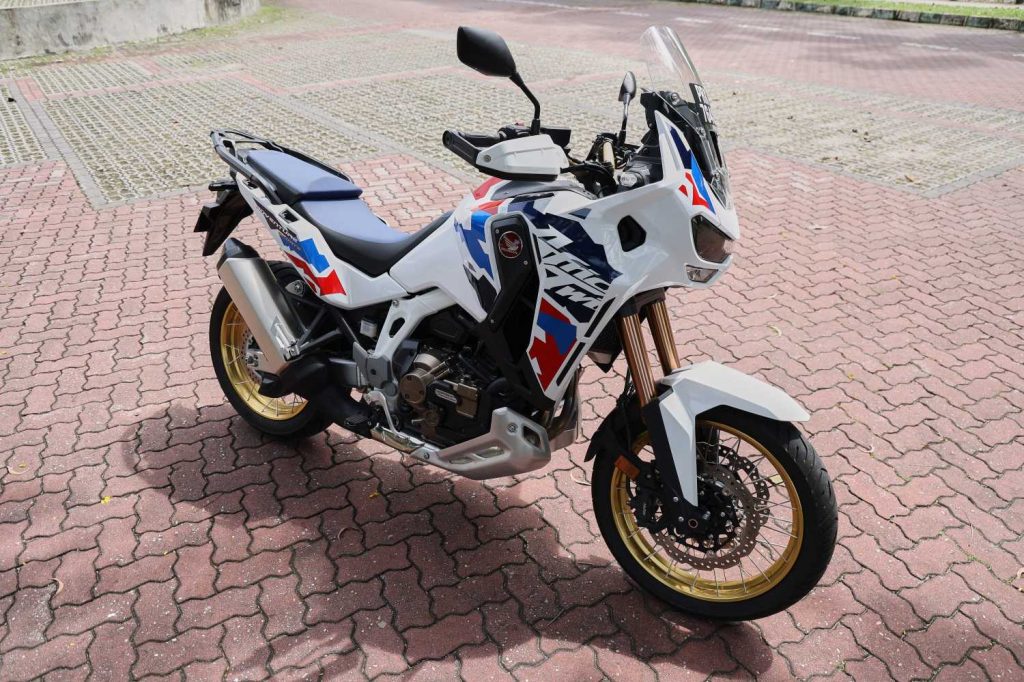
Body panels are narrow giving me more leg space and clearly designed for riders who actually travel.
It is fitted with integrated luggage mounting points and solid engine protection to reinforce the Africa Twin’s long-distance, go-anywhere brief.
Once in the saddle, I felt immediately comfortable.
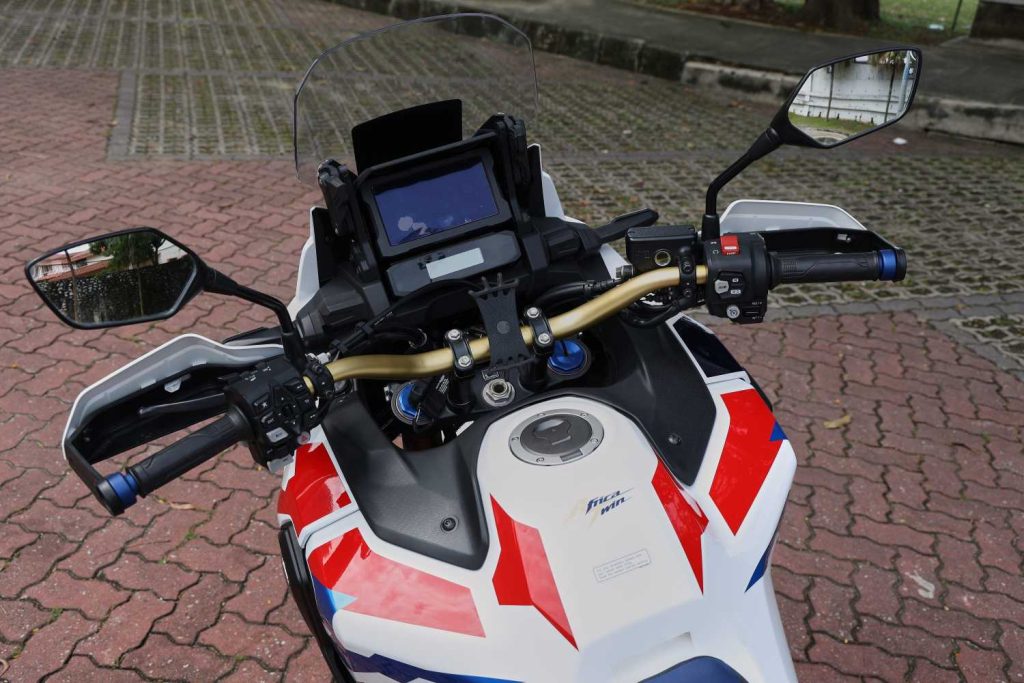
The wide handlebars give me plenty of leverage, and the relationship between the seat, pegs, and bars feels natural whether I’m seated or standing.
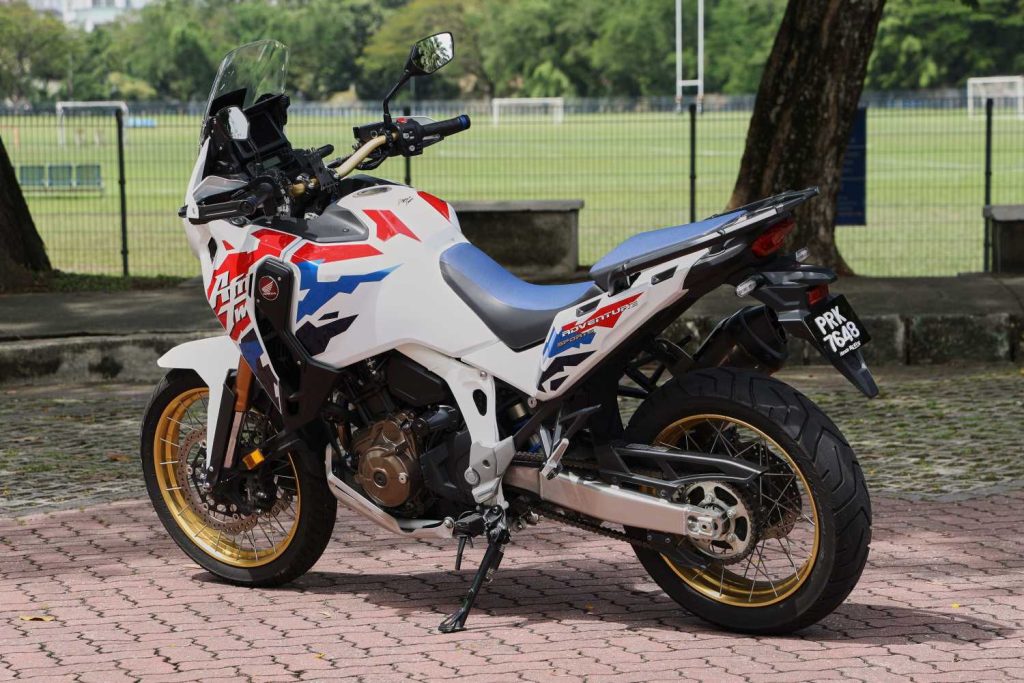
The seat height is still tall, and I’m always aware of that at stops, but the slim waist makes it easier to get a foot down than the numbers suggest.
On longer rides, I found the seat supportive rather than tiring, and the adjustable windscreen did a good job of cutting fatigue without introducing turbulence.
Standing on the pegs felt instinctive, which reassured me that Honda hasn’t diluted the bike’s off-road DNA.
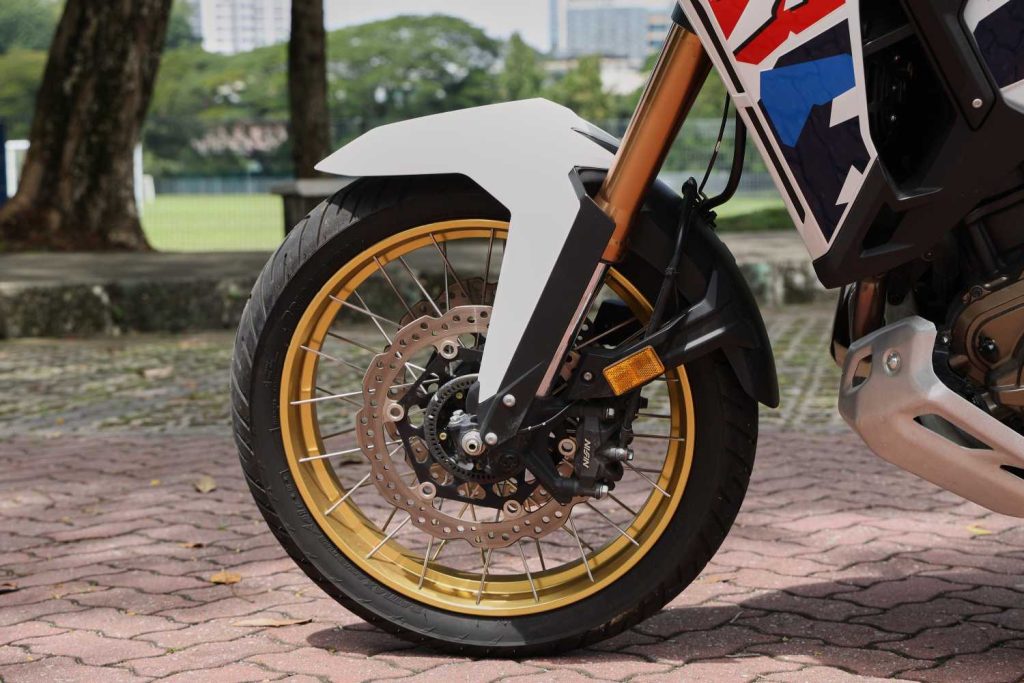
The Showa suspension continues to impress me.
On the highway, it smooths out surface imperfections effortlessly, giving the bike a planted, composed feel.
When I moved onto broken tarmac and rougher backroads, the suspension absorbed punishment without unsettling the chassis.
Even when I pushed harder through faster sections, the Africa Twin never felt wallowy or vague.
I always knew what the front tyre was doing, which gave me the confidence to ride it at a pace that might surprise people unfamiliar with large adventure bikes.
Braking performance felt pleasant and safe rather than aggressive.
I liked the progressive feel at the lever, especially when trail braking into corners or riding downhill on inconsistent surfaces.
ABS intervention was smooth and unobtrusive, stepping in only when genuinely needed.
While I would welcome slightly more feedback from the rear brake, overall I felt confident relying on the system in mixed conditions.
On the highway, I found the Africa Twin calm and unstrained.
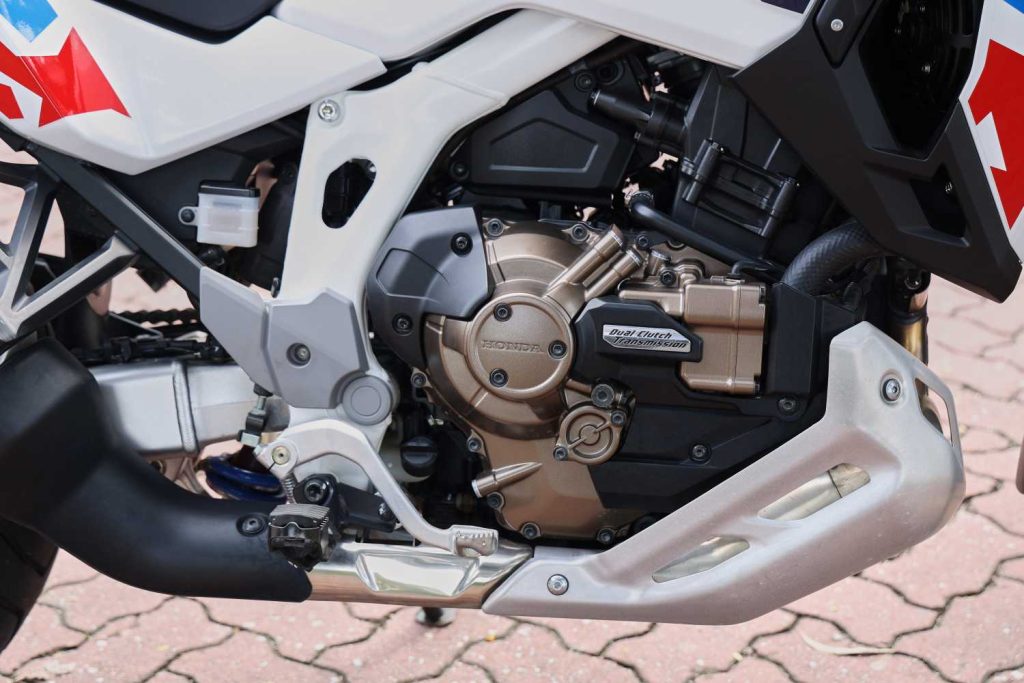
The parallel-twin engine delivers usable torque rather than headline-grabbing top-end power, which suits real-world riding perfectly.
Overtaking required little planning, and the bike felt stable and reassuring at cruising speeds.
Wind protection worked well for me, and vibration was kept in check.
I could comfortably imagine covering serious distance in a single day without feeling beaten up.
In traffic, I was most aware of the Africa Twin’s size and weight.
At walking pace, especially with a full tank, I had to be deliberate with my inputs when filtering or dealing with uneven road camber.
Slow-speed balance demands attention, but smooth throttle response and good steering lock help
manage the bulk.
With DCT fitted, I found stop-start riding noticeably less tiring.
Once I was moving, the weight largely disappeared.
Through corners, I found the Africa Twin rewarding as long as I rode it smoothly.
If I rushed into tight bends or braked late, the mass made itself known.
When I took a measured approach, the chassis settled quickly and tracked cleanly.
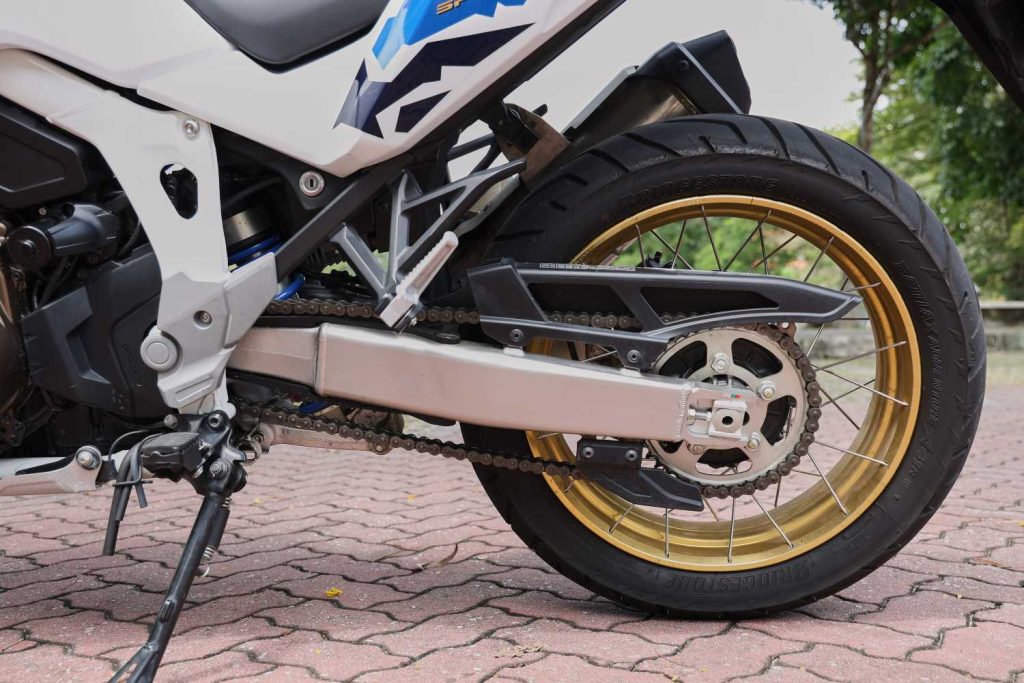
On faster sweepers, the weight actually worked in my favour, giving the bike a planted, confidence-
inspiring feel even when surfaces weren’t perfect.
Climbing hills, I appreciated how accessible the engine’s torque is.
The bike maintained momentum easily, and while tight uphill switchbacks demanded respect, the Africa Twin remained predictable and composed.
I found that riding smoothly rather than aggressively allowed the bike to shine, especially on longer climbs.
Riding both the manual and Dual Clutch Transmission (DCT) versions highlighted how much the
gearbox choice affects the experience.
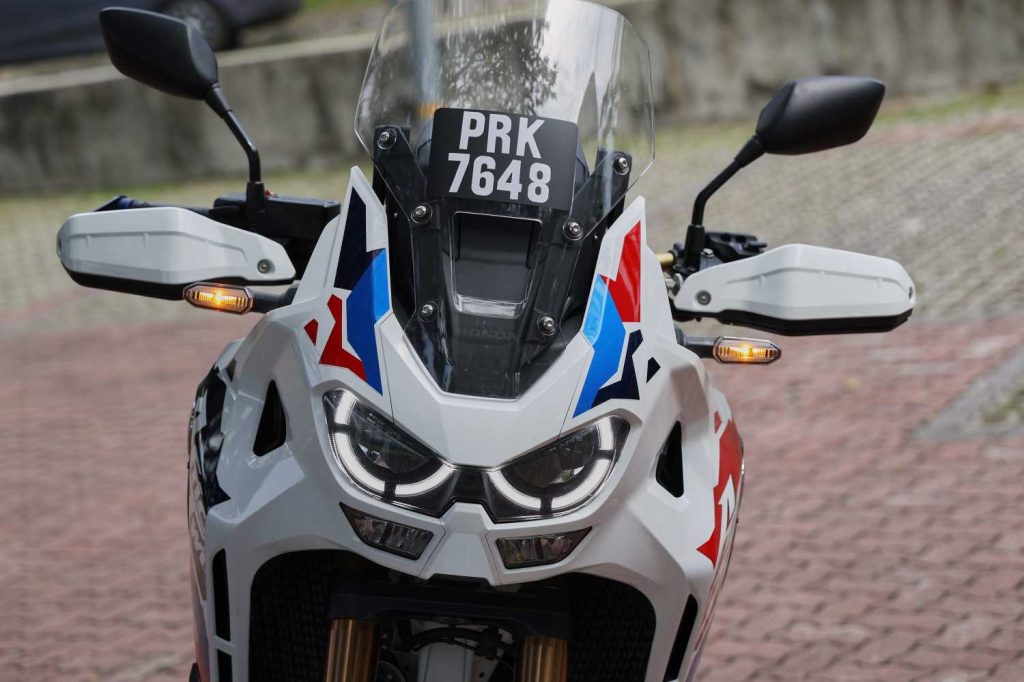
On the manual, I enjoyed the traditional engagement — the clutch is well weighted, shifts are clean, and I felt fully connected to the bike.
The DCT, however, genuinely impressed me.
In automatic mode, it anticipated gear changes well in traffic, during climbs, and when exiting corners.
When I wanted control, the paddle shifters let me override the system instantly without upsetting the bike’s balance.
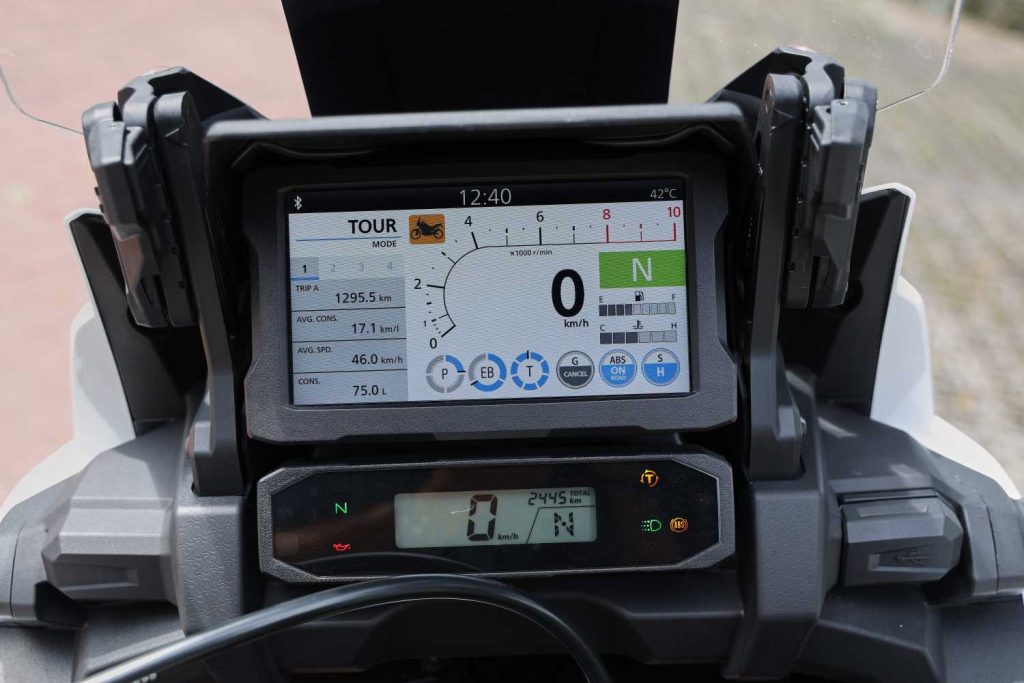
The riding modes – Tour, Urban, Gravel, Off-Road, and User made a noticeable difference.
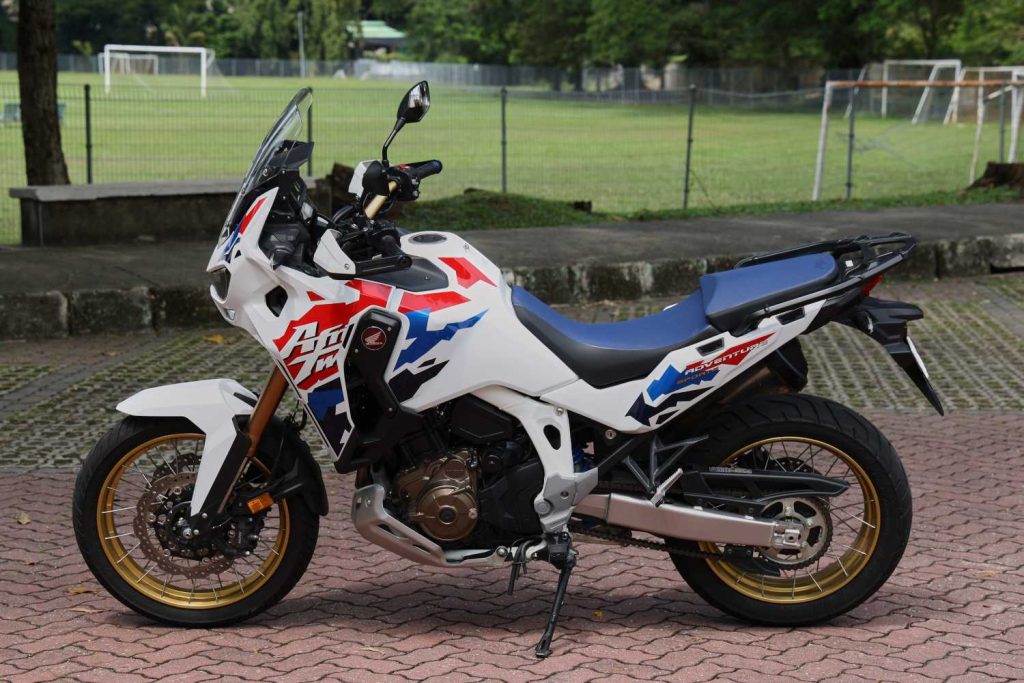
Tour suited relaxed cruising, Urban softened throttle response in traffic, while Gravel and Off-Road allowed more wheel slip and reduced intervention.
I particularly appreciated User mode, which let me tailor the bike to how and where I was riding.
At night, the Africa Twin continued to inspire confidence.
I found the LED headlights bright and well spread, illuminating corners and road edges clearly.
Instrument lighting was easy to read without being distracting, and the bike felt stable and reassuring even on unfamiliar roads after dark.
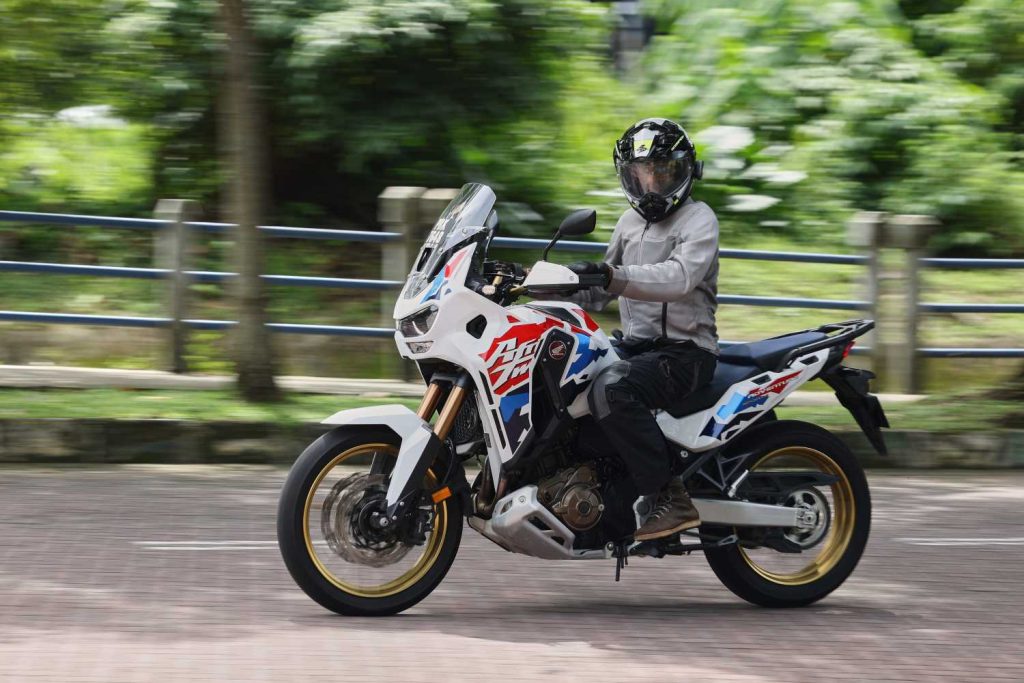
Riding the 2025 Africa Twin Adventure Sports ES priced at RM119,388, I was reminded why it remains such a respected name in the adventure segment.
The weight demands respect at low speed, but once moving, it rewards the rider with stability and confidence.
With strong ergonomics, capable suspension, adaptable electronics, and the choice between manual or DCT, it remains one of the most complete and versatile adventure motorcycles I’ve ridden.
SPECIFICATIONS
Honda Africa Twin Adventure Sports ES
Engine: 1,084cc, parallel-twin, 4-stroke
Maximum power: 101hp at 7,500rpm
Maximum torque: 112Nm at 5,500rpm
Transmission: Six-speed
Suspension: Front Showa upside-down 45mm fork, preload, compression and rebound electronically adjustable; rear Pro-Link single shock with electronic adjustment for compression, rebound and preload
Brakes: Front Dual 310mm petal-style floating rotors and radial-mount, four-piston calipers with lean-angle ABS; rear 56mm petal-style disc with lean-angle sensitive ABS, switchable
Fuel capacity: 24.9 litres
Wet weight: 253kg
Price: RM119,388 (excluding registration and insurance)