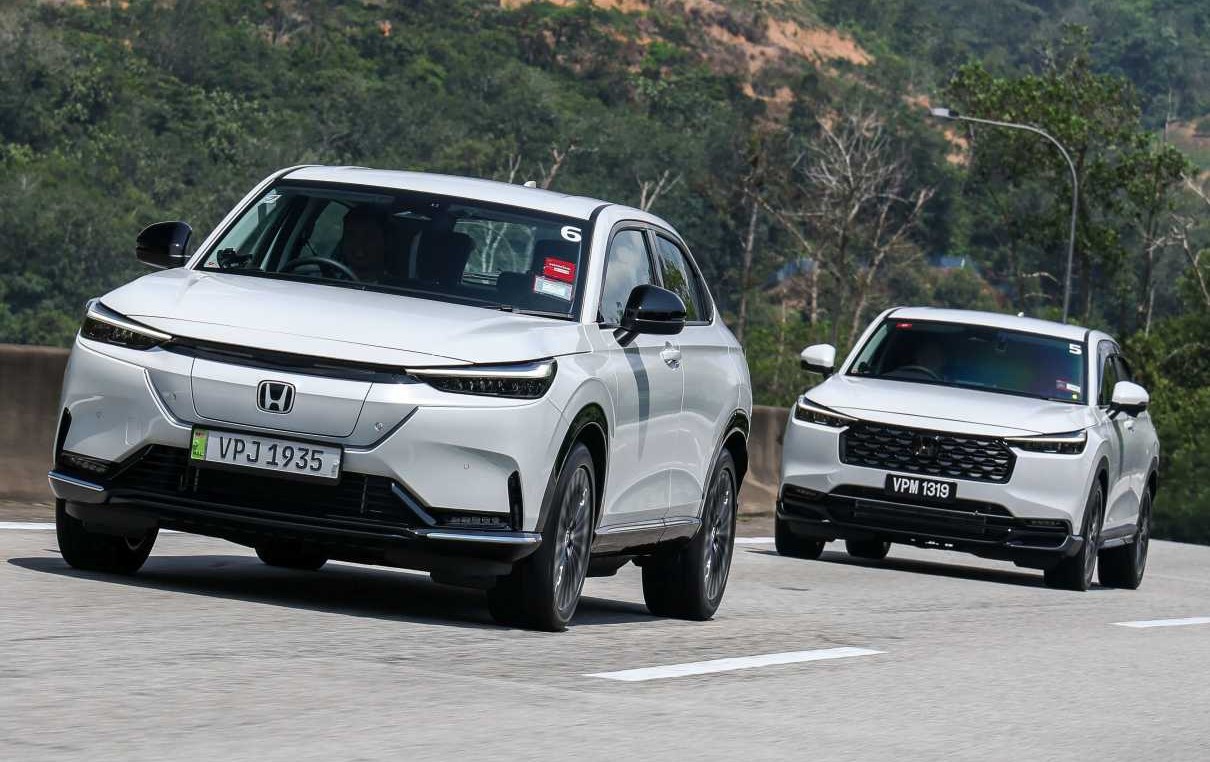
IF you want to see how Honda plans to hold the line against the Chinese charge, put 20 scribes and YouTubers, seven sports utility vehicles (SUVs) and over 200km of tarmac in the same sentence.
Honda Malaysia recently corralled two HR-V hybrids, two HR-V Turbos, a CR-V Turbo AWD and a pair of e:N1s for an overnight run to Gambang, just inland of Kuantan.
The brief was simple: sample the spread from petrol to hybrid to full electric, then decide if the badge still buys more than nostalgia.
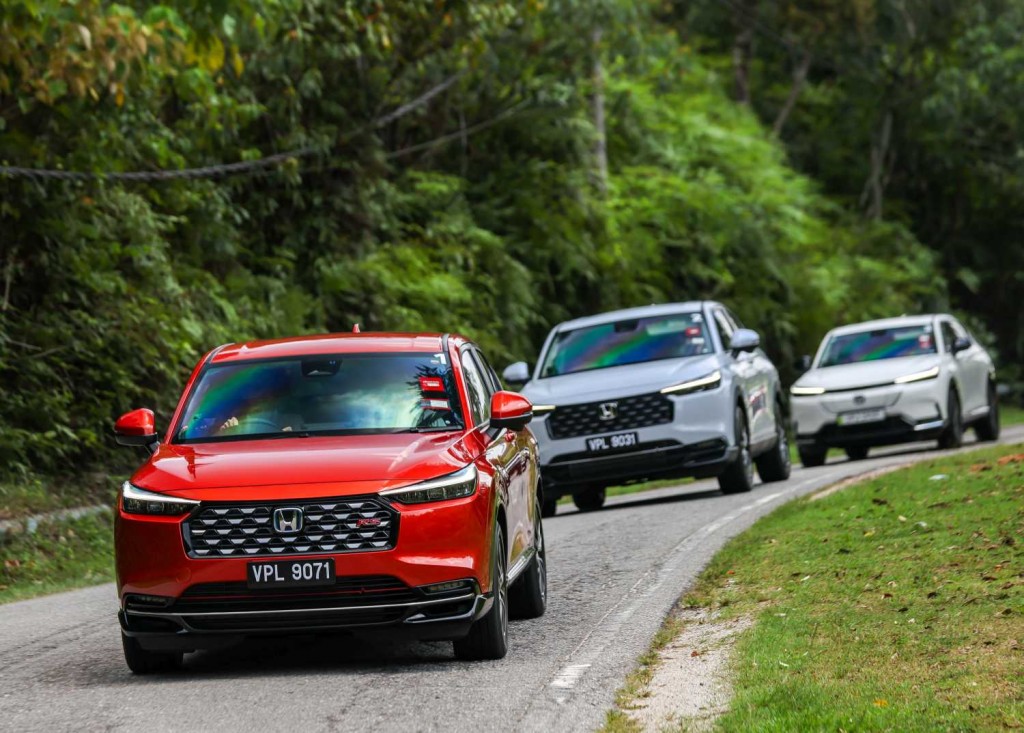
A HR-V e:HEV leading the Honda group.
Chinese rivals have rewritten the showroom script, pairing aggressive sticker prices with feature lists that read like catalogues.
Honda’s reply is different: polish the fundamentals.
The HR-V’s hybrid smoothness, the CR-V’s easy stride and the e:N1’s unfussed city manners are meant to win you over not with fireworks but with fit, finish and the sort of calibration that makes a long day’s drive feel short.
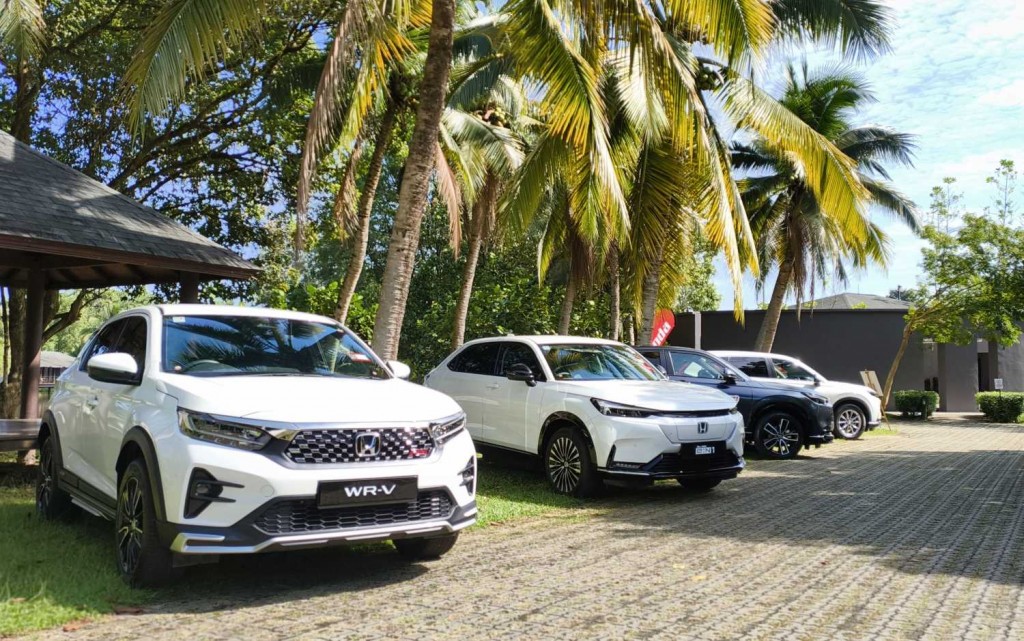
WR-V at the left.
Honda also has a fourth SUV model, the WR-V.
As the smallest in the range, it is already well reviewed, and wasn’t part of the drive.
It sat on static display at the resort where we stayed to complete the four-strong SUV lineup.
Three-up in most cars, we traded seats, swapped notes and watched the odometer climb.
e:N1
Honda’s first battery electric vehicle (BEV) for Malaysia presents clean, conservative lines rather than shouty futurism, with crisp surfacing and familiar Honda proportions that make it look like a quiet HR-V cousin.
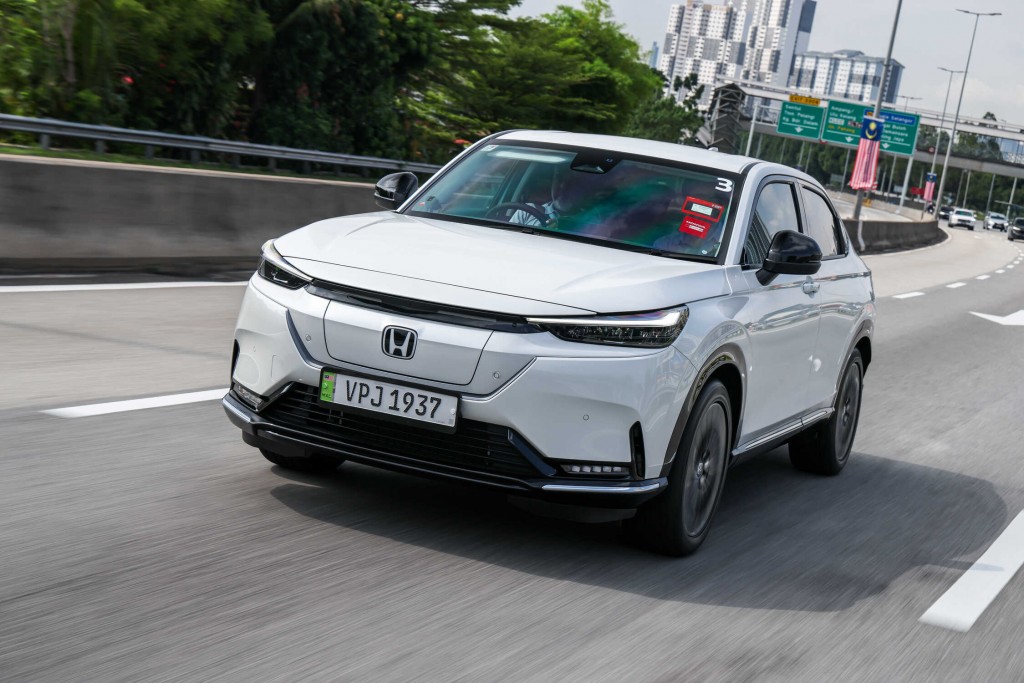
e:N1.
Inside, the portrait-style infotainment stack and straightforward controls are a welcome break from screen-first gimmickry; materials feel respectable, and cabin hush at city speeds is a clear strength.
Performance is linear and friendly.
The e:N1’s tuning prioritises smooth take-off and easy modulation over neck-snapping thrust, which suits urban and suburban duties.
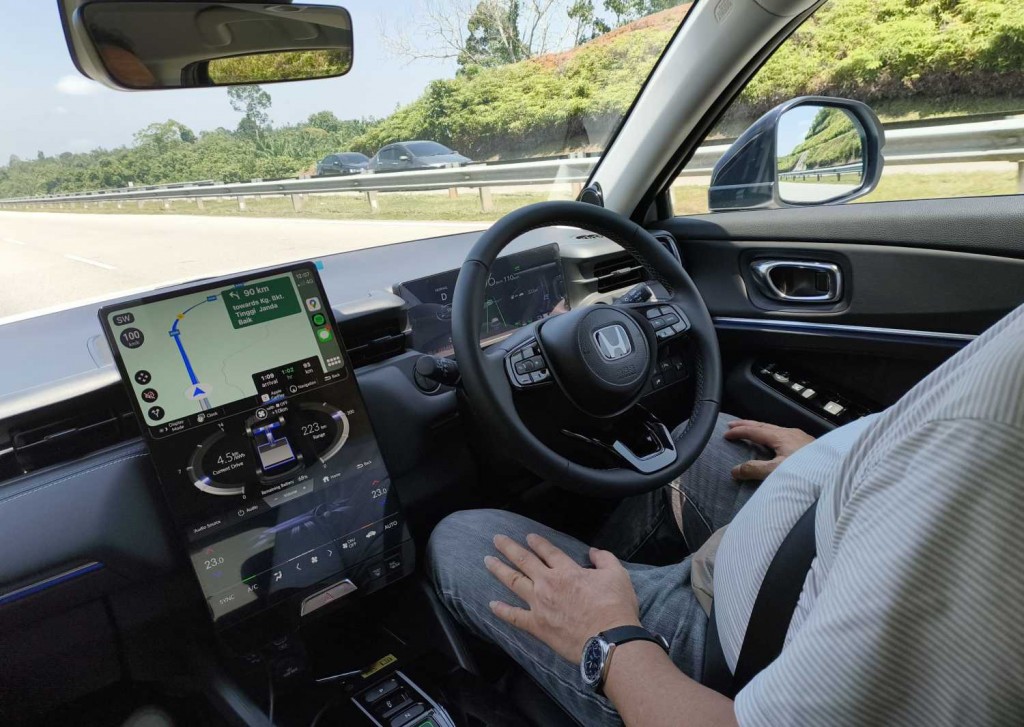
Driving the e:N1 with Honda Sensing.
Regeneration levels are simple to access, and refinement over patchy tarmac is good, though sharper edges can elicit a thump on the 18-inch wheels.
Official range in Malaysia is quoted at up to 500km on the NEDC cycle; in mixed driving you should expect a figure closer to the low-400km on WLTP-style usage.
Charging is competitive for the class and use-case, and Honda Sensing comes standard, giving the BEV the same driver-assist familiarity as its combustion engine siblings.
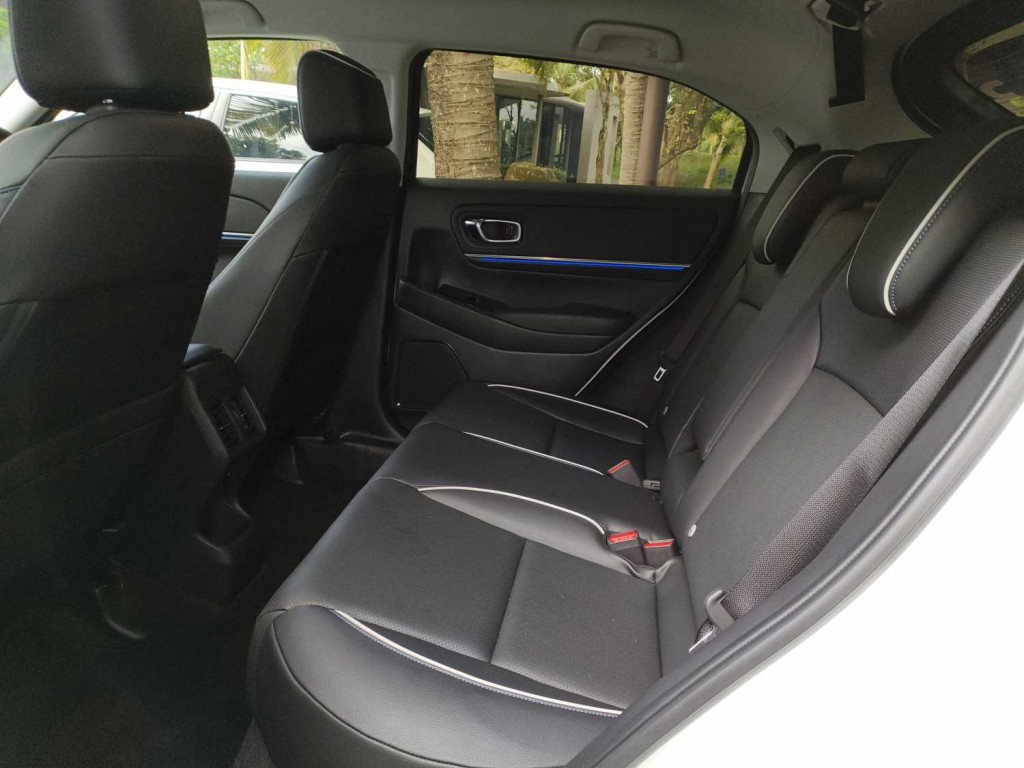
Spacious rear seats.
Verdict: A pragmatic, confidence-building first step into Honda EV ownership.
Not the flashiest spec sheet, but cohesive where it counts.
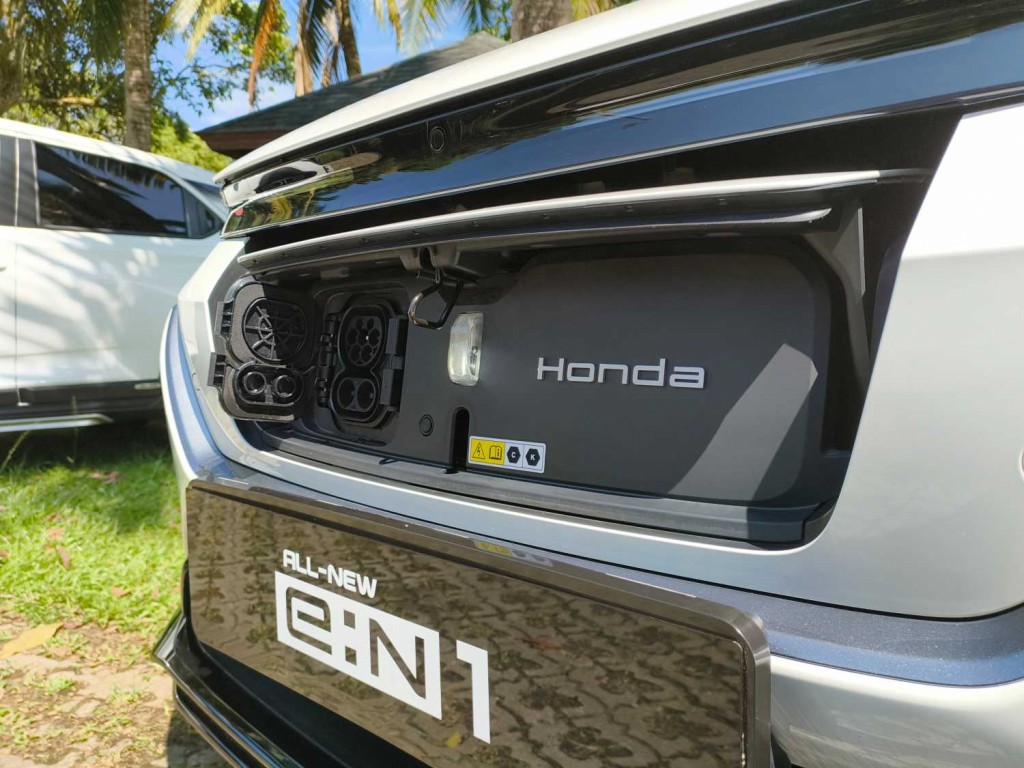
e:N1's AC/DC Charging point.
Two flavours, two personalities.
The HR-V e:HEV RS trades outright shove for silk.
It pulls with that trademark hybrid surge at town speeds, is impressively quiet when cruising and sips fuel lightly.
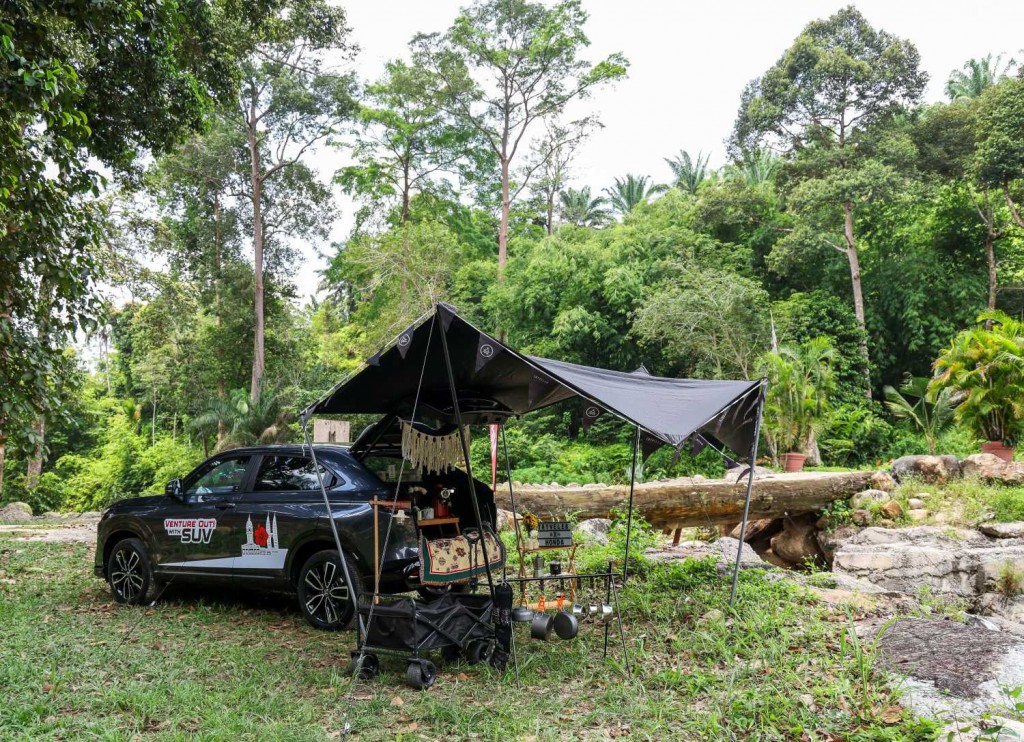
HR-V e:HEV.
Steering is light but accurate, and ride compliance is well-judged for Malaysian surfaces.
If your life is mostly city miles with the occasional highway jaunt, the hybrid’s calmness and thrift are persuasive.
The HR-V Turbo turns the wick up.
With much higher peak power than the hybrid and stronger pull once you’re up to highway pace, it gets up to speed briskly and feels more effortless when overtaking or climbing.
The chassis is composed, with well-contained body motions, and the drivetrain responds cleanly to judicious throttle inputs
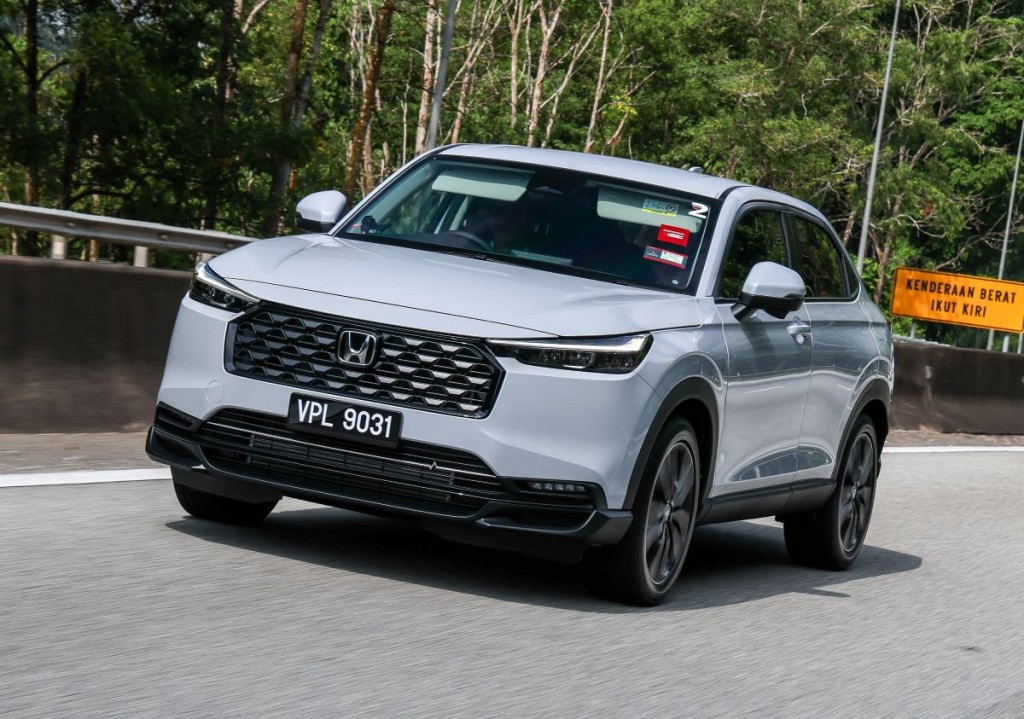
HR-V Turbo.
Cabin packaging remains a selling point, with good rear legroom and useful cargo flexibility.
StarCarSifu’s pick?
The Turbo of this refreshed model.
The e:HEV’s efficiency and smoothness are admirable, but the Turbo’s extra punch and easier highway stride makes it the more rounded all-rounder, especially with passengers and luggage aboard.
CR-V (1.5 Turbo AWD)
The latest CR-V returns to its core brief: space, refinement and long-haul ease.
The 1.5-litre Turbo AWD is quiet at a cruise, the cabin isolates well, and the steering has welcome accuracy.
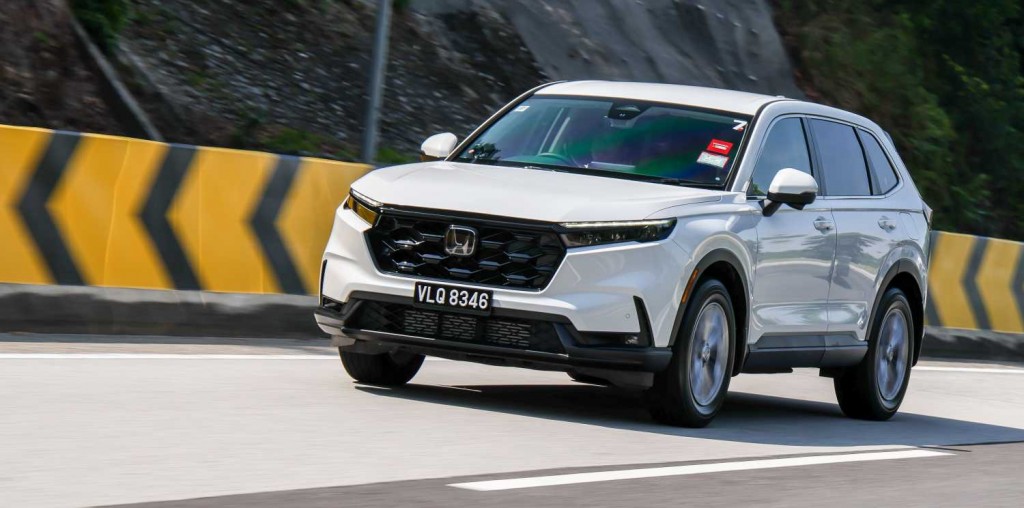
CR-V Turbo AWD.
There’s a grown-up fluency to the way it covers ground; Honda Sensing works unobtrusively, and the driving position is spot on.
Rear-seat space and boot volume remain class strengths.
How does it stack up?
Against the Jaecoo J7 AWD, the Honda cedes some headline kit but answers with a more accomplished ride quality, cabin refinement and more predictable dynamics.
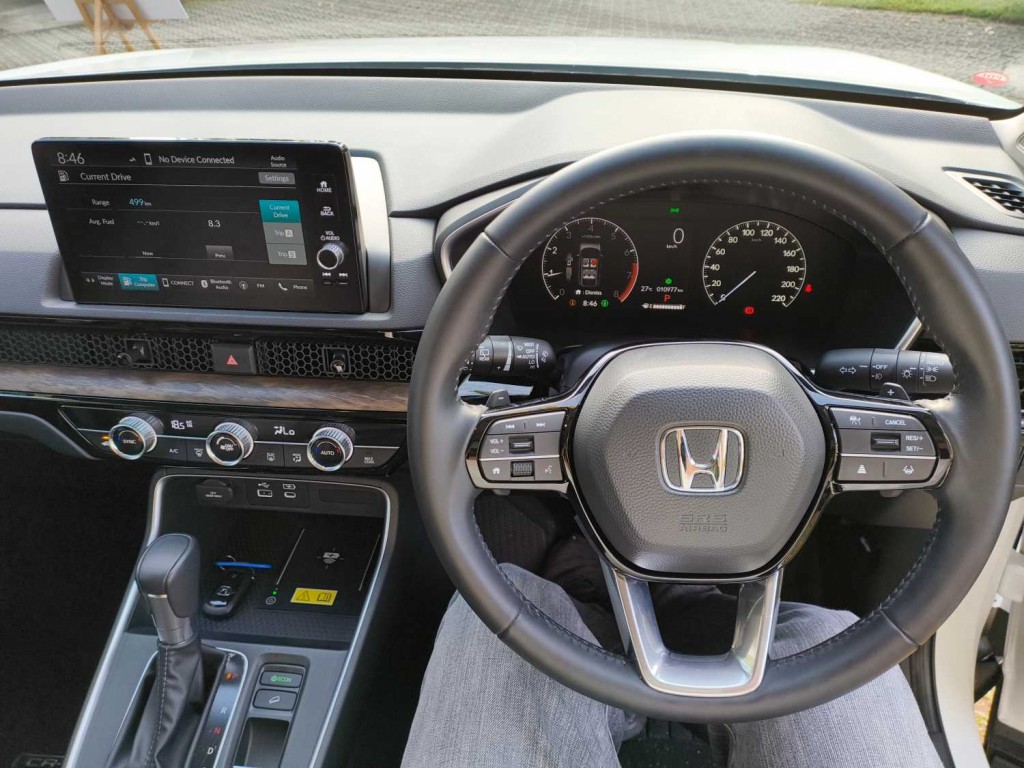
CR-V's premium interior.
Versus the Toyota Corolla Cross Hybrid, which sits a class below, the CR-V can’t match its fuel economy or low-speed hush, yet delivers appreciably more space, better highway composure and cleaner steering feel.
In short, the CR-V isn’t the cheapest or the most flamboyant, but it’s the most complete family SUV of the trio we sampled.
A premium pause: Mangala Estate
Honda Malaysia’s choice of Mangala Estate Boutique Resort for the overnight stopover reads as consistent with the Japanese brand’s accessible-premium positioning.
Set amid lakes and rehabilitated wetlands in Gambang, the villas offer private, quiet spaces, with service and presentation that justify the RM1,000-plus nightly rate.
It’s the sort of place where you hear the cicadas before you hear another guest.
As a staging post it worked: short resort roads for quiet EV crawls, open country routes just beyond the gates for the HR-V and CR-V to stretch, and a tranquil backdrop to digest the convoy’s notes.
The venue didn’t make the cars feel posh; it simply matched the calm, cohesive vibe Honda is pitching.