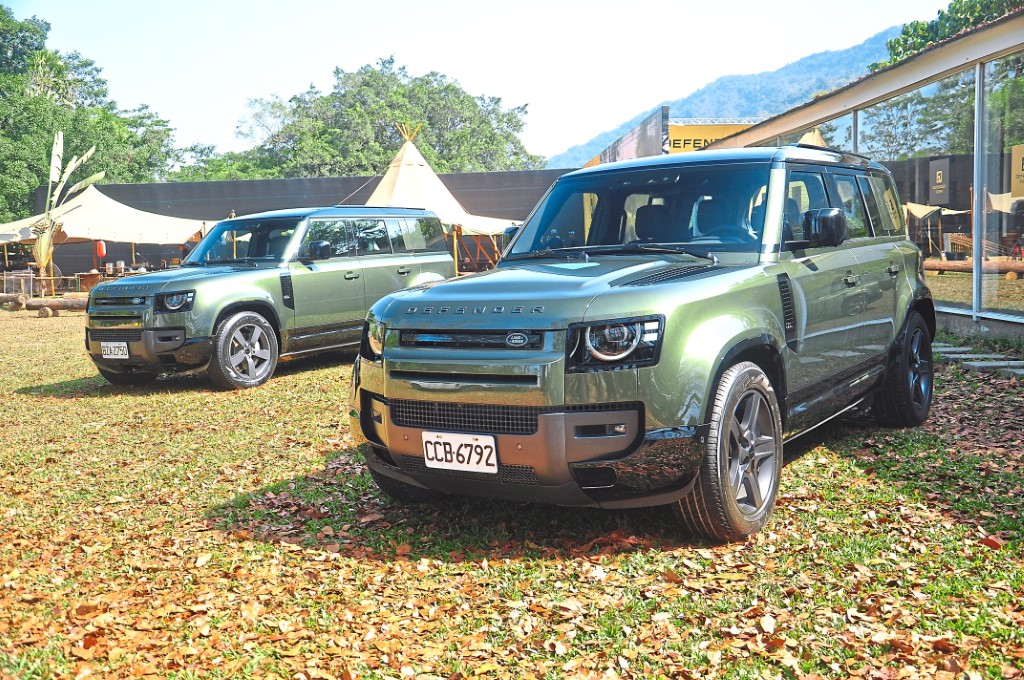
WHILE the petrol-powered Land Rover Defender (L663) variant is expected to anchor sales in Malaysia, it was the diesel-powered D350 variant that quietly emerged as one of the most technically compelling highlights during a recent drive programme in southern Taiwan.
The choice of Kaohsiung as the location is home to indigenous communities such as the Paiwan and Rukai, whose traditions include the “hundred-pace” viper, a symbol associated with protection.
According to local folklore, the sun laid two eggs (one red and one white) on a mountain peak, which were guarded by the viper until they hatched into the first human leaders.
At the core of the Defender is a 3.0-litre inline-six Ingenium turbodiesel, supported by a 48V mild-hybrid system that produces 350PS and 700Nm of torque from just 1,500rpm.
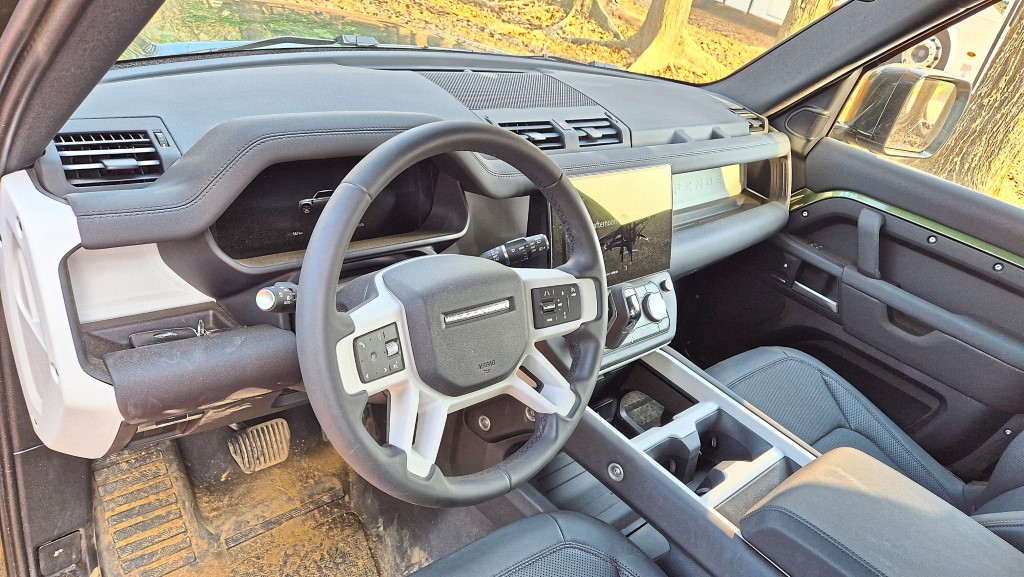
The D350 is engineered for sustained effort rather than outright urgency, with the ability to sprint from 0 to 100kph in 7.1 seconds.
Although this might appear modest, it is behind the wheel that the focus is on accessible, low-end power and overall drivability.
This character became immediately apparent on the transition from Kaohsiung’s urban outskirts to the winding mountain roads leading towards the Sandi Mountain Forest trail.
Here, the D350 settles into a relaxed rhythm, with the mild-hybrid system playing a subtle but important role.
The start-stop system, often a point of contention in diesel applications, operates with notable smoothness.
Restarts are almost imperceptible, thanks to the belt-integrated starter generator, which spins the engine back to life without the usual vibration associated with compression-ignition units.
Throttle response, however, requires a degree of familiarisation.
Unlike a high-strung petrol engine, the D350 does not react instantly to sharp inputs.
Instead, there is an obvious pause between throttle application and forward motion, particularly noticeable at lower speeds or when operating in off-road settings.
This characteristic may initially catch inexperienced drivers off guard, occasionally resulting in a slight surge forward once the torque comes into play.
However, once understood, the behaviour reveals itself to be intentional.
In low-range off-road driving, this calibrated response becomes an advantage rather than a drawback - simply apply some throttle and wait.
Within a brief moment, the engine delivers a controlled wave of torque that allows it to progressively creep forward.
This reduces the likelihood of wheelspin on loose surfaces such as gravel, mud or sand – conditions where excessive throttle input can quickly lead to loss of traction or the vehicle digging itself deeper into the terrain.
The Sandi Mountain Forest trail provided an ideal environment to explore this characteristic in depth.
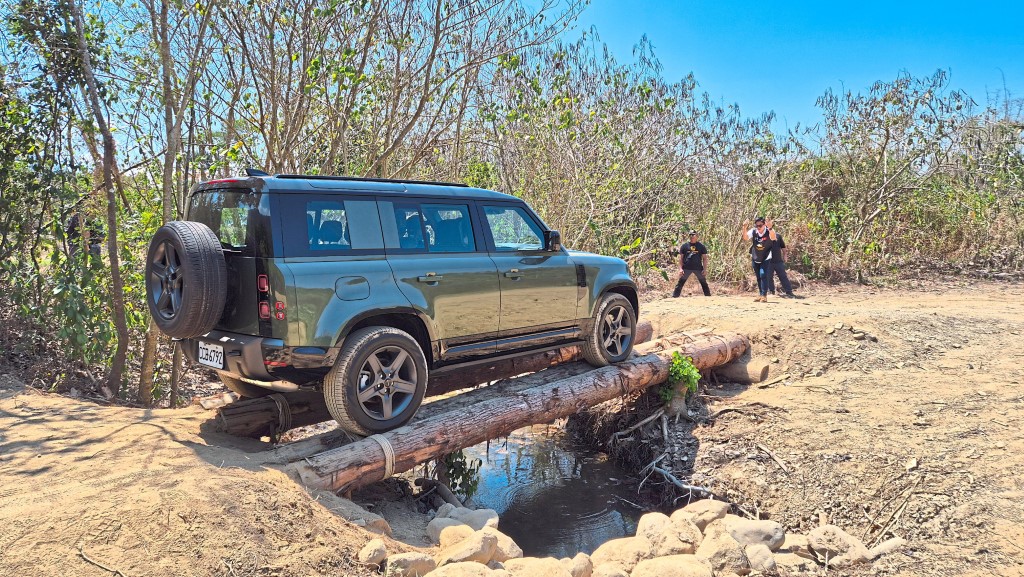
Climbing to approximately 900m above sea level, the route consists primarily of gravel and compacted dirt that incorporates uneven surfaces to demand careful wheel placement.
Engaging low-range gearing and raising the electronic air suspension to its maximum setting transforms the Defender into a highly capable off-road tool.
The suspension itself deserves particular mention, with Land Rover having struck a well-balanced 50:50 mix between on-road comfort and off-road articulation.
On tarmac, the ride remains composed and controlled, absorbing imperfections without excessive float.
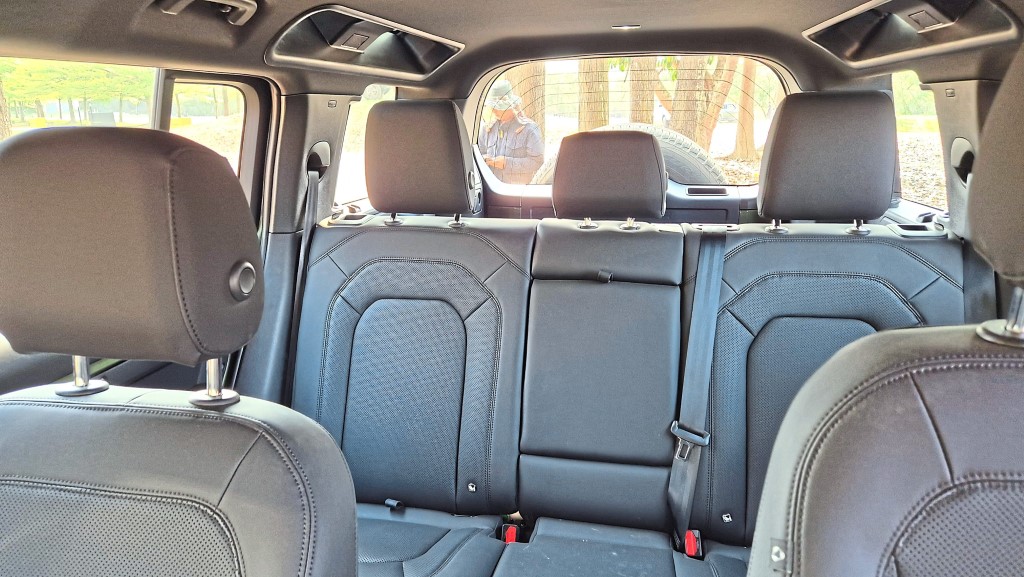
Off the beaten path, the same suspension is still able to allow for sufficient wheel travel to maintain traction over questionable surfaces, and still able to isolate occupants from harsh impacts.
Steering, too, adapts well to the environment, and traversing through the off-road route, it becomes noticeably lighter – reducing effort during low-speed manoeuvres and making it easier to navigate tight, technical sections of the trail.
While it lacks the feedback typically associated with hydraulic systems, the trade-off is improved ease of use, particularly for drivers who are less experienced in off-road conditions.
Throughout the ascent, the Defender’s suite of electronic aids proved invaluable.
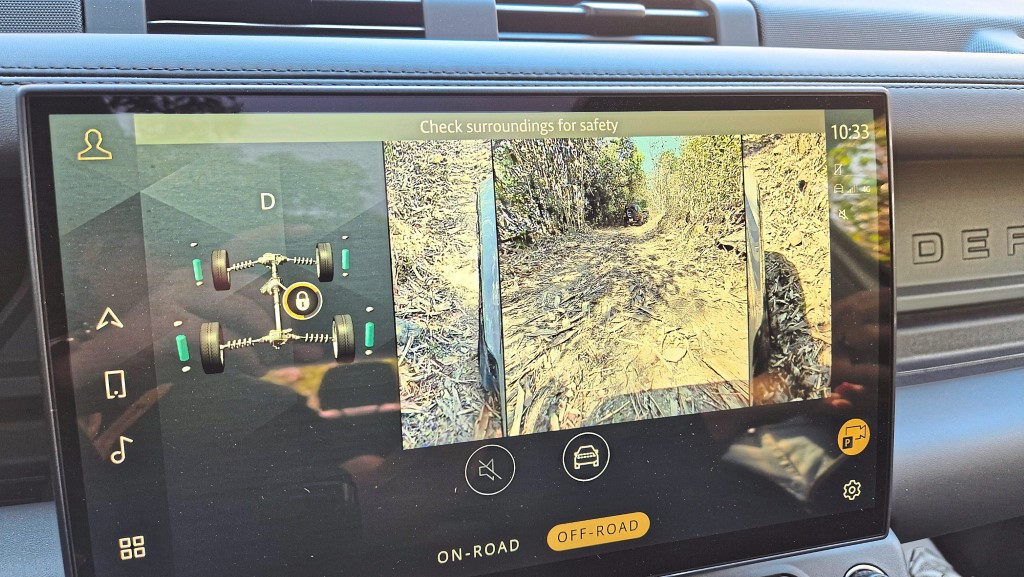
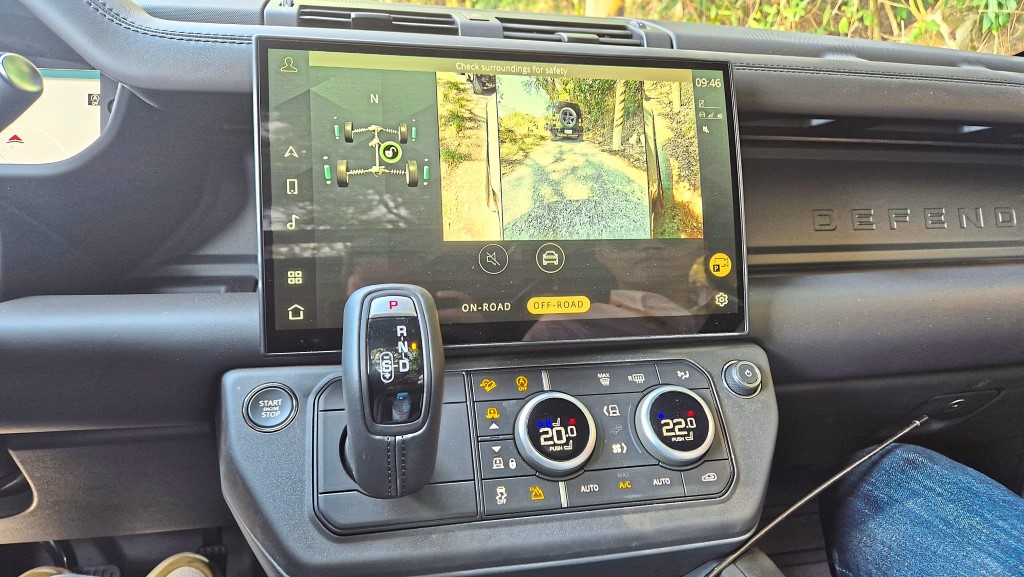
The Terrain Response system, when set to Grass, Gravel and Snow mode, optimises throttle sensitivity, gearbox logic and traction control.
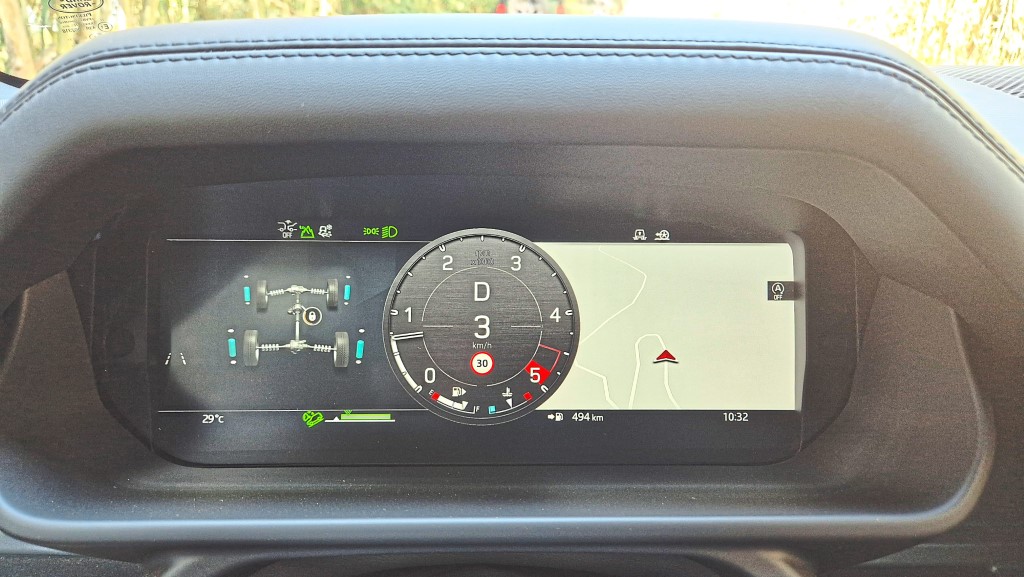
Complementing this is a high-resolution camera system, offering clear forward and surround views that assist in placing the vehicle accurately - especially useful when cresting blind sections or negotiating uneven ground.
There were, however, subtle reminders of the physical demands placed on the vehicle.
Over particularly uneven sections of the trail, minor creaks could be heard from within the cabin structure.
These noises seem to be consistent with chassis flex when traversing off-camber terrain and serve as an indicator of the route’s severity.
Returning to paved roads further highlighted the D350’s dual-purpose nature.
Despite its off-roading abilities, it remained a capable long-distance cruiser where the engine is able to settle into a hum at highway speeds.
Meanwhile, the suspension maintains composure over varying road surfaces that reinforces the notion that the Defender, even in diesel form, is not a single-purpose vehicle but rather a versatile platform suited to a wide range of driving conditions.
Compared with the petrol-powered P400 variant for Malaysia, the D350 offers a different take on performance.
Where the P400 offers quicker acceleration and a more immediate throttle response, the D350 focuses on sustained torque delivery and efficiency.
Both share identical off-road hardware, including a 900mm wading depth and an advanced Terrain Response system, ensuring that capability is not compromised regardless of powertrain choice.
Ultimately, the D350 appeals to a specific type of driver – one who values control, durability and effortless progress over outright speed.
Its strengths are best appreciated not in short bursts of acceleration, but in the way it maintains momentum across difficult terrain with minimal strain.
In such a context, the diesel Defender continues to uphold a long-standing tradition that’s less about drama and more about dependability – an approach that remains highly relevant for those who enjoy venturing beyond conventional roads.