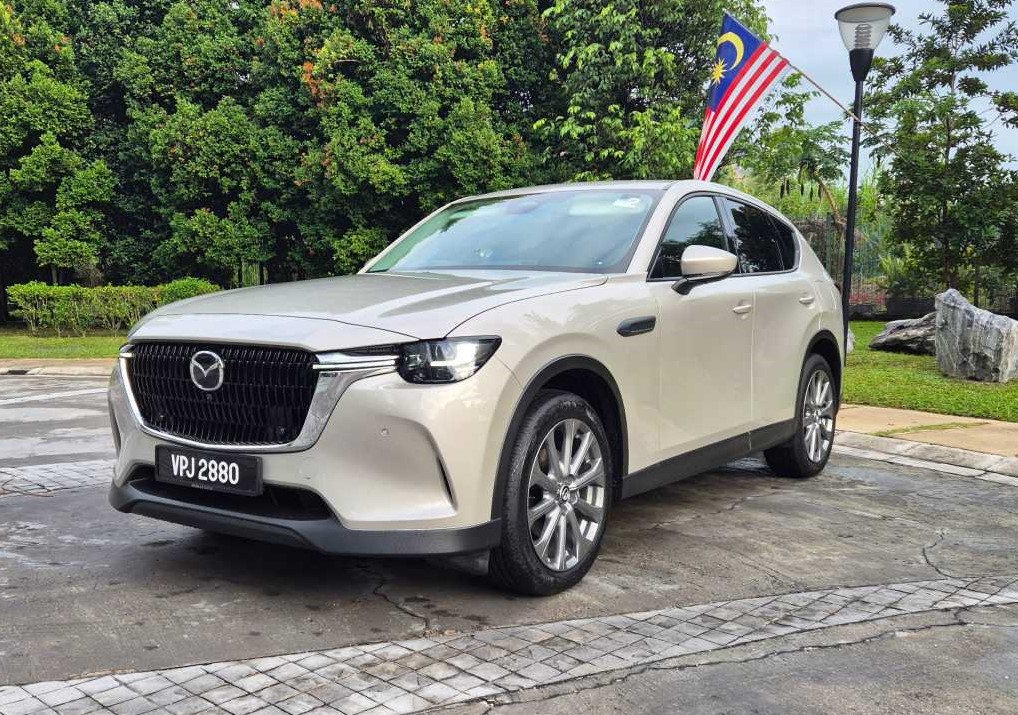
THE CX-60 is Mazda’s first step into the premium mid-size sports utility vehicle (SUV) segment in Malaysia, positioned above the long-standing CX-5.
Built on a new rear-wheel-drive platform, the CX-60 represents Mazda’s push upmarket with a sharper focus on design, craftsmanship and driving engagement, while aiming to stand as a Japanese alternative to European makes by blending elegance, technology and the carmaker’s signature Jinba-Ittai driver-focused philosophy.
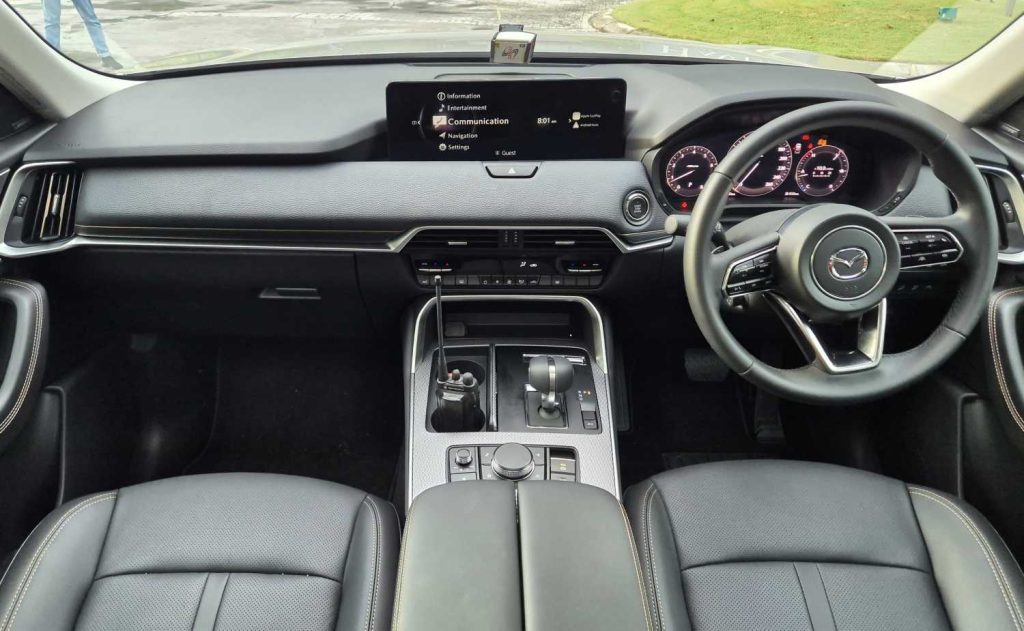
In terms of size and stance, the CX-60 makes its presence felt through its extended hood and rearward-set cabin that brought to mind the proportions of the first-generation BMW X1 (E83), which combined the practicalities of a station wagon with an SUV - thus justifying the inclusion of the CX-60’s “crossover” designation.
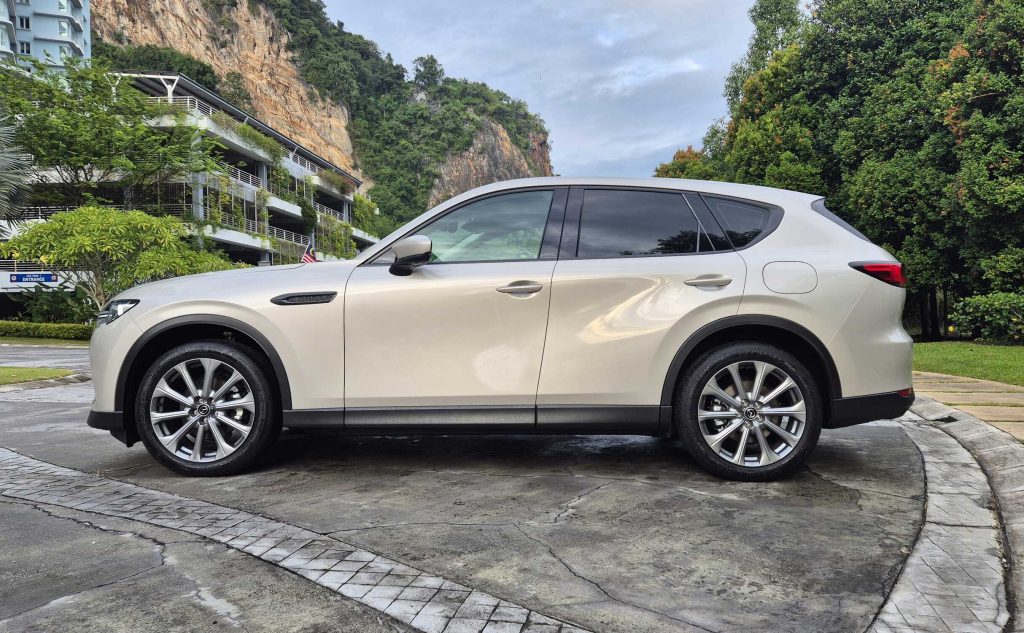
Besides the bonnet-to-cabin proportions, which may divide some opinions, the CX-60’s overall execution gives it a road presence that feels both upscale and distinct.
Though the brand’s design cues remain inherently evident, with a sharp, angular nose paired with slim, aggressive headlights to give this SUV a striking front end.
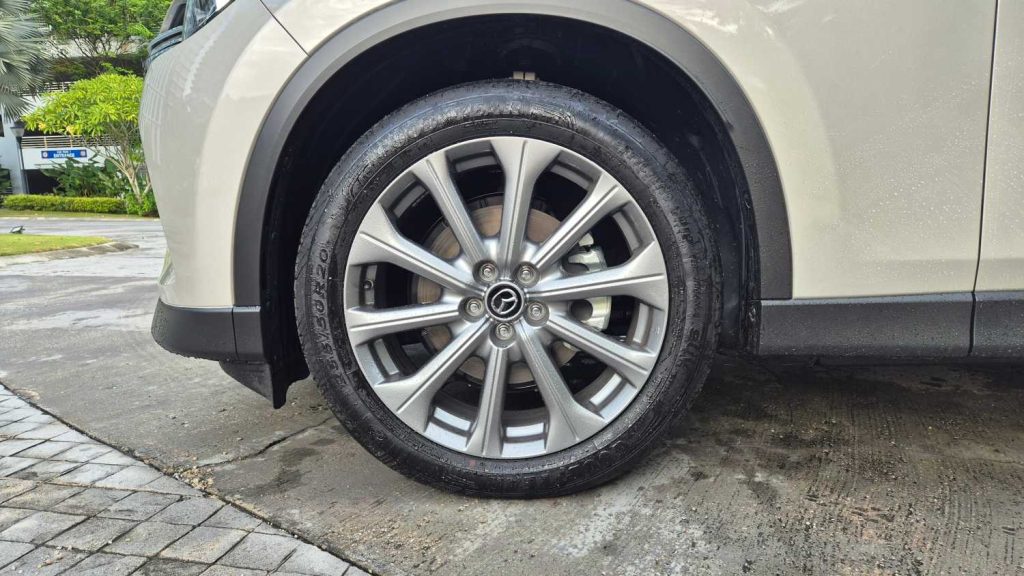
Additionally, the flowing muscular flanks add sportiness and elegance to render a bold look that’s further emphasised by cavernous wheel arches that are properly filled by its 20-inch wheels.
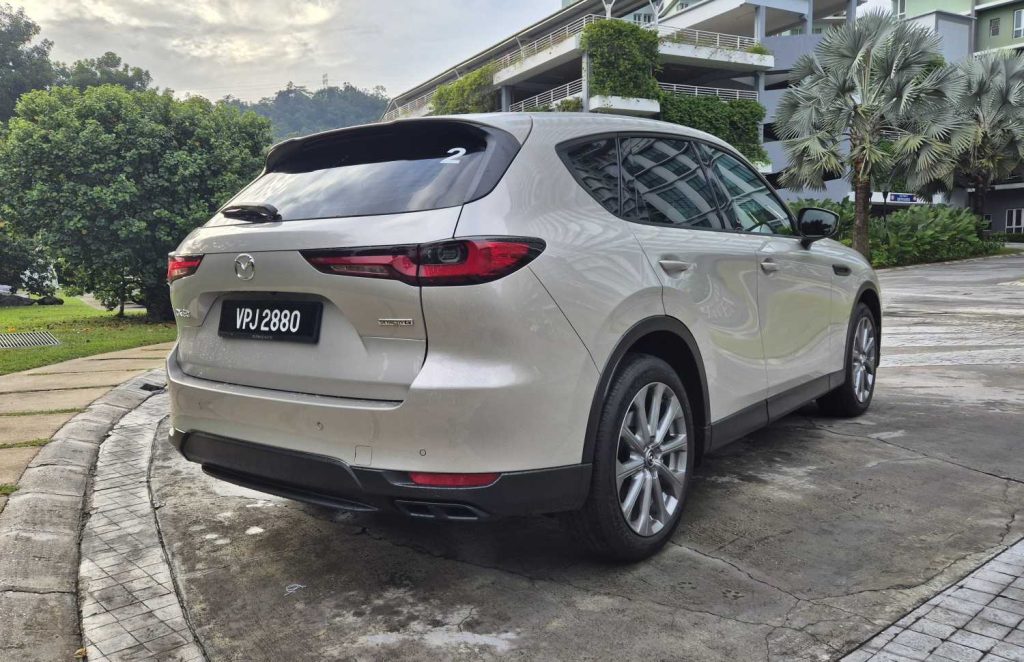
Stepping inside and the intention to push into premium territory is immediately clear.
Visually, the cabin is dressed in soft touch materials, Nappa-like leather upholstery and tasteful trim elements, giving it an air of refinement with its wide digital displays and neatly integrated controls reinforcing the sense of modernity.
Physically, though, the interior finish, while good, seemed to fall just short of the polish when measured against its price tag and may leave some questioning its value proposition.
On the move, the CX-60’s rear-wheel-drive underpinnings come into play, offering balanced handling and composed road manners.
Through the winding B-roads en route to Ipoh, the SUV felt confident and planted, with enough steering precision to inspire confidence.
Ride quality leaned towards the firmer side but remained controlled and especially compliant while at highway speeds.
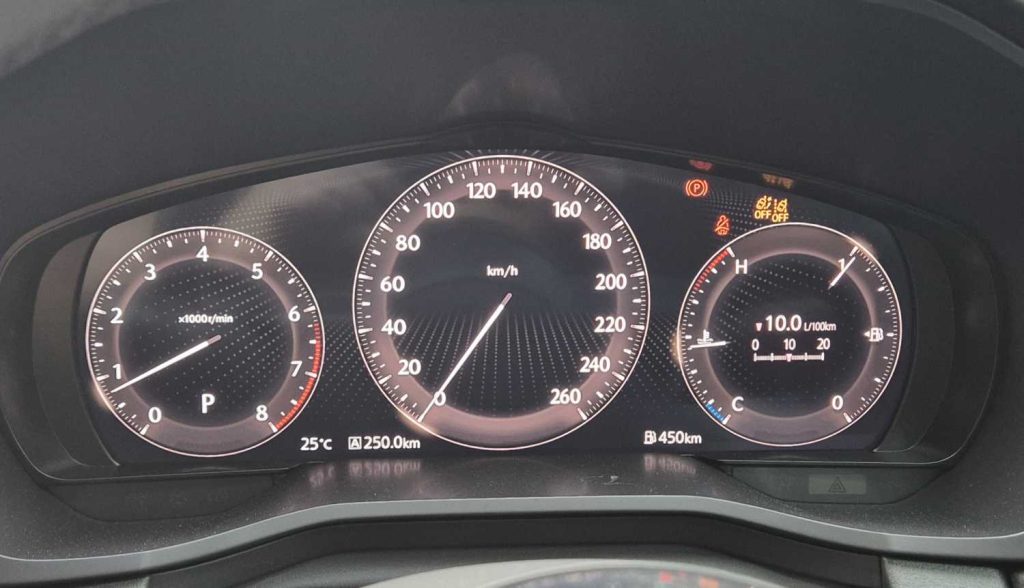
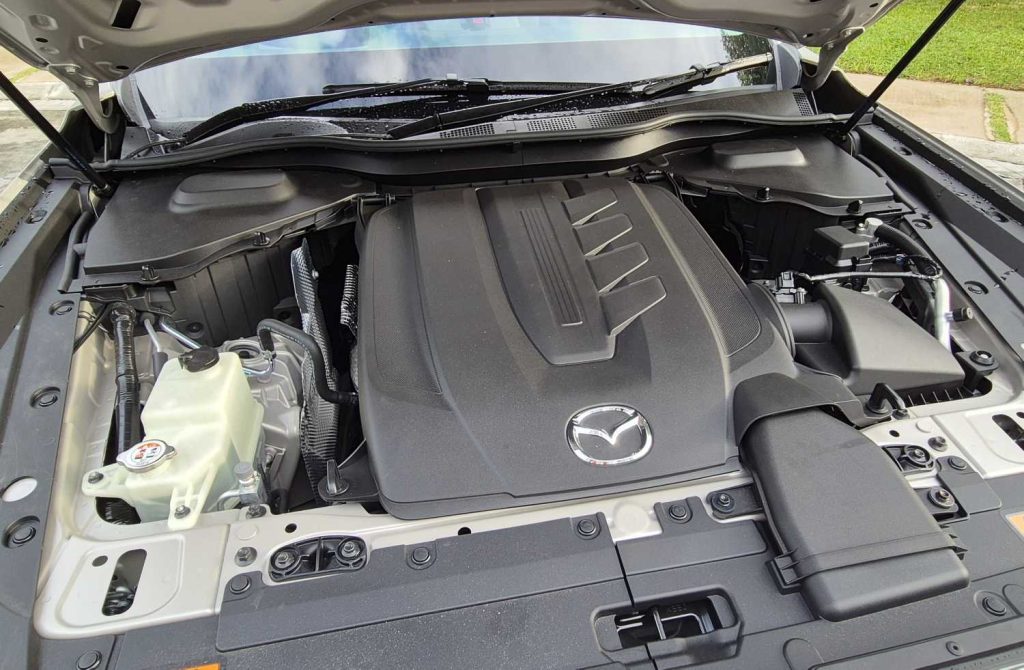
The 198hp and 261Nm of torque from a 2.5-litre naturally aspirated (NA) engine that’s paired to an eight-speed automatic (without a torque converter) delivered smooth and linear acceleration.
However, when pushing the CX-60 from standstill, while in Normal driving mode, it will seemingly have it residing on the sluggish end of the spectrum, and it simply does not wish to downshift while cruising about - unless there’s excessive throttle input or paddle-shifters are used.
Engaging Sport mode will add more life to the CX-60, with the transmission now more eager to down-shift and directly access the engine’s powerband, which seems to begin somewhere around the 3,500rpm mark.
Even from a standstill, the engine will seem to lack some punch, but this would only be more evident to those accustomed to turbocharged engines.
Regardless, the 2.5-litre mill is still a competent runner, able to reward those willing to work with higher revs that come with the usual progressive power delivery associated with such engines.
With the eight-speed automatic, the engine is able to impressively remain at lower revs during excessive highway speeds.
At 100kph, the engine is performing under the 2,000rpm mark, and if pushed up to 170kph and it’s somewhere above 3,000rpm.
During relaxed cruising, the CX-60 stays quiet and composed, with many appreciating the level of insulation accorded to the cabin, but at higher revs, the engine’s notes were able to permeate inside.
Another point worth noting is its braking feel, which carries an inherently Japanese character where the brake pedal is tuned for a progressive, measured response rather than having a definite or almost immediate bite more commonly found in European makes.
This does make it easy to modulate in everyday driving and contributes to a smoother, more refined experience around town.
Considering the CX-60’s road abilities, a slightly more aggressive brake feel could have been a better match in this case, with those familiar with a sharper, more aggressive brake tuning may perceive the CX-60’s setup as softer at initial pedal press.
Overall, the CX-60 does blend elegance, refinement and composure rather well.
While the NA mill may seem to lack that low-end punch turbocharged drivers are accustomed to, it still delivers a smooth and engaging drive - so long as drivers are willing to work at high revs, and when factoring in its Japanese-flavoured refinement together with its dynamics, this SUV priced at RM200,510 still makes a strong contention.