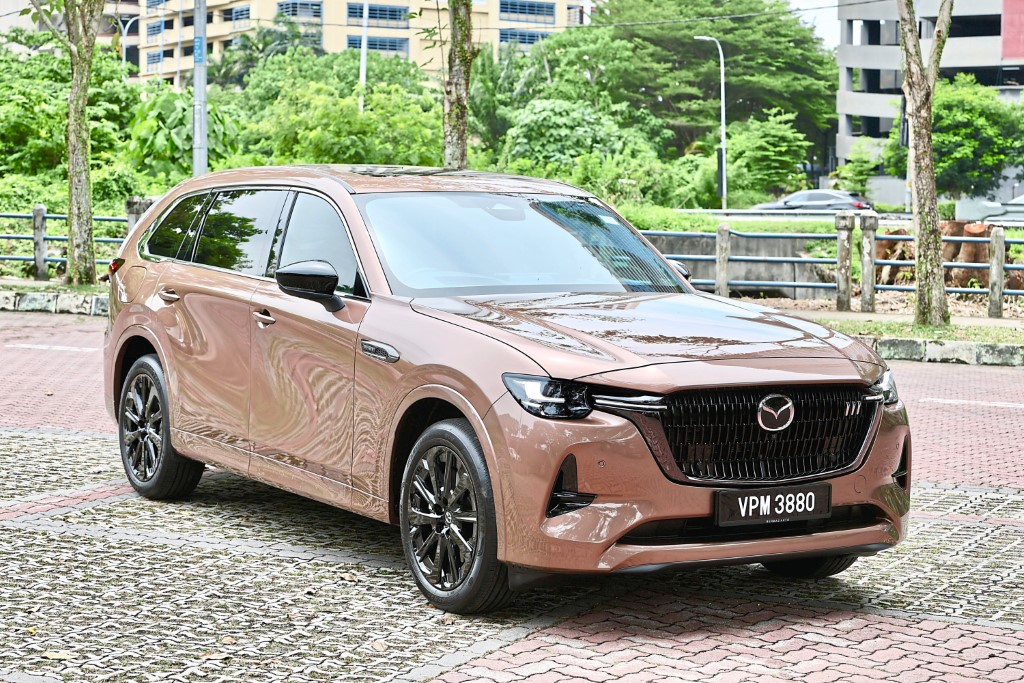
MAZDA hails a new flagship in the CX-80 plug-in hybrid electric vehicle (PHEV) that boasts an even higher level of luxury motoring and that is clearly needed to weather the challenges from the Chinese brand “tsunami”.
This replaces the Mazda CX-8 that was first introduced to the market in 2019 as a locally assembled model to serve as its version of luxury motoring.
Back then, we had a brief drive in Kulim, Kedah near the Inokom factory where the CX-8 six-seater was assembled to revel in the level of automotive luxury that Mazda had to offer.
Today, its replacement, the CX-80 is a complete build-up (CBU) model as it might not sell in the numbers that would make it a good financial move as a CKD (complete knock-down) model, especially against so many fancied and well-equipped rivals from China.
In a way, the CX-80 gains an added level of prestige as an imported model that justifies its price of just under RM300,000 at RM296,610.
That makes the CX-80 a lot more appealing against the price it was originally launched with; RM331,610 on the road without insurance.
Bermaz Motor probably persuaded Mazda to lower the price so that the CX-80 would have a more competitive standing against its rivals.
Actually, the price reduction was part of a general strategy applied across the Mazda range to shore up appeal and address weakening demand.
What’s perhaps more important with the CX-80 is that it is a PHEV, which gives it a strong footing in the Malaysian arena as the next best thing to a BEV (battery electric vehicle).
It’s Mazda first foray into the local hybrid sector and obviously, there are no half measures by going the whole hog as a PHEV.
Unlike the CX-8 that was offered with three internal combustion engine (ICE) variants, the CX-80 would only be available as a PHEV, influenced no doubt by the current market trend.
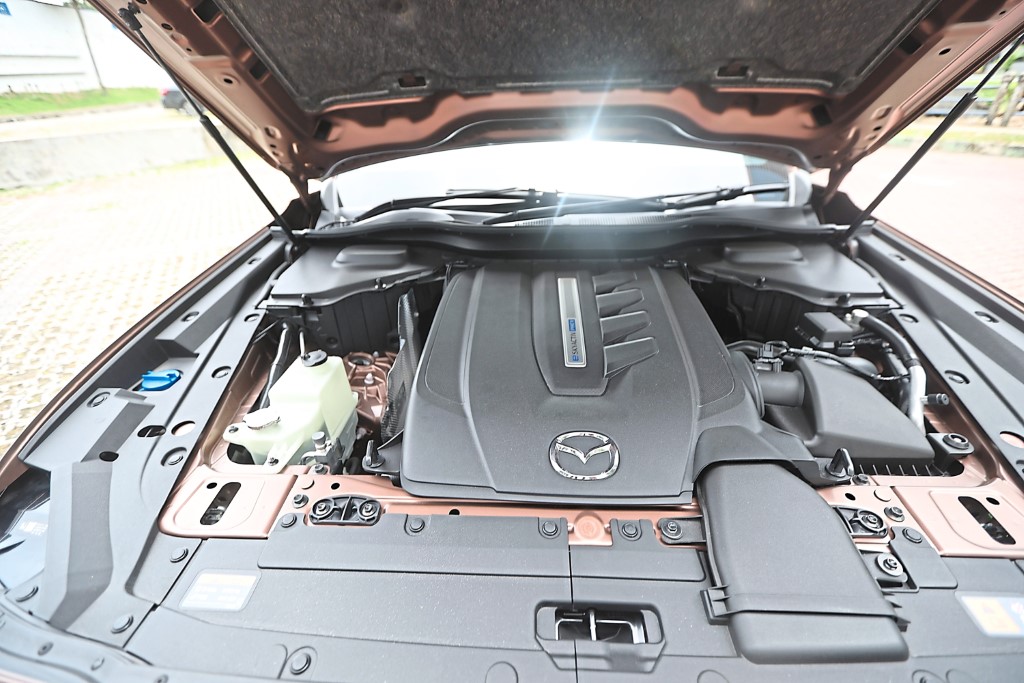
Based on the non-turbo 2.5-litre engine of the CX-8 as the base, the block output varies slightly with that in the CX-80 delivering 139kW (189hp) and 261Nm of torque.
The advanced 2.5L e-Skyactiv PHEV system features a 17.8kWh lithium-ion battery and electric motor system with output of 126kW (172hp) and 270Nm.
Mazda says the combined output is 237kW (323hp) and 500Nm, which is channelled to all four wheels via an eight-speed EAT (electronic automatic transmission) AWD (all-wheel drive) system.
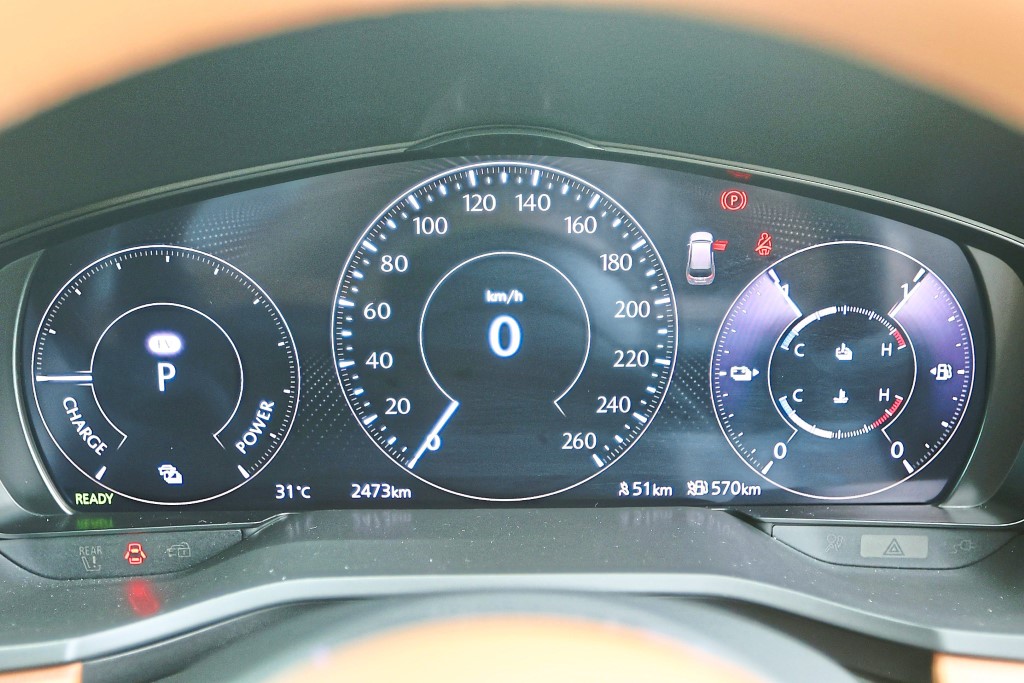
While the claimed top speed is modest at 195kph, it’s the combined fuel efficiency that is its major draw at 1.6 litres/100km (62.5km/l) (NEDC – New European Driving Cycle).
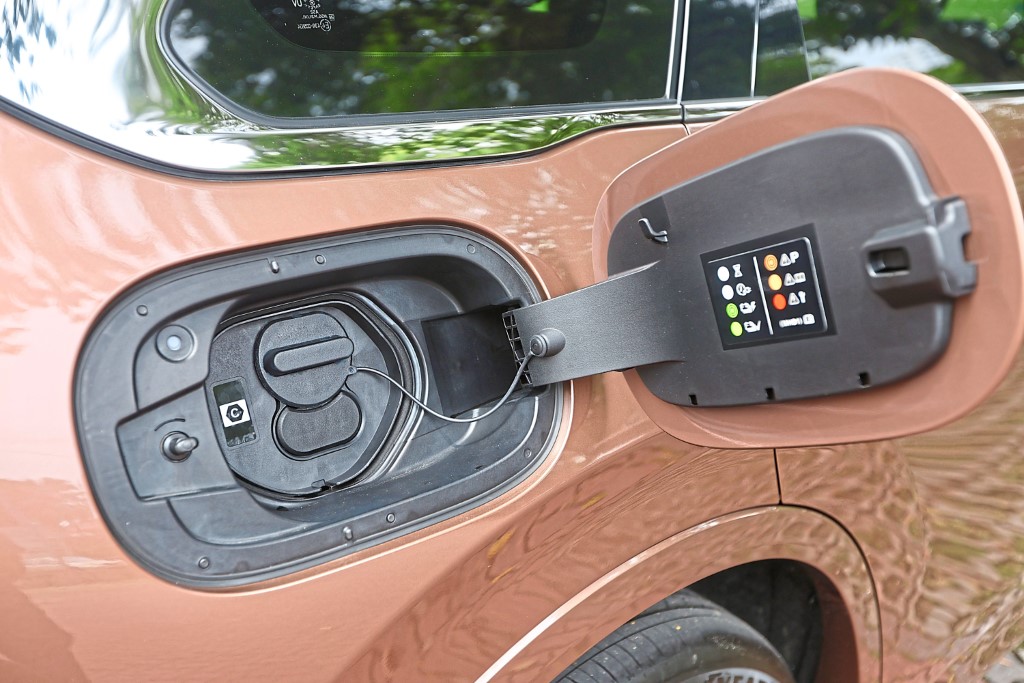
Likewise, the EV driving range is 65km based on the same standard and the AC charging rate is either about six hours or two hours and 30 minutes based on the mode.
During our weekend with the CX-80, we were on EV mode for half of it as the drive was mostly in the urban centre, with minimal highway runs.
When the EV range was exhausted, the battery was sufficiently charged during braking and deceleration to provide some electric assistance during initial acceleration and overtaking.
As a PHEV with a fairly big battery, the CX-80 is a heavy sports utility vehicle (SUV) at 2,342kg while the CX-8 in all its three engine variants tip the scales below 1,900kg.
Although the combined output made driving the CX-80 an effortless affair, the engine output by itself was good enough to do the job with some electric assistance.
The difference was that we could hear the engine revving up against the silent EV running experience.
While we have three AC chargers in our residential ground, we didn’t have the app to use them, thus leaving the battery uncharged.
Yes, the battery in a PHEV has to be regularly charged too like a BEV or else the battery could depreciate quickly in service life.
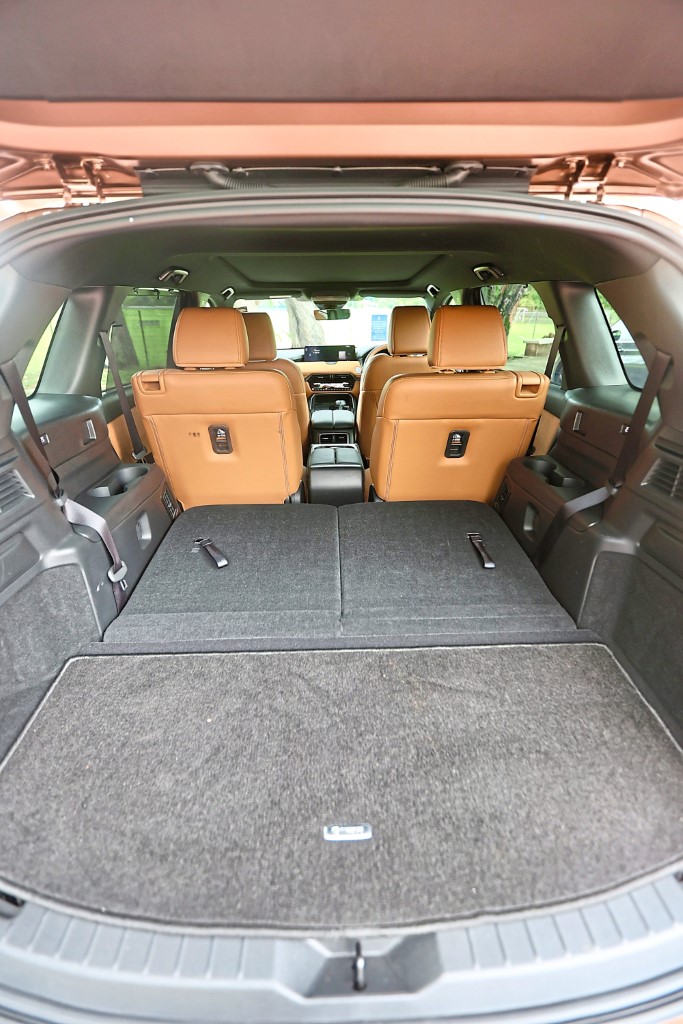
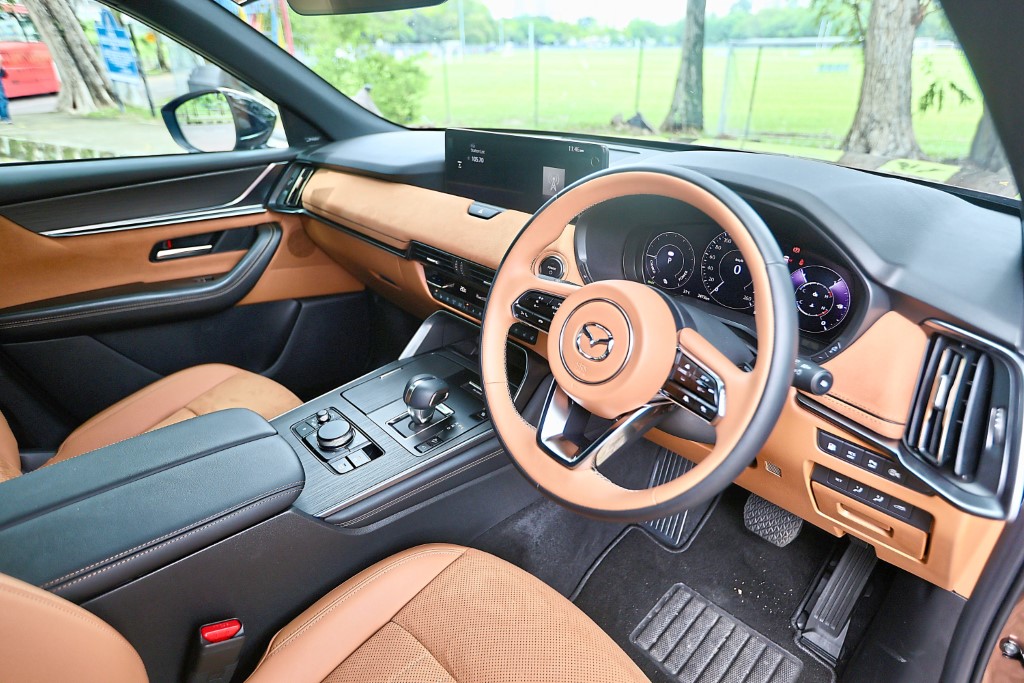
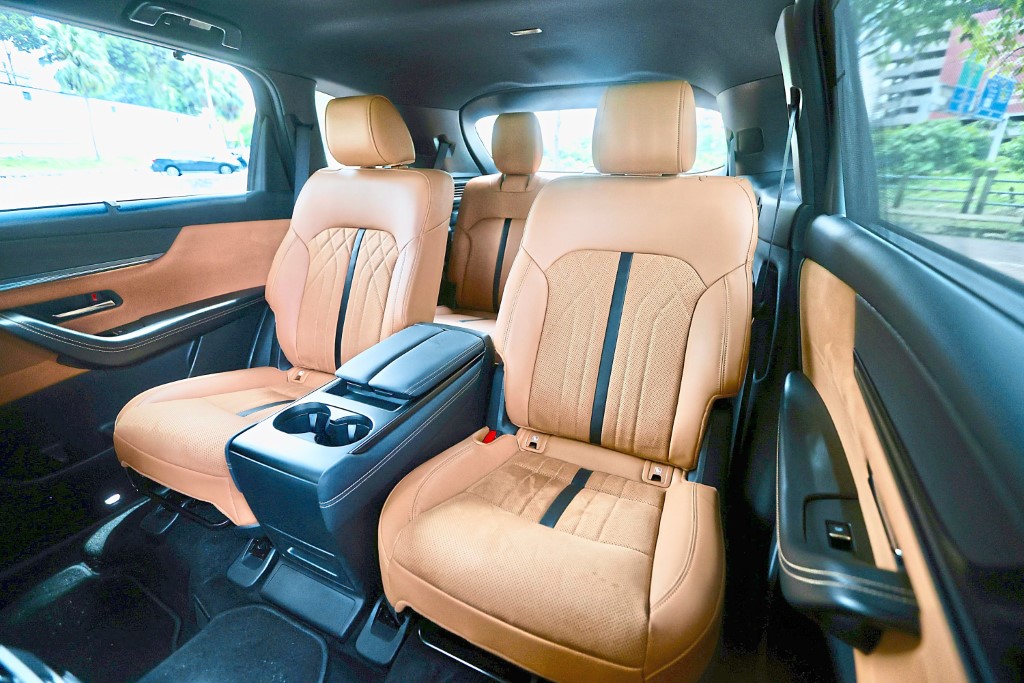
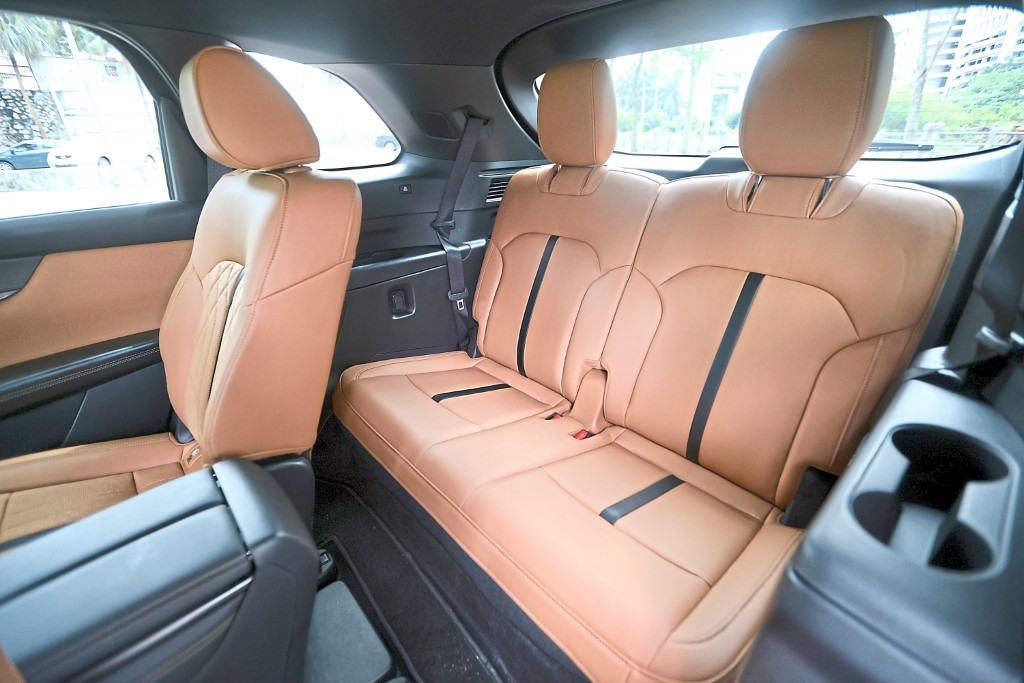
The luxury factor in the CX-80 is visually feasted on in the tan Nappa leather upholstery and the Captain’s seats with centre console for the second row.
The third row with 50:50 split seat rests is best for adults on short trips or children on long distance runs.
The panoramic sunroof is a must to rub shoulders with rivals and our favourite item, the HUD (head-up display) is also standard fare.
The preset button for the driver’s seat position (two) is located on one of the two control panels on the lower dashboard to the right of the steering wheel.
When we engage reverse, we not only have the visuals from the rear camera and 360-degree view camera on the 12.3-inch centre display but also the driver’s door mirror.
It would automatically angle downwards so that we could use it to see the parking spot boundary line as a guide.
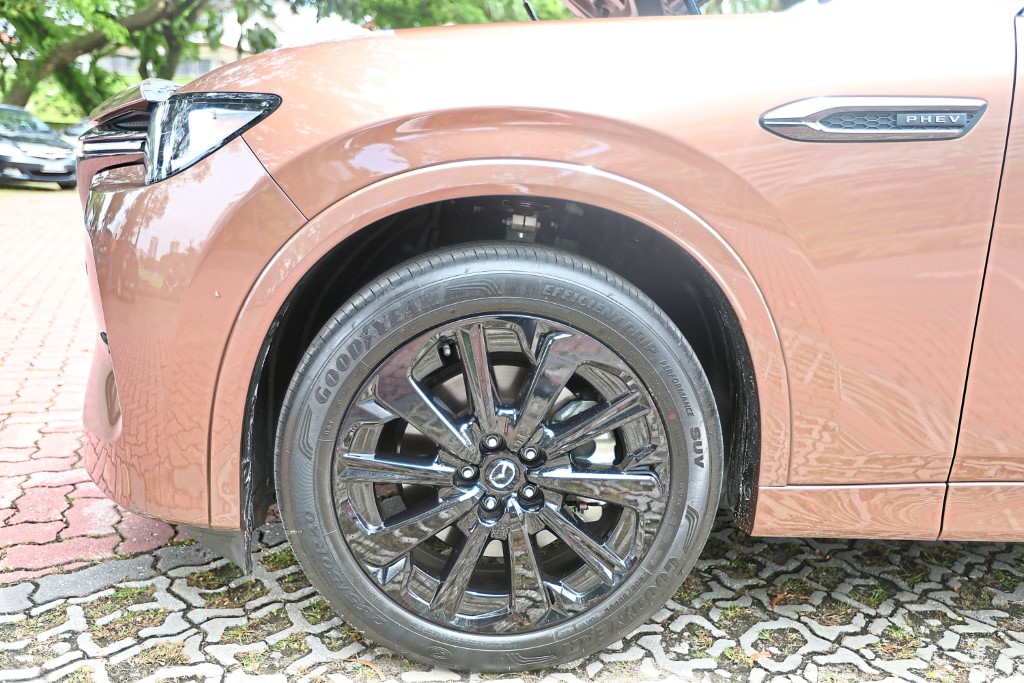
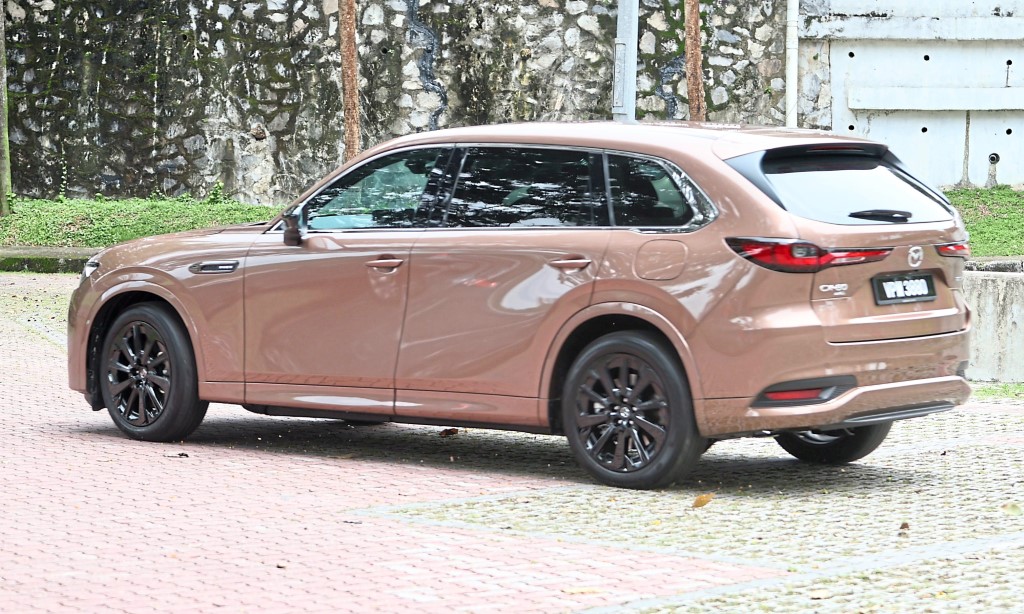
The CX-80 has front double wishbone and rear multi-link rear suspension, and 20-inch alloy wheels with 235/50 R20 Goodyear EfficientGrip tyres.
Ride was firm but comfortable and that made our daily drives over roads with bad patches, potholes, bumps, speedbumps of all shapes and sizes a decent one.
Perhaps the best testament to that is the vertigo test; I had to take the missus to seek medical assistance for her severe vertigo malaise twice.
And on both times, with gentle progressive and jerk-free driving, we did it without exacerbating the her “giddy” condition and having her throw up.
The good and supple ride quality helped, along with the accommodating and comfortable Captain’s seats.
With a wheelbase of 3,120mm, the CX-80 is a big SUV with a body length that almost reaches five metres at 4,995mm.
Negotiating the ramps in our condo required a more measured manoeuvre than with our own CX-5 and the 360-view camera helped, giving us a fair idea of how close we were to the cement walls.
We didn’t have the chance to take the CX-80 through our favourite winding roads but the few corners and sweepers that came our way were taken in good confidence.
The CX-80 comes equipped with a Kinetic Posture Control (KPC) that Mazda says “refines cornering balance by subtly adjusting brake force to individual wheels, reducing body roll and maintaining composure through every twist and turn.
This luxury SUV is not a vehicle that one would ordinarily go gung-ho driving through winding stretches but it is good to know that it could handle the situation if needed.
While the CX-8 impressed us on its luxury ways during the brief drive some six years ago, the longer drive experience in the CX-80 affirmed our conviction that it would easily fulfil its flagship role well up to expectations.
SPECIFICATIONS
Mazda CX-80 2.5G PHEV AWD High Plus
Engine: 2,488cc, four-cylinder, inline4, direct injection
Maximum power: 189hp/139kW at 6,000rpm
Maximum torque: 261Nm at 4,000rpm
Electric motor power: 172hp/126kW
Electric motor torque: 270Nm
Combined system power: 323hp/237kW at 6,000rpm
Combined system torque: 500Nm at 4,000rpm
Transmission: Eight-speed EAT AWD
Top speed: 195kph
Features: Front LED (light emitting diode) headlamps and rear LED combination taillamps, with Signature illumination, door mirrors with position memory, power sunroof with sliding and tilt glass, body cladding in body colour, leather dashboard trim with stitching and gunmetal panel, active head-up display, paddle shifters, 10-way power adjustable front seats (two position memory for driver seat), second row Captain’s seats with centre console, tan Nappa leather seats, Kinetic Posture Control (KPC)
Price: RM296,610 (on the road without insurance)