PERODUA has a system that it has been working with for decades.
Its a pattern we’re mostly familiar with - introduce an economically-trustworthy model and slowly let Malaysians see its value.
Every so often a hit-or-miss model will come our way to stir up a bit of excitement in the lineup.
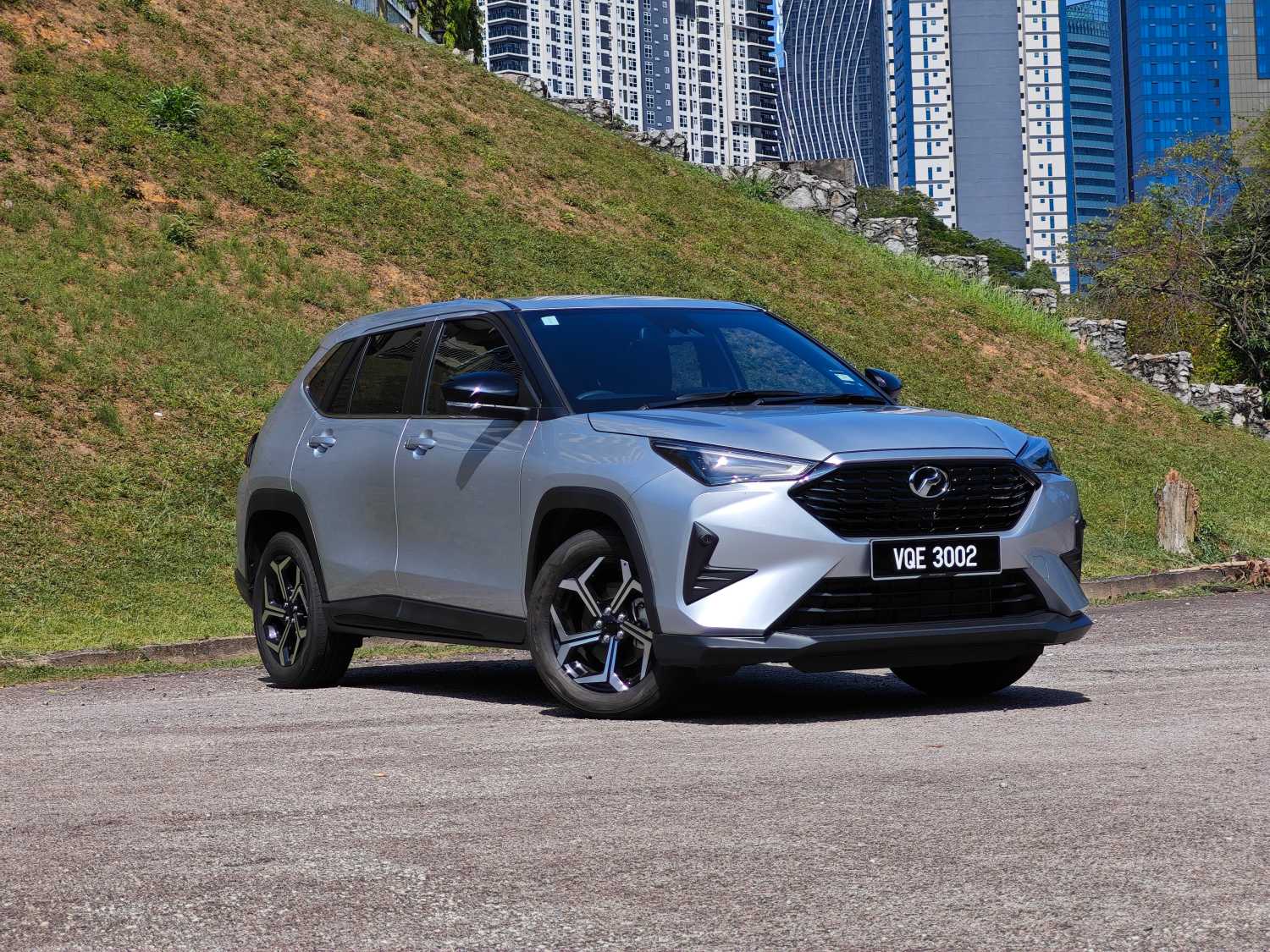
Which explains the elation in the air over the arrival of Perodua’s new compact crossover sports utility vehicle (SUV).
Only natural given it has almost been two years since the country’s leading national automaker has put out a new model.
In its shadow is the anxiousness that follows.
Malaysians are curious for not only what sort of model we’re getting this round but also how well it drives.
But trust in Perodua to deliver the goods where it counts most.
And unlike their previous models, the Traz is something special as far as the brand’s history of models go.
Its specifications are decent.
Available in variants of X and H, the Traz houses a 1.5-litre four-cylinder DOHC engine that’s paired to a D-CVT system to produce 105hp and 138Nm of torque.
Nothing too outlandish but you do get three drive mode options of Eco, Normal and Power for some fun.
Cabin comes with your modern market updates.
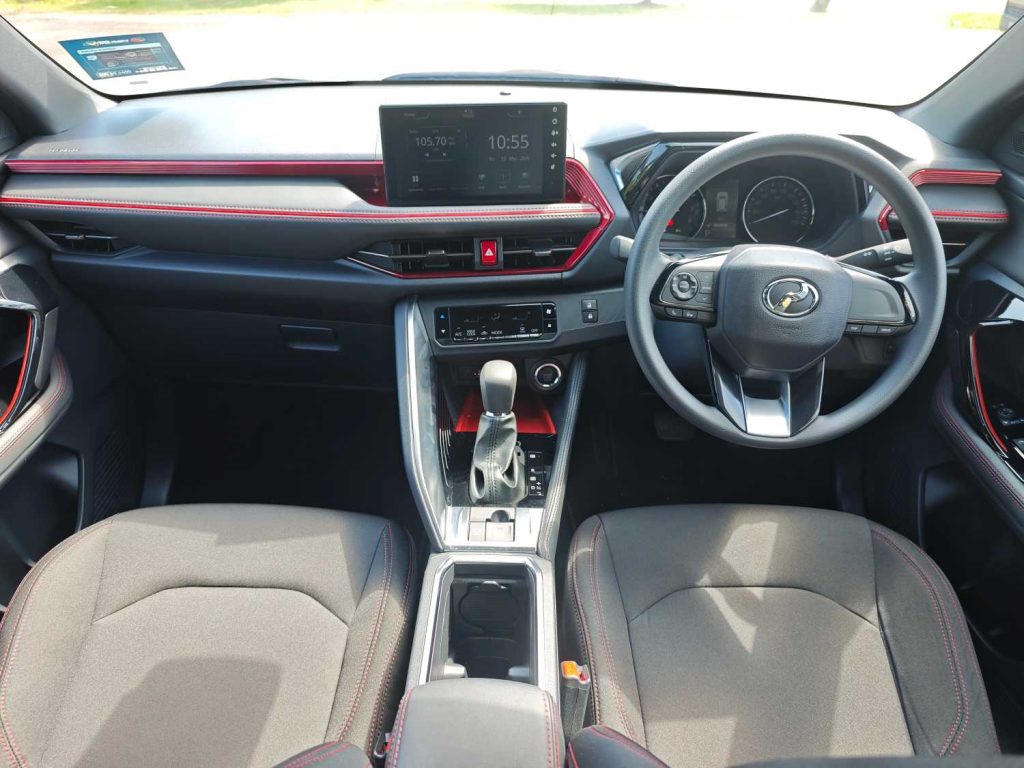
Standard is a 9.0-inch multimedia display audio that supports Android Auto and Apple CarPlay connectivity, a 4.2-inch TFT meter combination, a 12V power socket, Type-A and Type-C ports (one each) for the front occupants, two Type-C ports for rear passengers, rear air-conditioner vents and a push-start button.
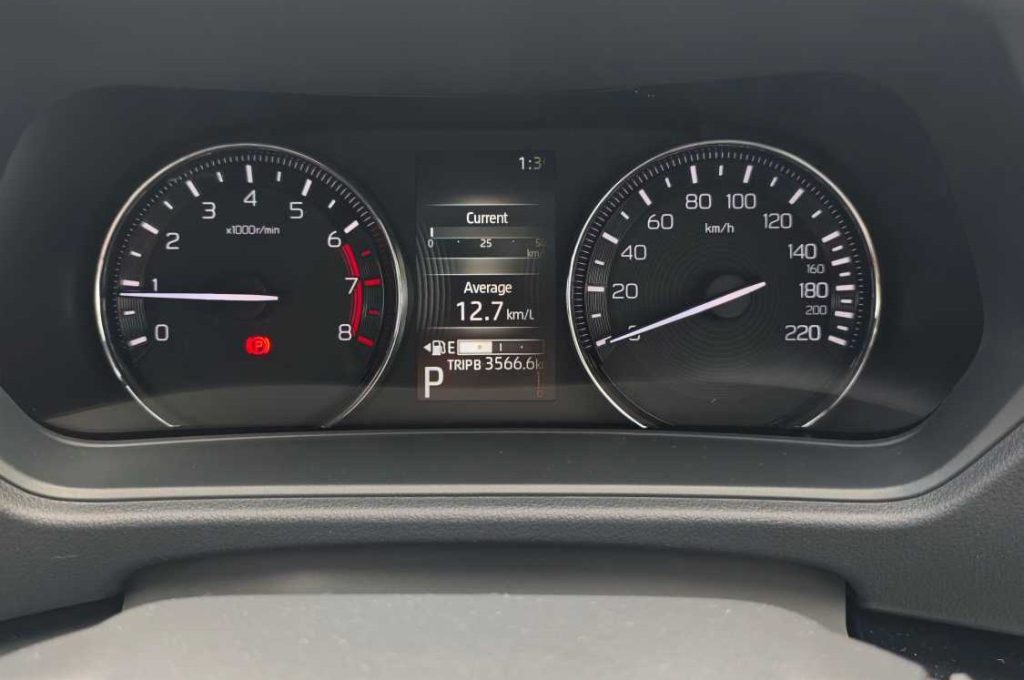
Both variants share 17-inch alloy wheels, six airbags with Electronic Brake-force Distribution (EBD) and Emergency Stop Signal (ESS), all-round disc brakes, Pre-Collision Warning, Pre-Collision Assist Brake for vehicles and pedestrians, Front Departure Alert and Pedal Misoperation Control.
Earning itself a NCAP Asean five-star rating, its Advanced Driver Assistance System (ADAS) comes complete with Lane Departure Warning (LDW), Lane Departure Prevention (LDP), Blind Spot Monitor (BSM), Front Corner Sensors, Rear Sensors, Reverse Camera, and Rear Cross Traffic Alert (RCTA), solar and security film and ISOFIX child restraint system.
If you’re gunning for the H variant then you’ll get extras like auto mode air-conditioner, 360-degree panoramic view monitor, hill hold system, leather steering wheel and shift knob, power tailgate with motion sensing and digital video recorder.
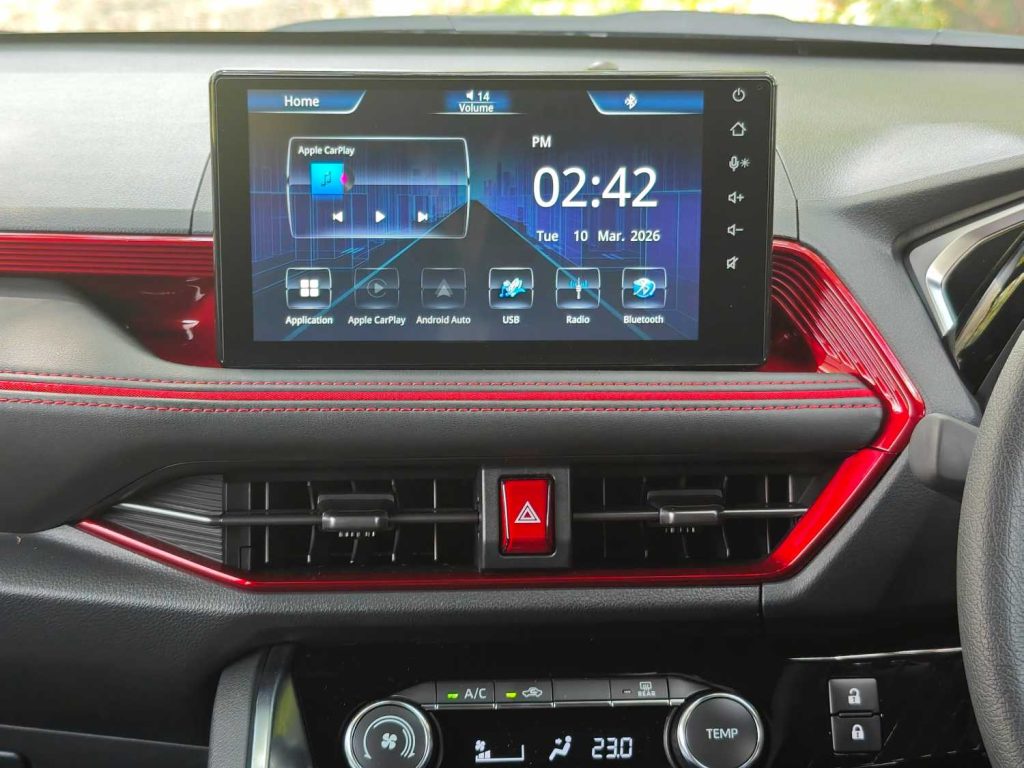
Standard affair with some tweaks.
Thing is generally, Perodua models are pretty much Daihatsus either based-off or rebadged right from the start.
Which is usually rougher in quality especially on the interior when you compare them to the slightly more premium Toyota variant of the same model.
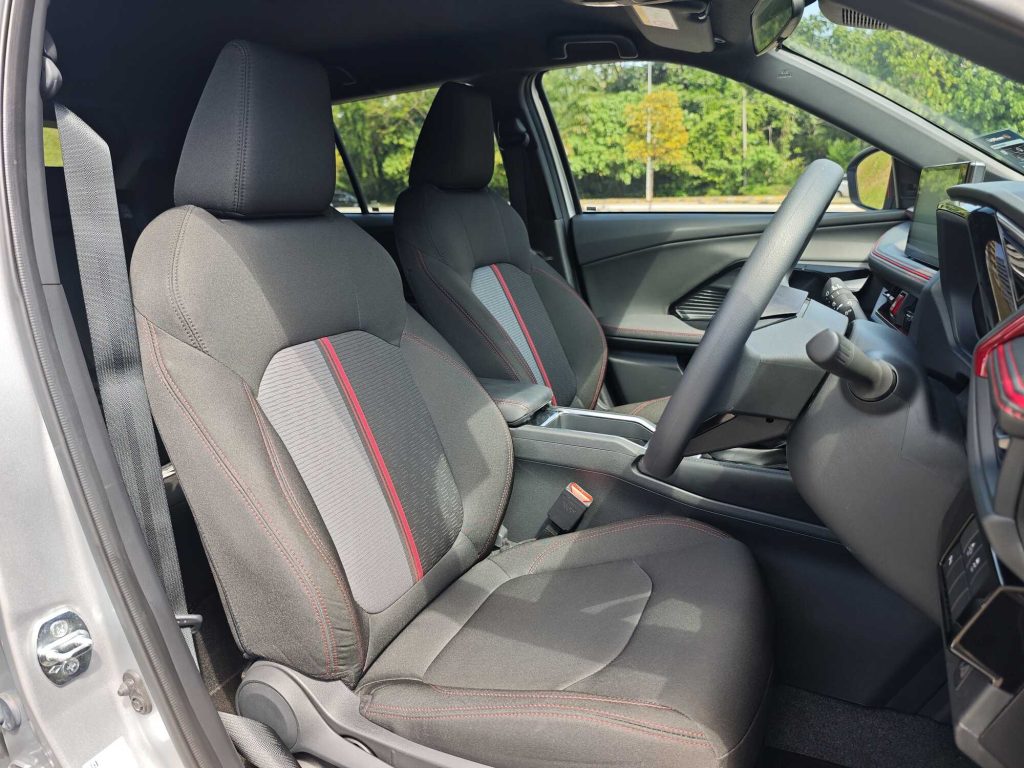
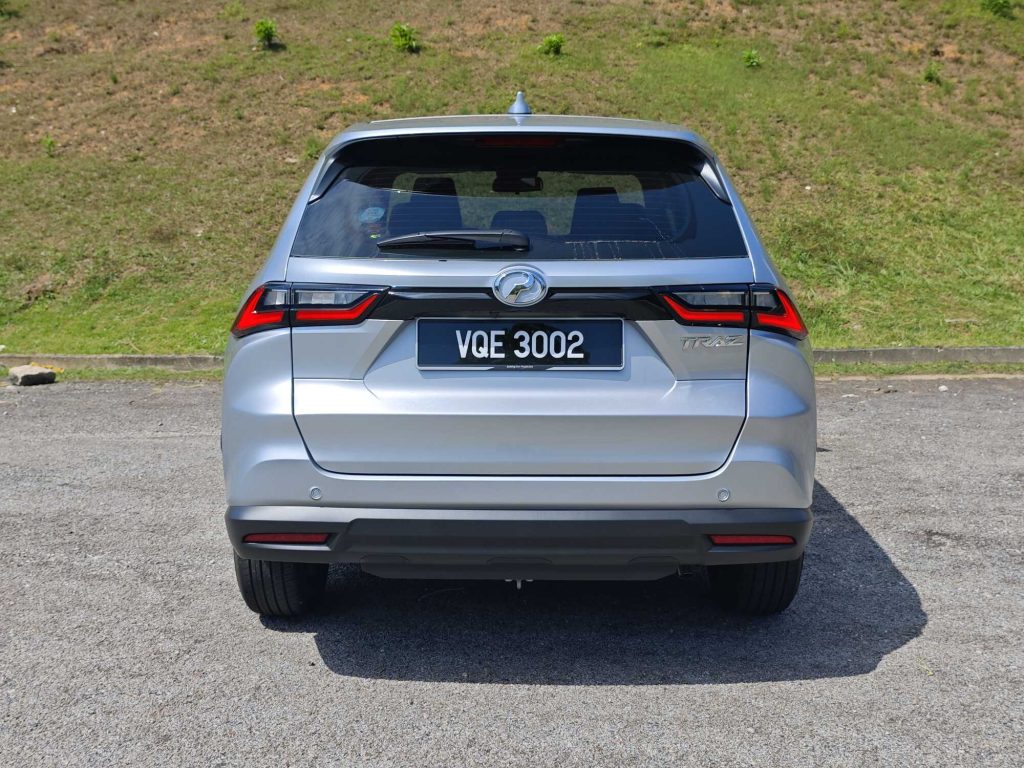
This latest five-seater SUV is however more Toyota than it is Daihatsu.
Its hard to say how much extra touches will be added to the highly anticipated Toyota Yaris Cross which the Traz is based on.
The Traz already feels more premium than your average Perodua car.
Regardless of Traz variants, the body feels solid and the doors are heavy.
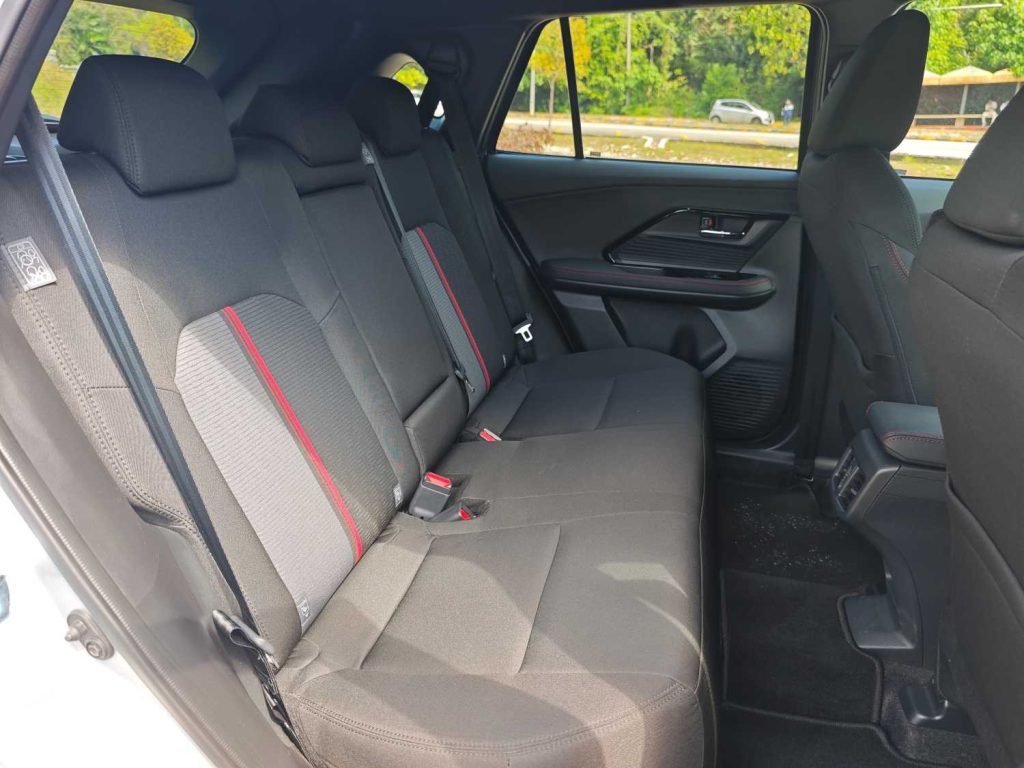
Cabin on the other hand is a mixture of soft and hard materials that elevate the touch feel.
Interior design is also far from bland with streaks of hard red panels contrasting itself from the dark grey surfaces to exude a bit of that sporty-youthfulness.
And that’s not even the most exciting bit of the Traz.
Where the model really shines is in its versatility and, believe it or not, drive performance.
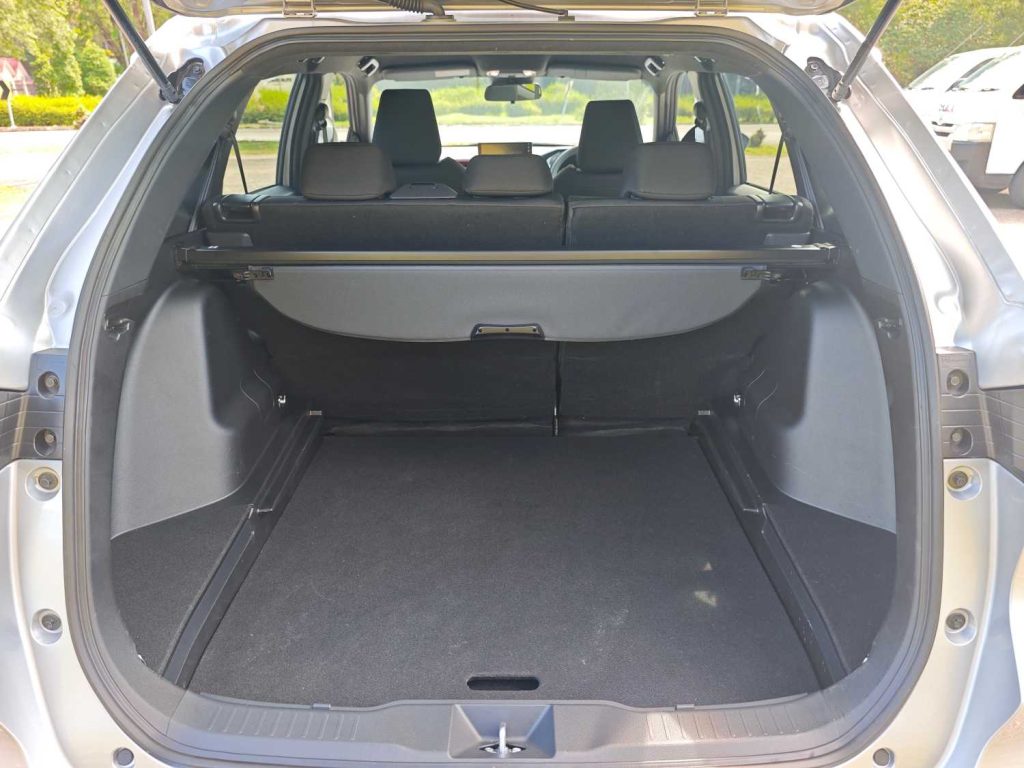
One half of this secret lies in its design and body dimension.
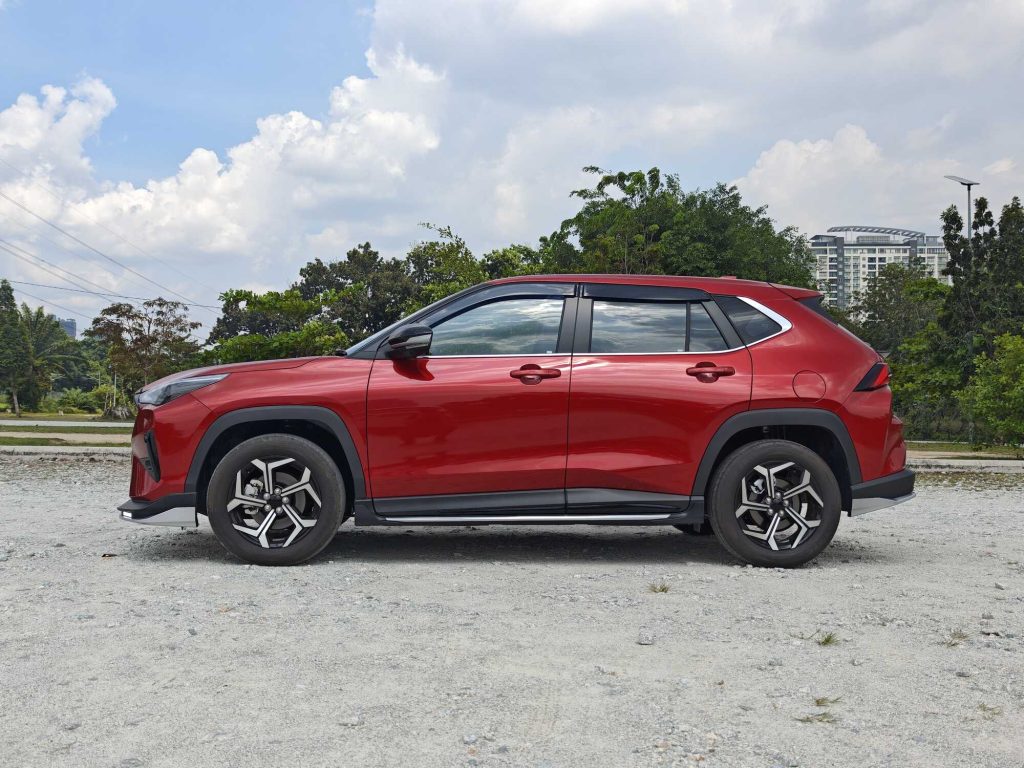
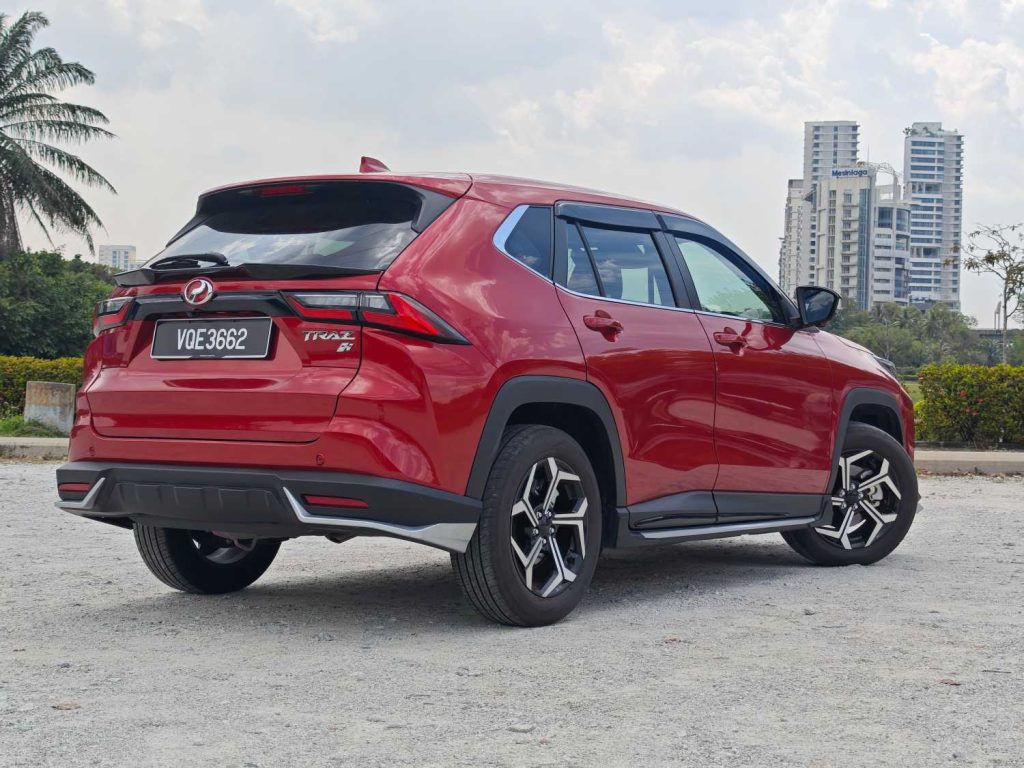
The Traz has a 2,620mm wheelbase, is 4,310mm long, 1,770mm wide, and has 1,655mm tall.
Pair this with its powertrain alongside the Daihatsu New Global Architecture (DNGA) platform and the model gains quite the spirited characteristic.
Acceleration build-up is energetic and smooth when pedal modulation is gradual.
As per-Toyotas and Peroduas the speed uptake on a hard press is decent if a little loud.
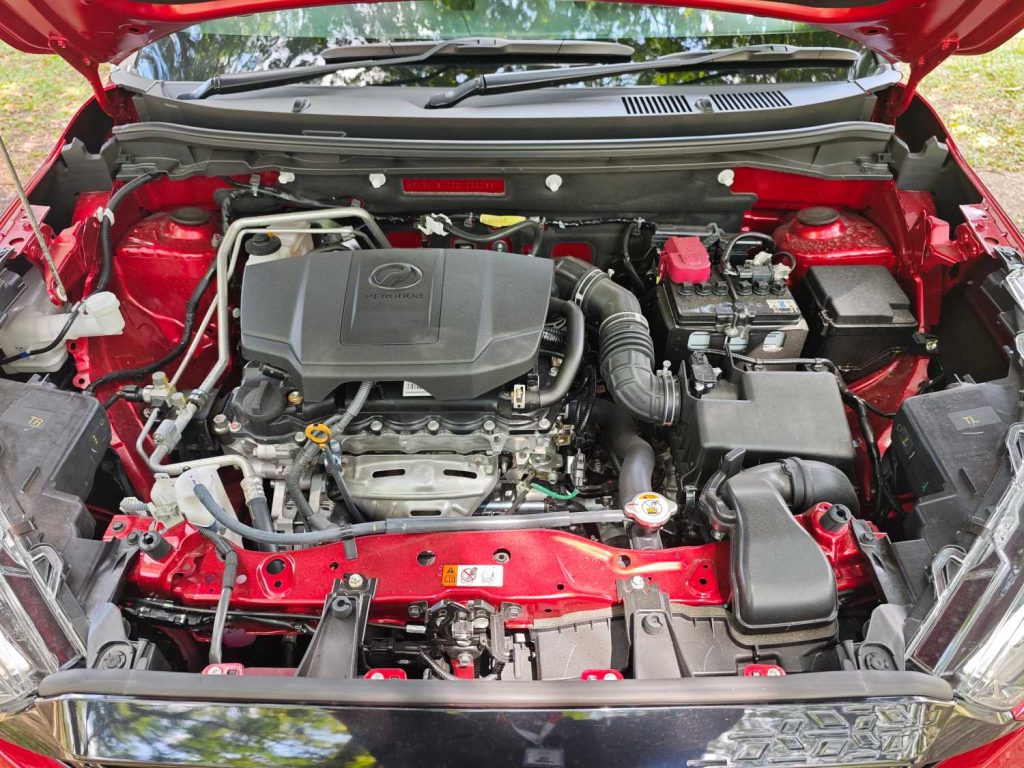
Swift cornering, traction and stability are equally impressive in addition to having a ground clearance of 210mm.
Thanks to its wide stance the Traz feels planted in most scenarios, affording it the mobility and agility despite not being mini in size
There’s also three drive modes of Eco, Normal, Power to toy around with should you feel the extra need to change up the performance.
The result is that the Traz makes up for its moderate speed with a lot of control for that little bit of fun.
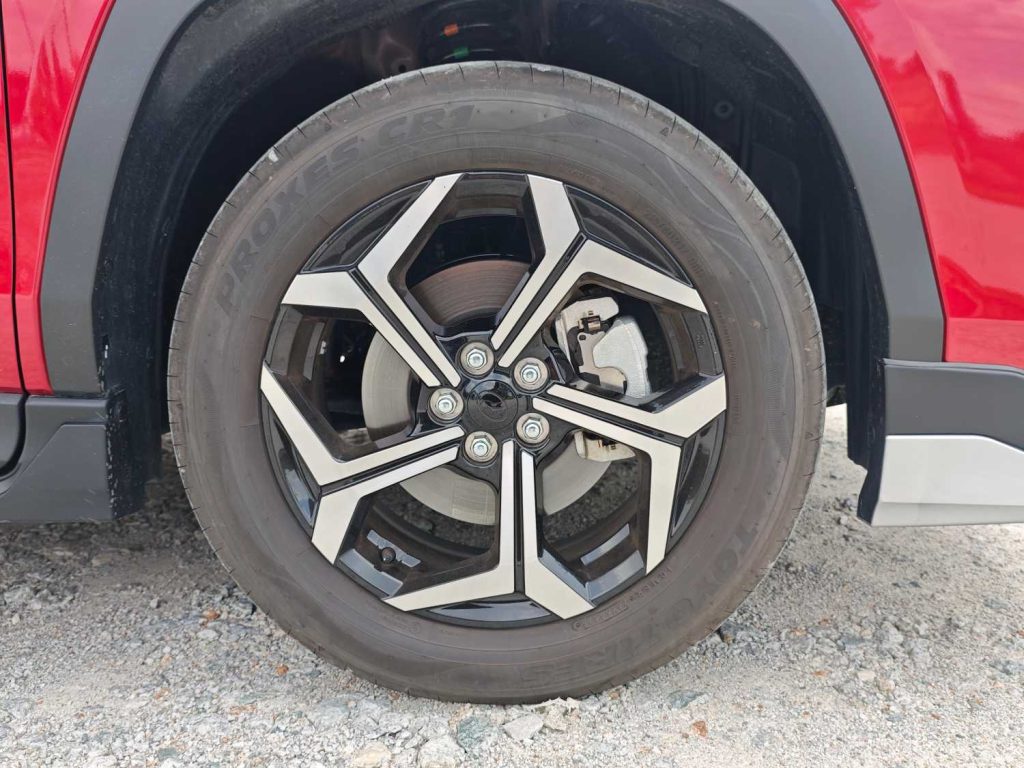
The more conservative or economical driver will be happy to know that the model also has a high fuel efficiency rate of 21.3km per-litre based on the Malaysia Driving Cycle.
Another half of its strength is the practicality the model comes with.
There’s enough cabin space and legroom for driver and passengers alike for it to be comfortable and then there’s the 471 litres of boot space to work with.
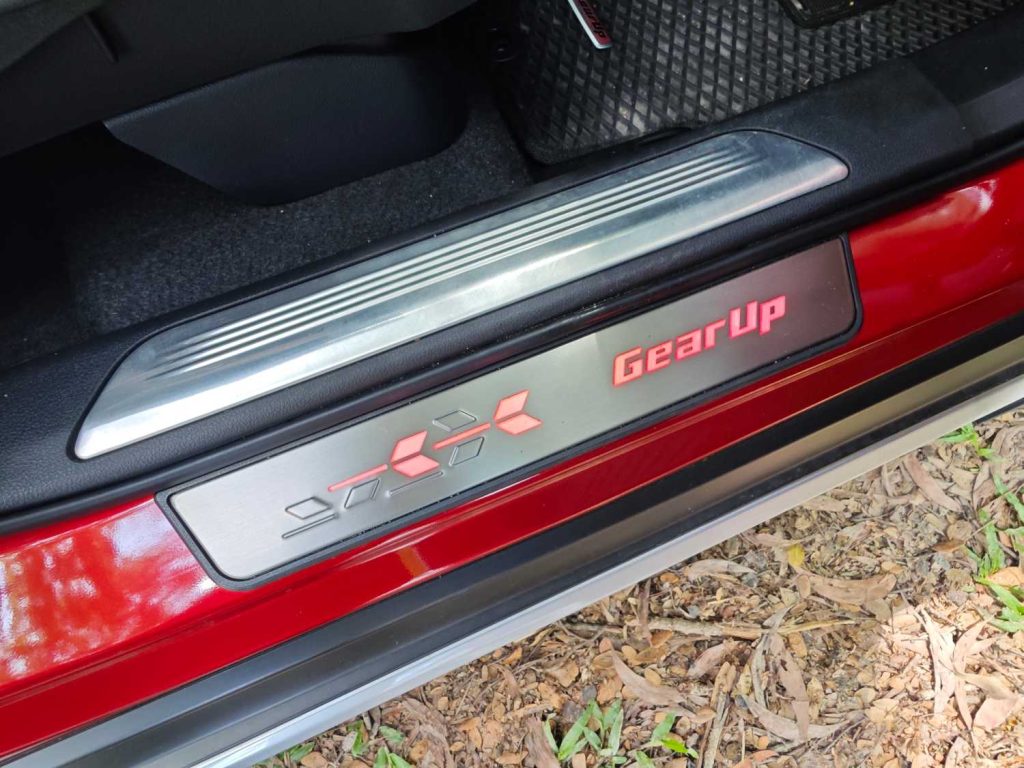
Put the two halves together and you get one of, if not the most, versatile model not only in Perodua’s lineup but the market itself below RM100,000
For a crossover SUV, the Traz doesn’t skim on the offerings where it matters.
It is both practical and fun for everyday driving.
It does have its hiccup for not having cruise control of any kind what more Adaptive Cruise Control (ACC).
By extension this is also reflected by a semi-bare steering wheel — with an empty face on the right side that was clearly meant to have some interactive buttons.
A noticeable absence since it is available in other Perodua models though we suspect it is only because the feature, outside of a timeframe approval issue between the company and Daihatsu and Toyota, is most likely reserved for the more premium Toyota equivalent in part to better distinguish the Traz from the Yaris Cross.
Even so it is only a dealbreaker if ACC is a necessity for your daily drive.
Otherwise it’ll be a shame to miss out on one of the best Perodua model in the present market.
SPECIFICATIONS
Perodua Traz
Engine: 1,496cc, four-cylinder, DOHC
Maximum power: 105hp at 6,000rpm
Maximum torque: 138Nm at 4,200rpm
Transmission: Dual-mode Continuous Variable Transmission (D-CVT)
Acceleration (0-100kph): 12.5 seconds
Top speed: 140kph
Features: Daihatsu New Global Architecture (DNGA) platform, full LED type with follow-me-home and leaving home functions, LED combination lights and spoiler with LED third brake light at the rear, 9-inch multimedia display audio that supports Android Auto and Apple CarPlay connectivity, a 4.2-inch TFT meter combination, a 12V power socket, Type-A and Type-C ports (one each) for the front occupants, two Type-C ports for rear passengers, rear air-conditioner vents, push-start button,six airbags with Electronic Brake-force Distribution (EBD) and Emergency Stop Signal (ESS), all-round disc brakes, Pre-Collision Warning, Pre-Collision Assist Brake for vehicles and pedestrians, Front Departure Alert, Pedal Misoperation Control, Lane Departure Warning (LDW), Lane Departure Prevention (LDP), Blind Spot Monitor (BSM), Front Corner Sensors, Rear Sensors, Reverse Camera, and Rear Cross Traffic Alert (RCTA), solar and security film, and ISOFIX child restraint system
Price: RM76,100 for the X variant, RM82,000 for the H (OTR without insurance)