FOR decades, the Toyota Hilux pick-up truck built its reputation the old-fashioned way — through diesel clatter, mechanical toughness and an almost legendary resistance to abuse.
Now, Toyota has done something that once sounded almost unthinkable.
It has turned the Hilux into a battery electric vehicle (BEV).
And surprisingly, it does not feel like a compromised engineering experiment.
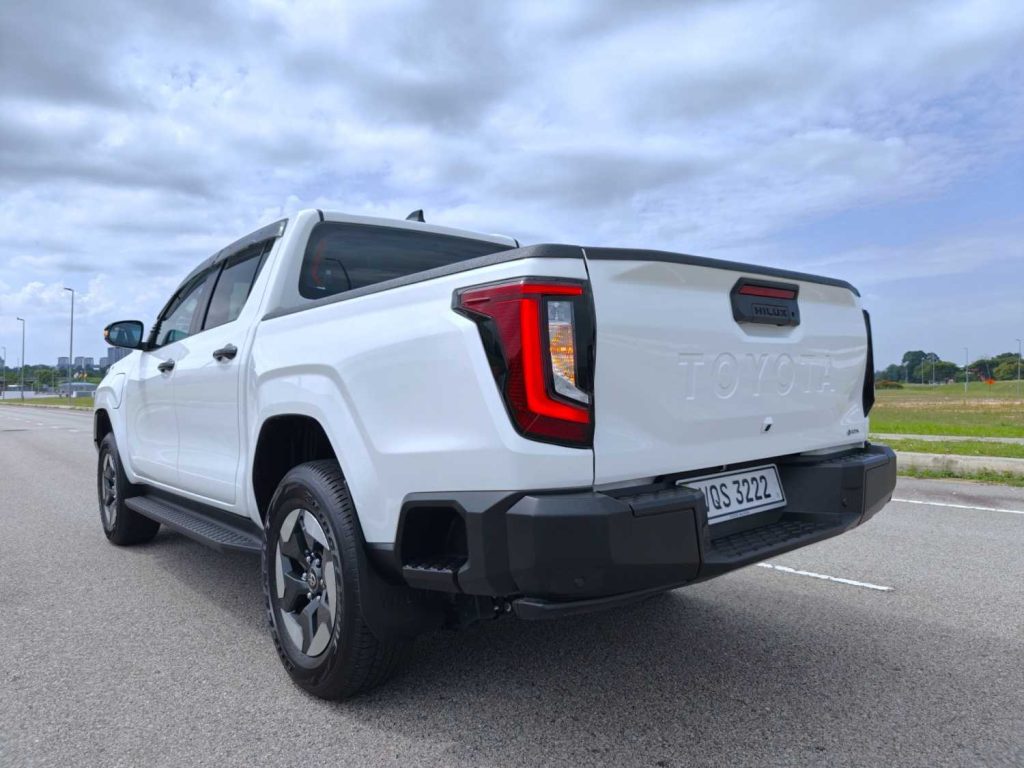
Priced at RM226,300 (on-the-road without insurance), the all-new ninth-generation Hilux BEV is Toyota’s first serious attempt at electrifying one of its most iconic nameplates.
Built in Thailand, the Hilux BEV arrives in Malaysia at a time when EV adoption is accelerating.
The biggest question naturally becomes this — can an electric Hilux still feel like a Hilux?
After spending time behind the wheel, the answer is both yes and no.
Familiar toughness, futuristic execution
The visual transformation is immediately obvious.
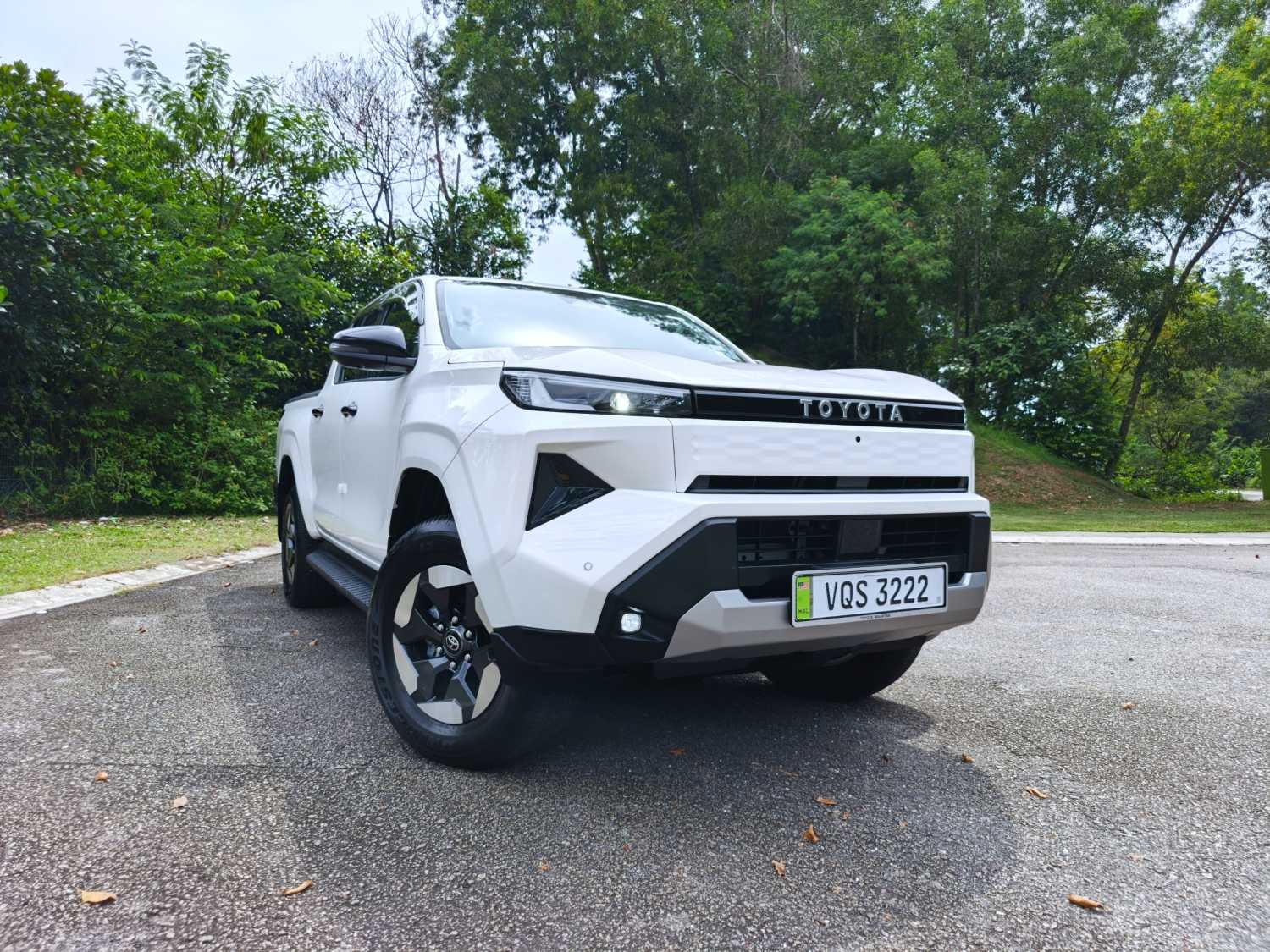
Toyota calls the design language “Cyber Sumo”, and while the name sounds unusual, the styling itself works surprisingly well.
The Hilux BEV still carries the upright proportions and commanding stance expected of a pick-up truck, but almost every surface has been modernised.
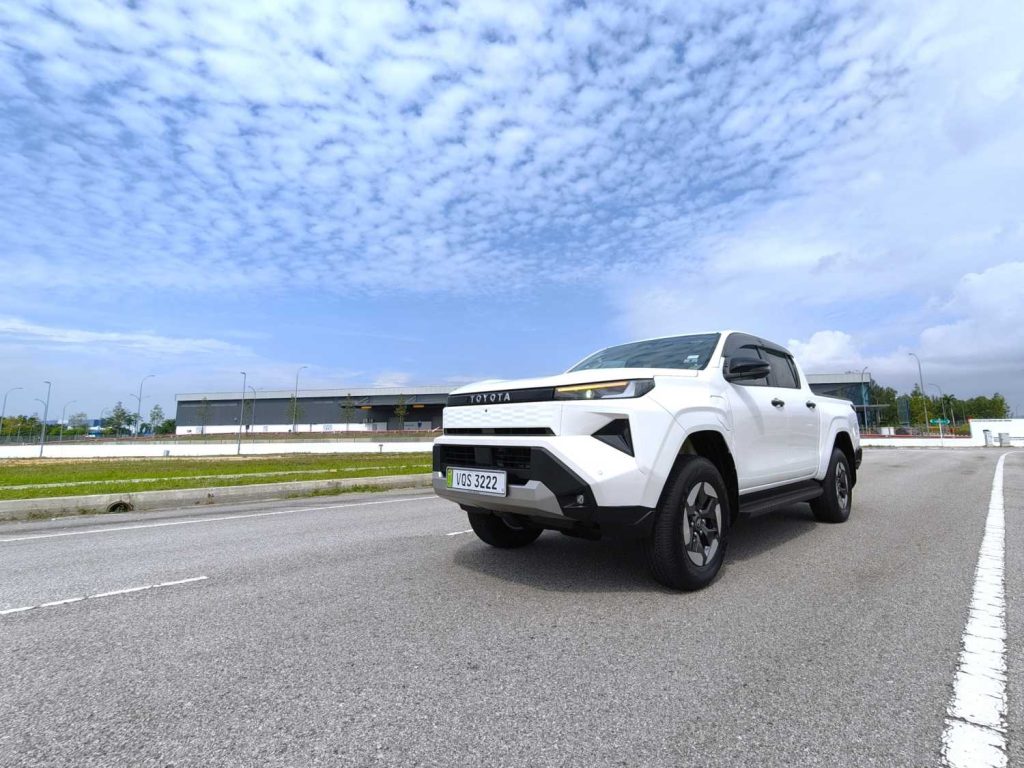
The front fascia is cleaner and more aggressive, with slim LED projector headlamps connected by a black trim panel carrying large TOYOTA lettering.
Without the need for a traditional cooling grille, the nose appears smoother and more aerodynamic than the diesel version, although it still retains enough visual muscle to avoid looking soft.
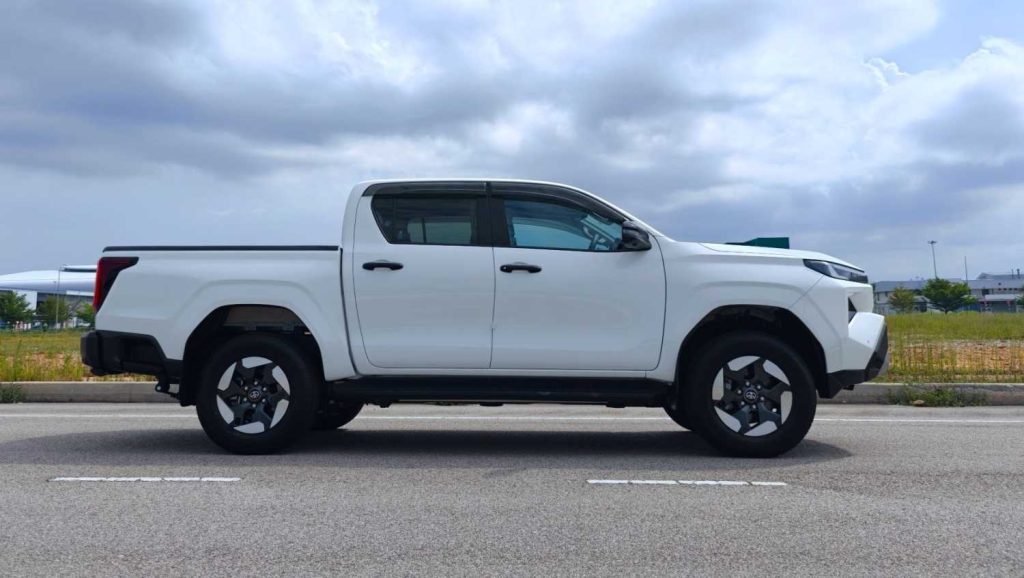
The squared-off wheel arches, chunky bumpers and high ride height preserve the tough pick-up truck character buyers expect.
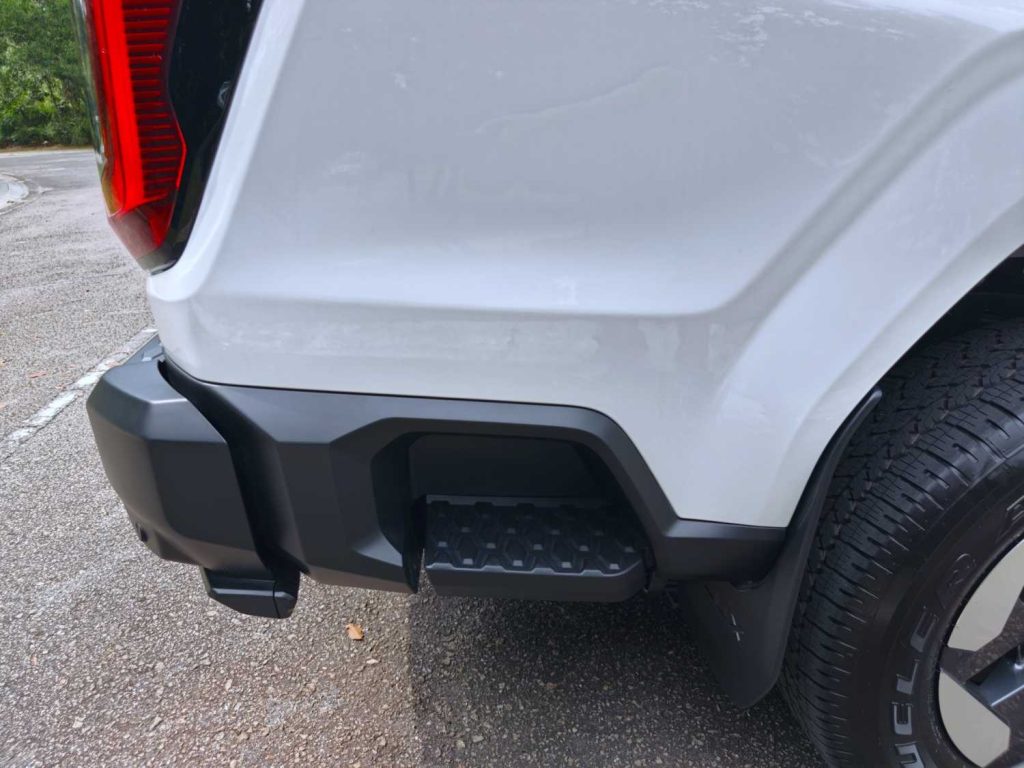
Toyota has also fitted distinctive 17-inch aero-design alloy wheels which help reduce drag, while integrated side steps next to the rear wheel arch improve access to the cargo bed.
The Hilux BEV retains the same 3,085mm wheelbase as the conventional Hilux, and from most angles, it still looks every bit like a serious working truck rather than an urban lifestyle EV pretending to be rugged.
More SUV than pick-up truck
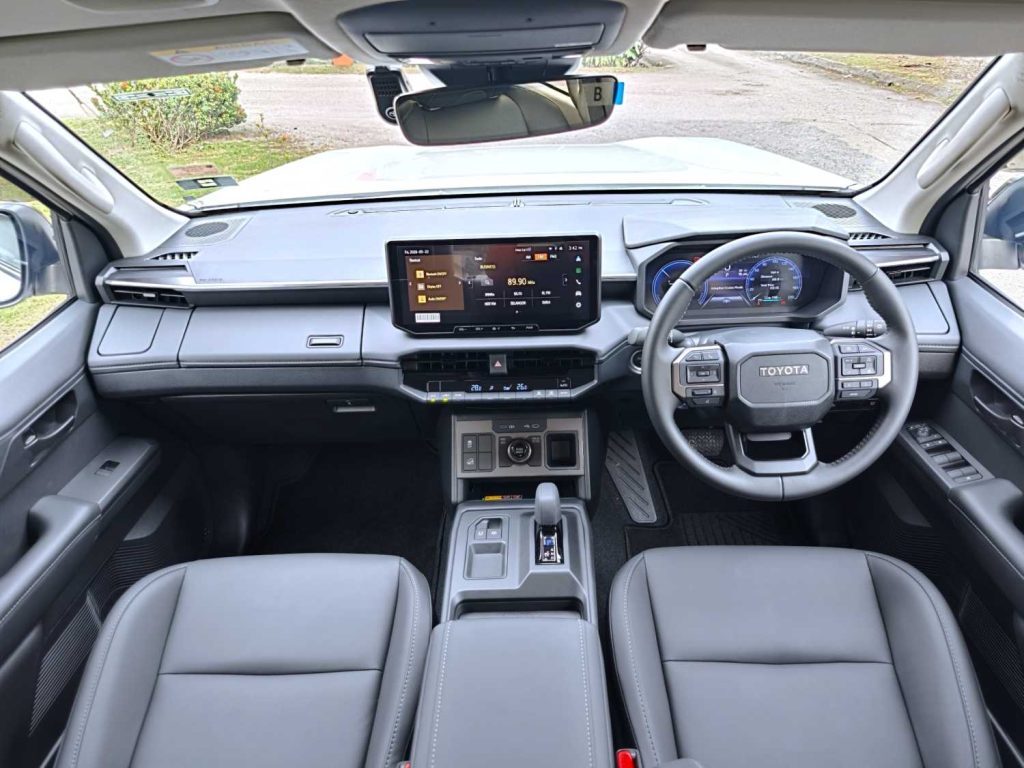
Inside is where the biggest transformation takes place.
Previous generations of the Hilux prioritised durability over sophistication.
Hard plastics, upright dashboards and utilitarian switchgear were simply part of the experience.
The Hilux BEV changes that dramatically.
It now feels closer to an SUV with a cargo bed than a traditional work truck.
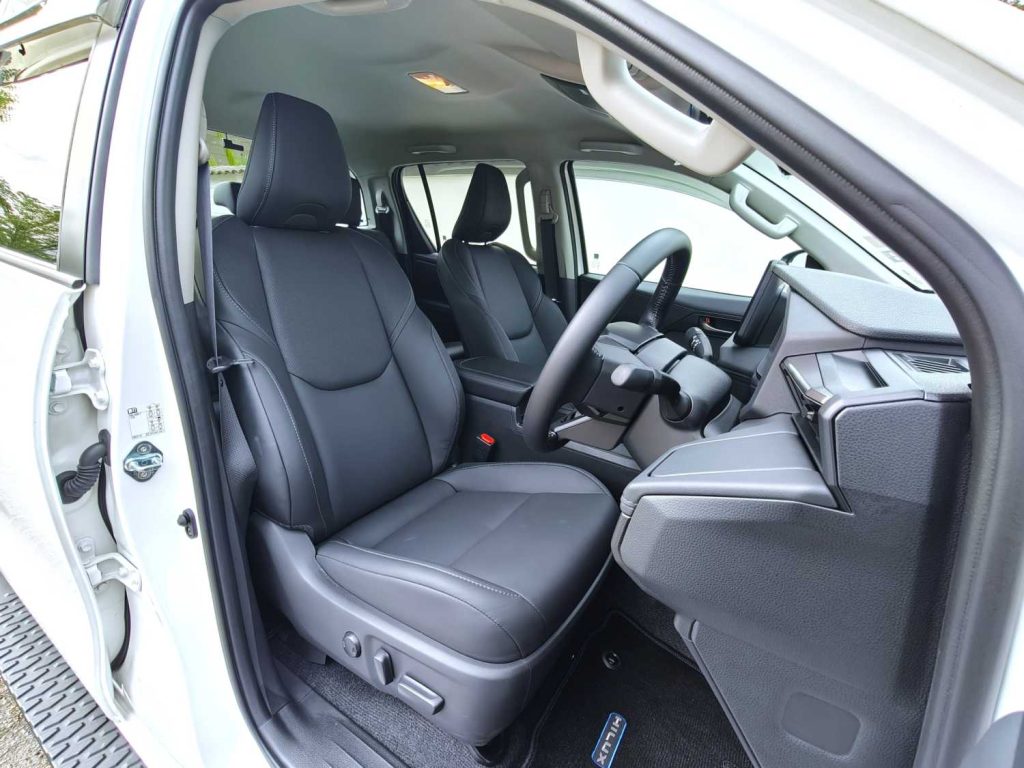
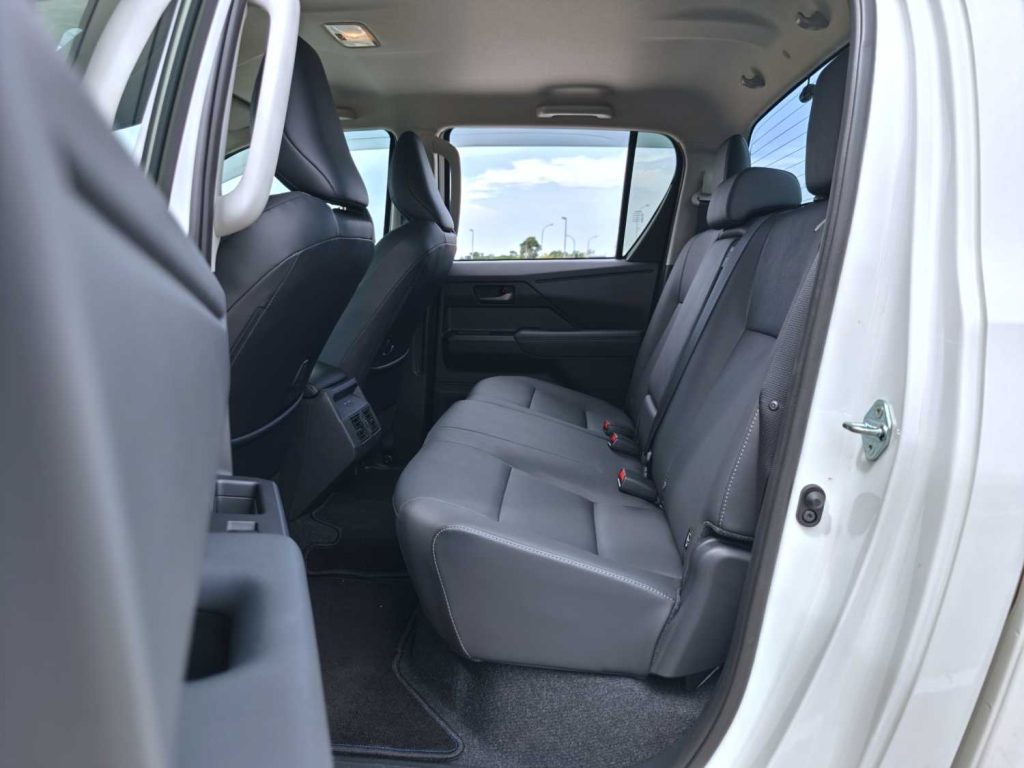
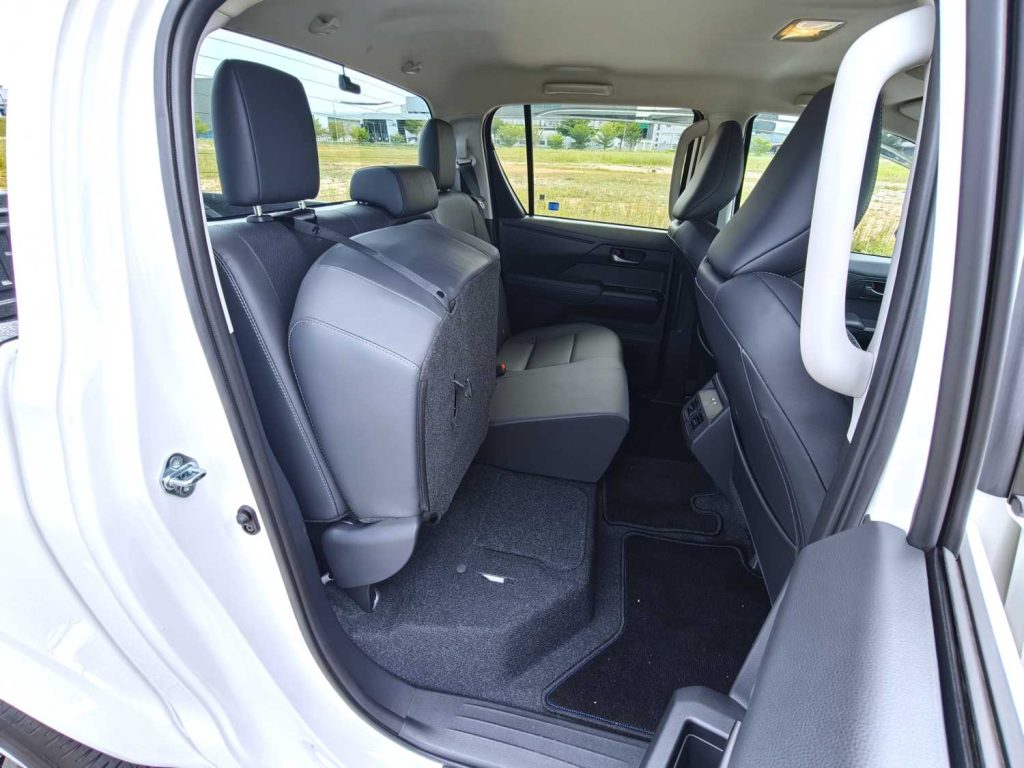
The cabin feels noticeably more sophisticated than previous Hilux generations, with a cleaner SUV-like dashboard layout, twin digital displays and improved material quality.
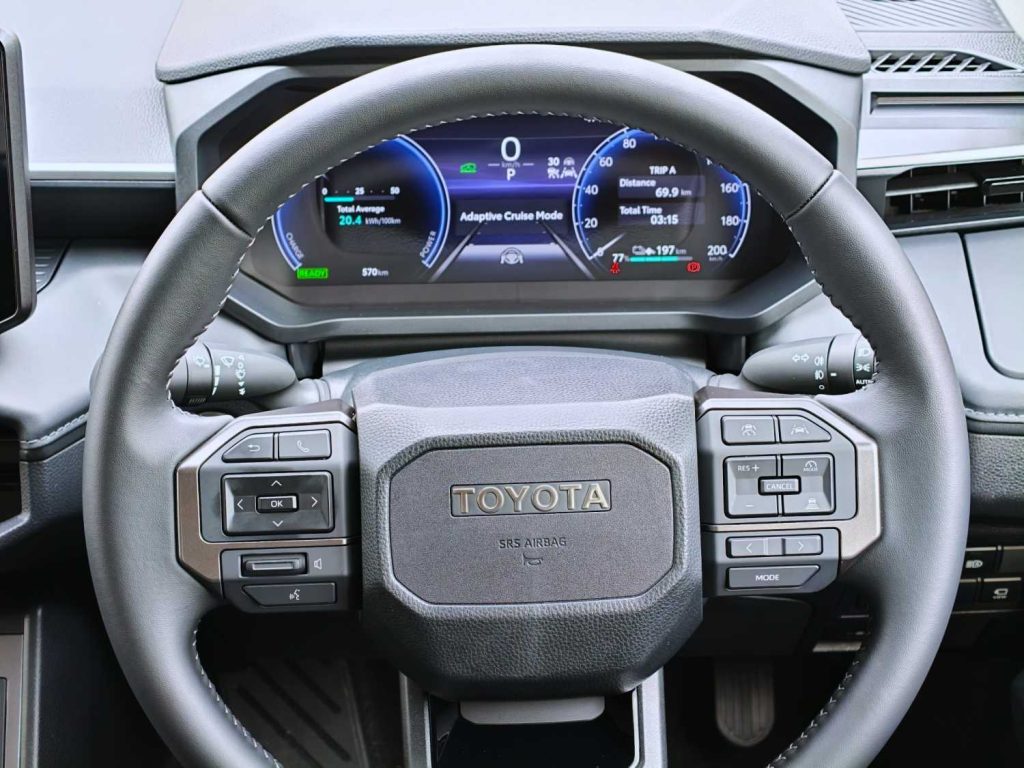
Twin 12.3-inch displays dominate the cabin — one serving as a fully digital instrument cluster, while the other handles infotainment duties with wireless Apple CarPlay and Android Auto support.
Soft-touch stitched materials across the dashboard and door panels add a noticeably more premium feel than any previous Hilux sold locally.
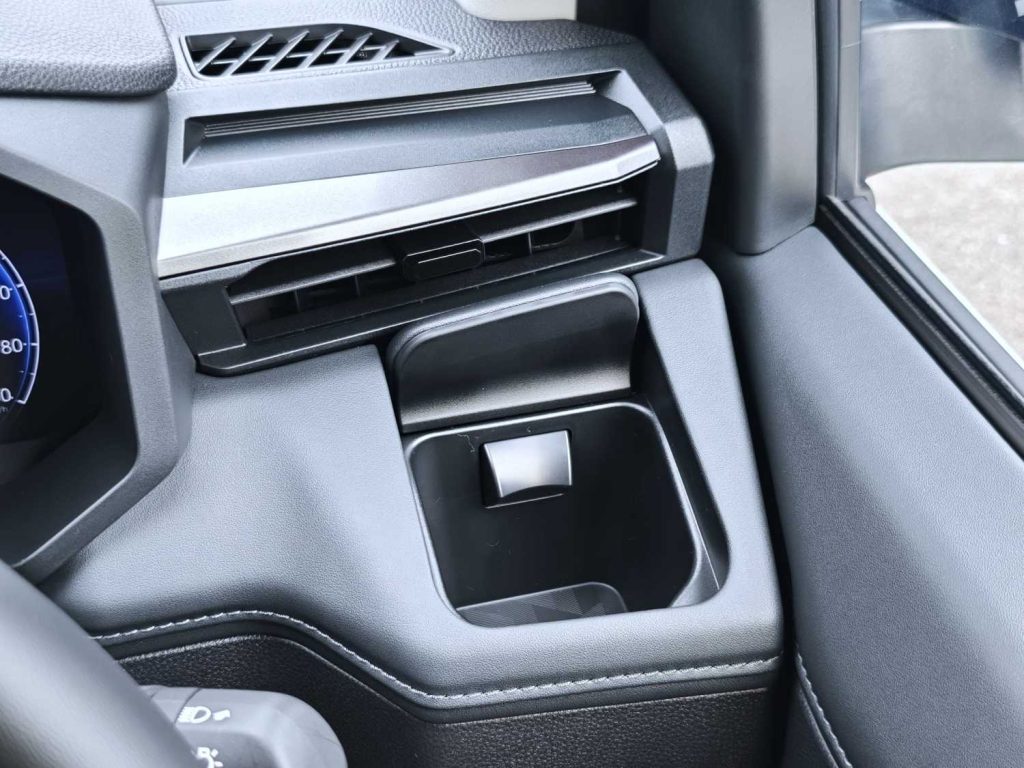
Cupholders are neatly integrated into the dashboard which also has twin gloveboxes like its diesel sibling.
The seats are supportive and visibility remains excellent thanks to the upright seating position.
Toyota has also modernised the cabin with features such as a shift-by-wire gear selector, electronic parking brake and an integrated wireless smartphone charger.
Elements such as the steering wheel and Mode Select dial are adapted from the Land Cruiser.
Owners can also use the Toyota Remote app to pre-condition the cabin or lock and unlock the vehicle remotely.
Other connected features include geofencing, location tracking and battery level and driving performance report.
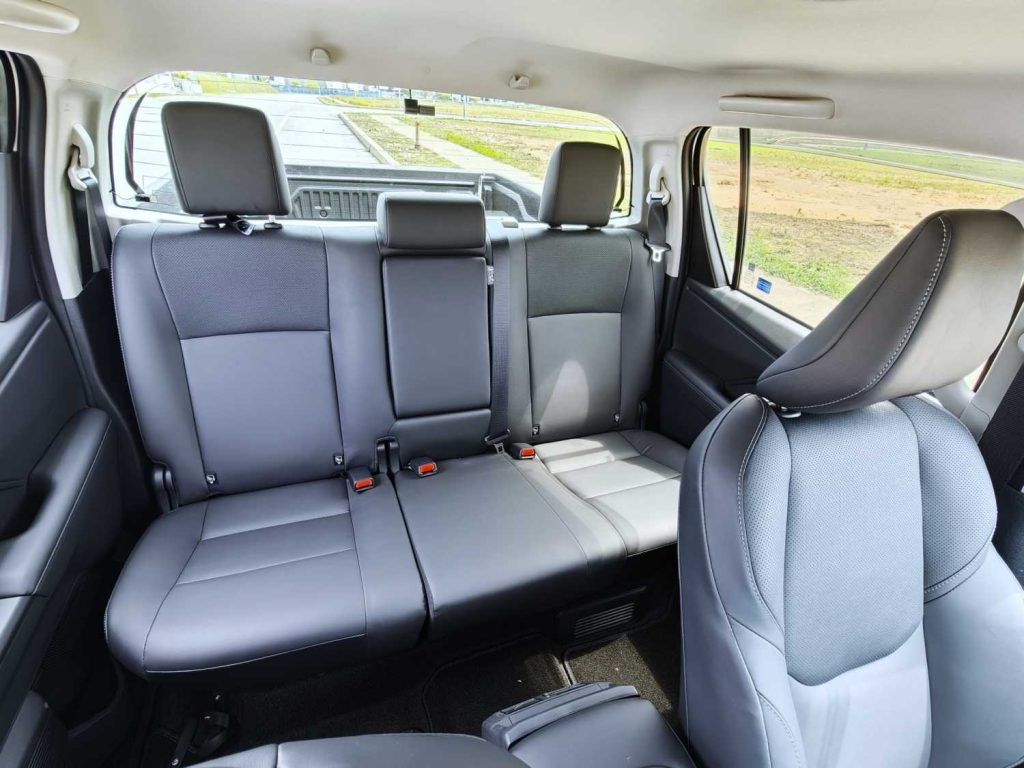
For long-time Hilux owners, the interior may actually come as the biggest surprise of all.
The quietness changes everything
Push the start button and the first thing you notice is what you do not hear.
There is no diesel vibration through the steering wheel.
No idle clatter.
No mechanical shudder.
Only the faint sound of tyre noise and gravel beneath the tyres.
The Hilux BEV uses a dual-motor setup producing a combined 196PS and 473Nm of torque.
While peak torque is slightly lower than the turbodiesel Hilux Rogue 2.8 (500Nm), the instantaneous delivery still makes the electric Hilux feel more responsive at lower speeds.
At low speeds, it actually feels quicker and more responsive than the turbodiesel Hilux.
Urban driving thus becomes remarkably relaxed because the drivetrain is so smooth and quiet.
Even in traffic, the absence of engine noise changes the entire character of the vehicle.
Instead of feeling commercial and industrial, the Hilux BEV suddenly feels refined.
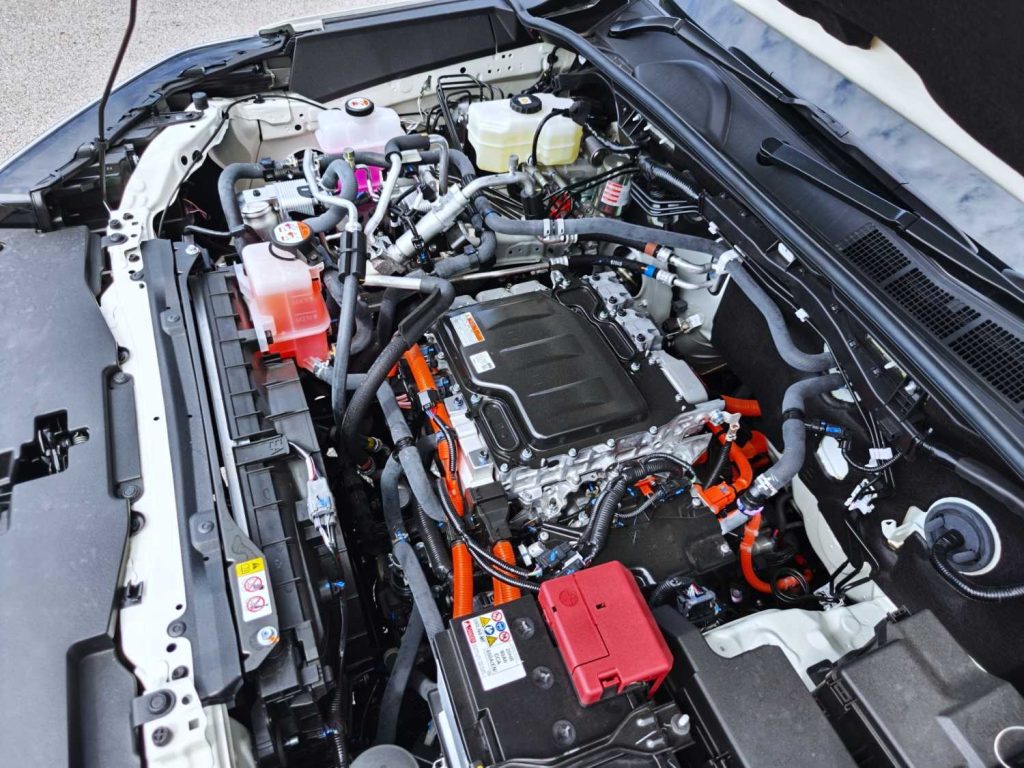
Acceleration is brisk up to highway speeds, although that sense of urgency gradually tapers off once you near the 100kph mark.
This is probably tuned more for usability and efficiency rather than outright performance.
Still, for a pick-up truck weighing nearly two and a half tonnes, the Hilux BEV moves with more composure than expected.
Ride comfort finally catches up
One area where pick-up trucks traditionally struggle is ride quality when unladen.
The typical rear-end hopping and bouncing over uneven roads is something Malaysian pick-up owners know well.
Toyota has made improvements here.
Thanks to the heavy battery pack mounted within the chassis, combined with a De Dion-type rear suspension designed to better manage the additional weight of the battery and eAxle, the Hilux BEV rides with noticeably better composure than the standard diesel model.
The rear axle feels more planted, body movements are calmer and overall stability improves significantly.
It still behaves like a ladder-frame pick-up truck, of course, but the harshness and jitteriness commonly associated with such vehicles have been noticeably reduced, provided you have the proper tyre pressure.
In daily driving, this refinement may be one of the Hilux BEV’s strongest selling points.
The steering remains light and easy to place in urban roads, although it still has the slightly relaxed feel of a ladder-frame pick-up truck.
Off-road capability remains intact
Traditional Hilux enthusiasts may initially worry about the absence of physical locking differentials or a conventional low-range transfer case.
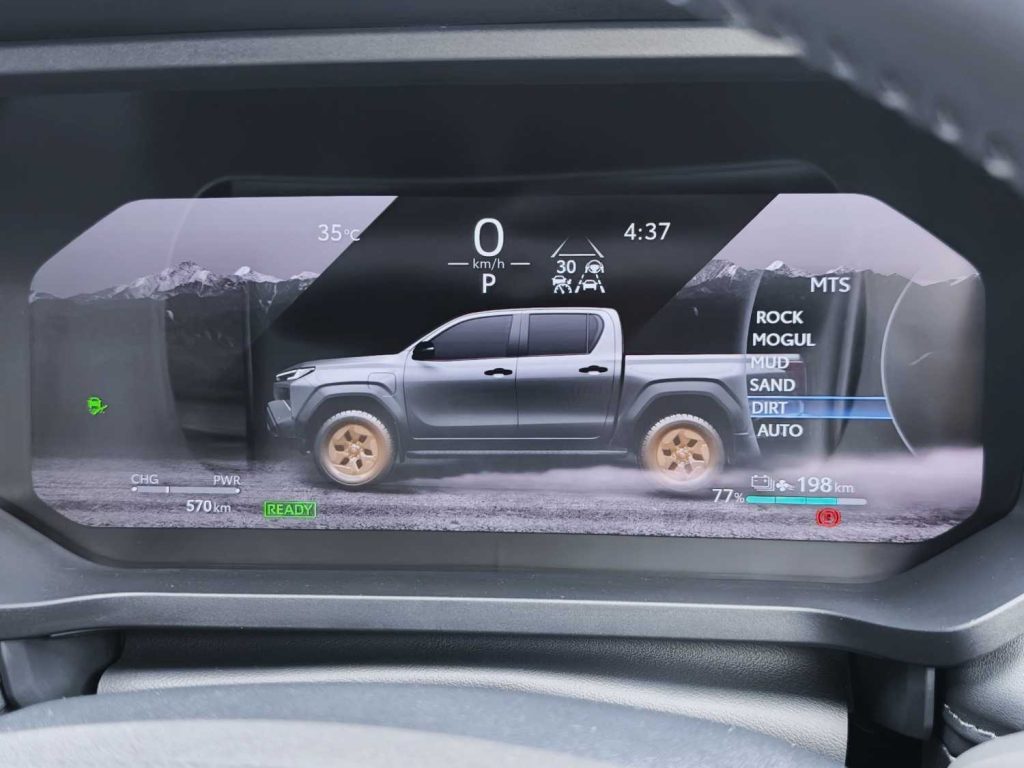
However, Toyota’s new Multi-Terrain Select system proves surprisingly effective.
With selectable modes for Dirt, Mud, Sand, Rock and Mogul terrain, the system continuously adjusts torque delivery between the electric motors with precision.
Because electric motors can react almost instantly, traction management often feels smoother and more seamless than mechanical systems.
The Hilux BEV also retains a 700mm water wading depth while maintaining similar ground clearance and off-road angles as the turbodiesel Hilux.
For those concerned, Toyota has reinforced the battery protection with a “Diamond Shield” underbody structure designed to withstand impacts from rocks and rough terrain.
In off-road situations, the vehicle feels less dramatic than traditional 4x4s because there is no roaring engine or gear hunting.
It just crawls forward quietly and methodically, which makes the experience feel almost surreal at first.
The nigglings that buyers must accept
The biggest challenge facing the Hilux BEV is not capability.
It is practicality.
Its 59.2kWh lithium-ion battery delivers a claimed 315km NEDC range.
But a more realistic figure is around 250km, and this depends heavily on load, terrain and driving style.
On a mostly urban drive, this author consumed an average of 20.6kWh/100km, which would give a total driving range of 293km.
Thus, for urban usage, municipal applications or predictable site-to-site routes, this works perfectly.
For long-distance interstate hauling however, the limitations become obvious. And more route planning is required.
Being about 400kg heavier than the current turbodiesel Hilux also means payload capacity is reduced to 750kg compared to the one-tonne capability typical of diesel pick-up trucks.
However, these figures only matter significantly to buyers
who genuinely use their pick-up trucks for heavy-duty commercial work.
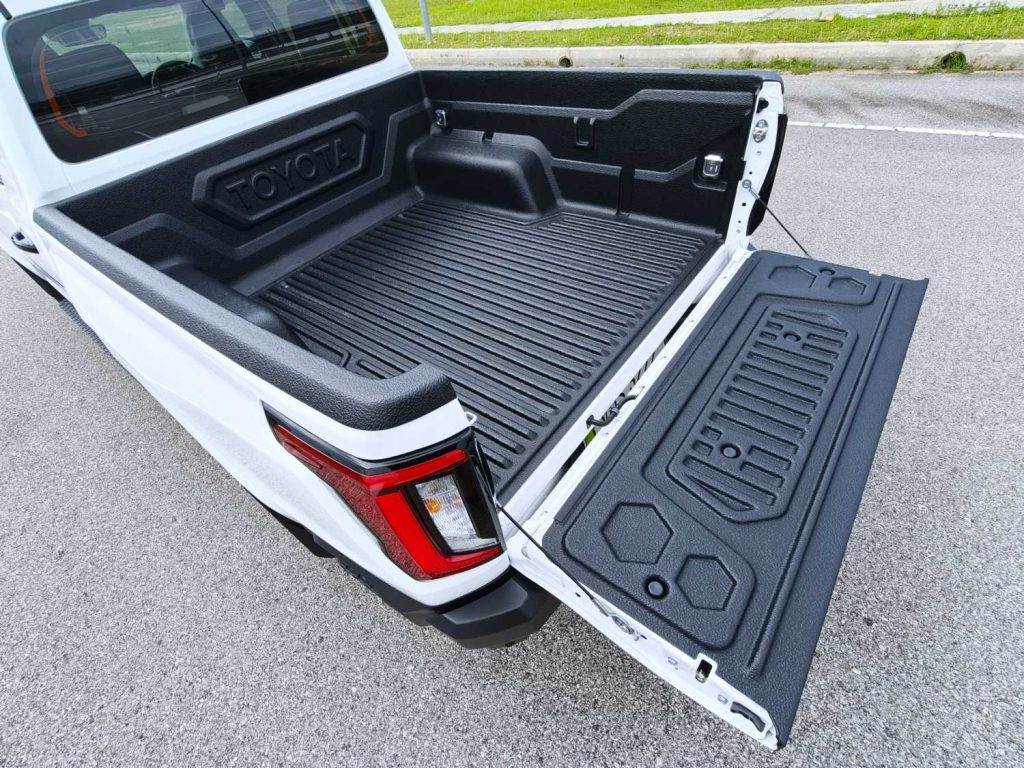
Another compromise is the absence of tailgate assistance dampers.
Charging performance is respectable as the Hilux BEV supports DC fast charging at up to 150kW, allowing a 10% to 80% recharge in approximately 30 minutes.
However, AC charging supports only up to 10kW and going from 10% to full charge will take six and a half hours.
Safety remains comprehensive
Toyota has equipped the Hilux BEV with the latest Toyota Safety Sense suite which includes autonomous emergency braking, dynamic radar cruise control (all speeds), lane tracing assist, blind spot monitoring, rear cross traffic alert and automatic high beam.
The advanced driver assistance systems operate quite smoothly and feel well-calibrated for Malaysian driving conditions without being too intrusive.
Verdict
The Hilux BEV is likely less of a workhorse and more of a lifestyle statement.
In Malaysia, its strongest appeal could come from private owners attracted to the novelty and refinement of an electric pick-up truck, while ESG-conscious companies may adopt it more for corporate positioning than outright operational necessity.
When seen from this perspective, Toyota has executed the concept well.
This is without doubt the most refined, comfortable and technologically advanced Hilux to be built.
The quietness and ride quality transform the driving experience so much that your brain initially takes a while to process that you are in a pick-up truck.
Yes, the range limitations and reduced payload capacity mean it will not suit every buyer.
But for users whose daily driving patterns fit within its operational window, the Hilux BEV delivers.
It still feels durable.
It still feels capable.
And it does it all with near silence.
SPECIFICATIONS
Toyota Hilux BEV
Electric motors: Dual permanent magnet synchronous motors, four-wheel drive
Maximum power: 144kW (196PS)
Maximum torque: 473Nm
Battery capacity & type: 59.2kWh, lithium-ion
Range (NEDC): 315km
Charger type: AC Type 2 / DC CCS2
Features: Toyota Safety Sense (pre-collision system, adaptive cruise control, lane tracing assist, blind spot monitor, rear cross traffic alert), Multi-Terrain Select (Dirt, Mud, Sand, Rock, Mogul), 12.3-inch touchscreen infotainment display, 12.3-inch digital instrument cluster, wireless Apple CarPlay and Android Auto, electronic parking brake, shift-by-wire gear selector, wireless charger, Toyota Remote app connectivity, LED projector headlights with DRLs, 17-inch aero-design alloy wheels, 700mm water wading depth
Normal charging (AC, 10kW): Approximately 6.5 hours
Quick charging (DC, max 150kW, 10%-80%): 30 minutes
Suspension: Front independent double wishbone; rear De Dion-type leaf spring
Payload capacity: 750kg
Wheelbase: 3,085mm
Warranty: Five-year/150,000km vehicle warranty; eight-year unlimited mileage battery warranty (extendable to 10 years)
Price (OTR without insurance): RM226,300