THE Toyota Vios is built for the mass market, so nothing is too strange, too sharp or too likely to frighten an auntie.
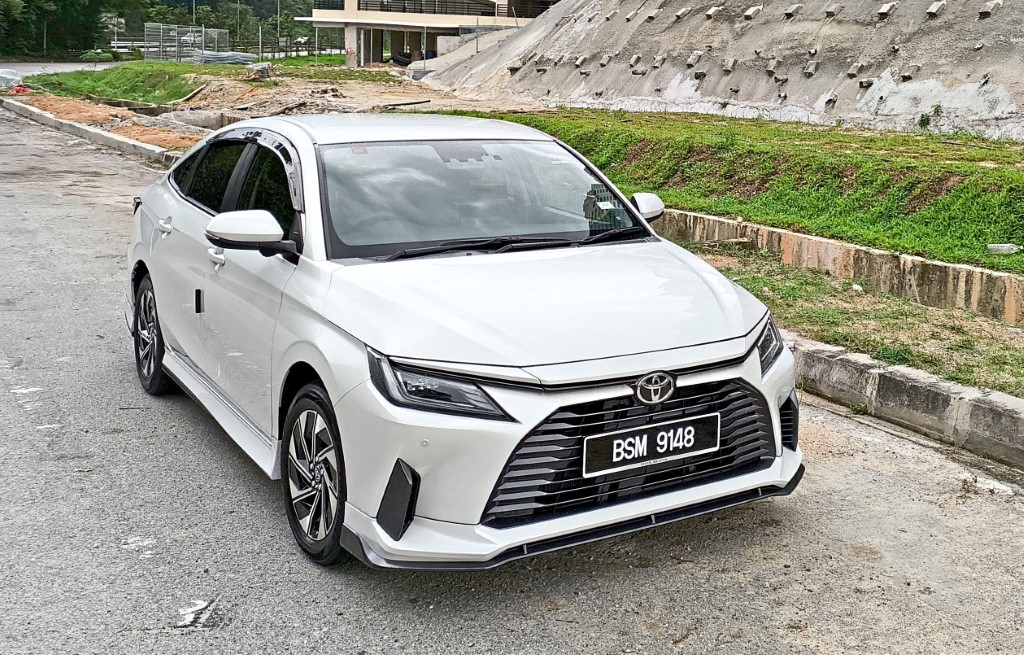
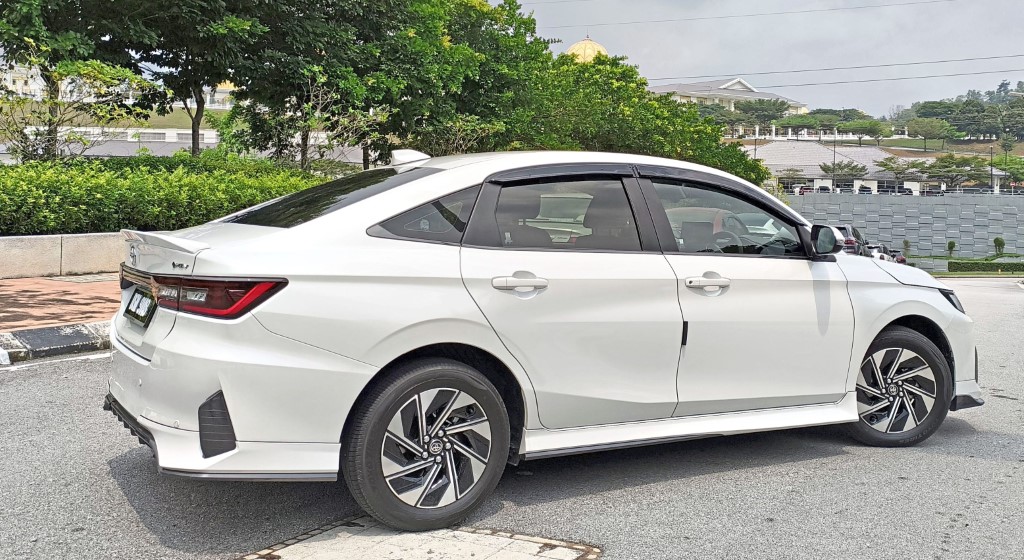
Dark trim, side skirts and a boot spoiler add some sportiness without straying too far from the established formula.
That formula worked when the shopping list was largely Vios, Honda City and perhaps Nissan Almera.
It is a tougher sell now. Newer rivals have widened the comparison.
The Proton S70 Flagship X costs less yet is larger and substantially more powerful, while the MG5 offers a bigger sedan for less.
The Chery Tiggo Cross Hybrid also places a hybrid SUV in roughly the same price bracket.
The old Vios-versus-City shopping list has acquired several extra pages.
The HEV difference
The Vios HEV arrived in Malaysia in January while subsidised petrol remained cheap.
Its economy is a long-term benefit rather than relief from a fuel-price shock, and gives the Vios a stronger reason to buy.
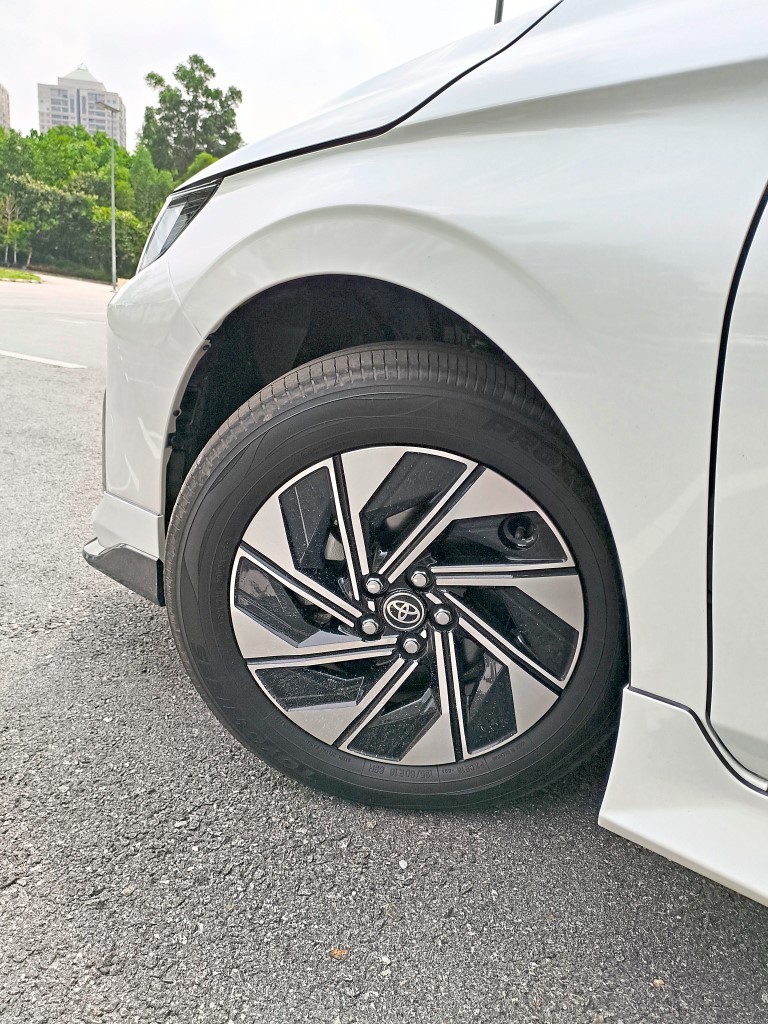
Closely related to the petrol Vios 1.5G, the HEV gains a gunmetal grille, dark-chrome trim and 16-inch machined wheels.
The test car looked low and broad from the front, although the body appeared slightly heavy around the middle from some angles.
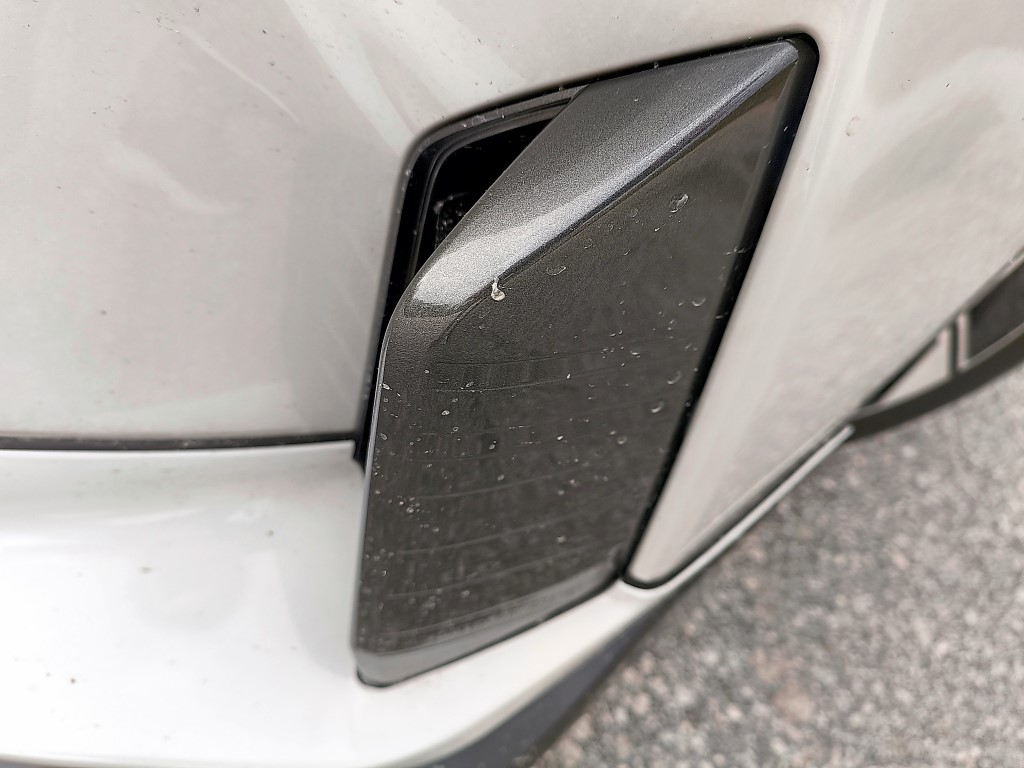
Toyota describes the vertical grey pieces at the front bumper corners as aerodynamic air vents that manage airflow to improve handling and stability.
Similar slats appear at the rear, though their role is not explained.
Whatever work they do, they also stop the Vios from looking too polite.
Toyota’s fourth-generation hybrid system pairs a 1.5-litre engine producing 90hp and 121Nm with an electric motor making 79hp and 141Nm.
Combined output is 110hp, delivered through an e-CVT.
How it drives
The Vios HEV feels different from Honda’s e:HEV setup.
The City relies more heavily on its electric motor in urban driving, with the engine often driving a generator to produce electricity before connecting directly to the wheels under suitable conditions.
The Vios can feel more engine-linked under acceleration, although it can also move away in near silence and crawl through traffic with the engine off.
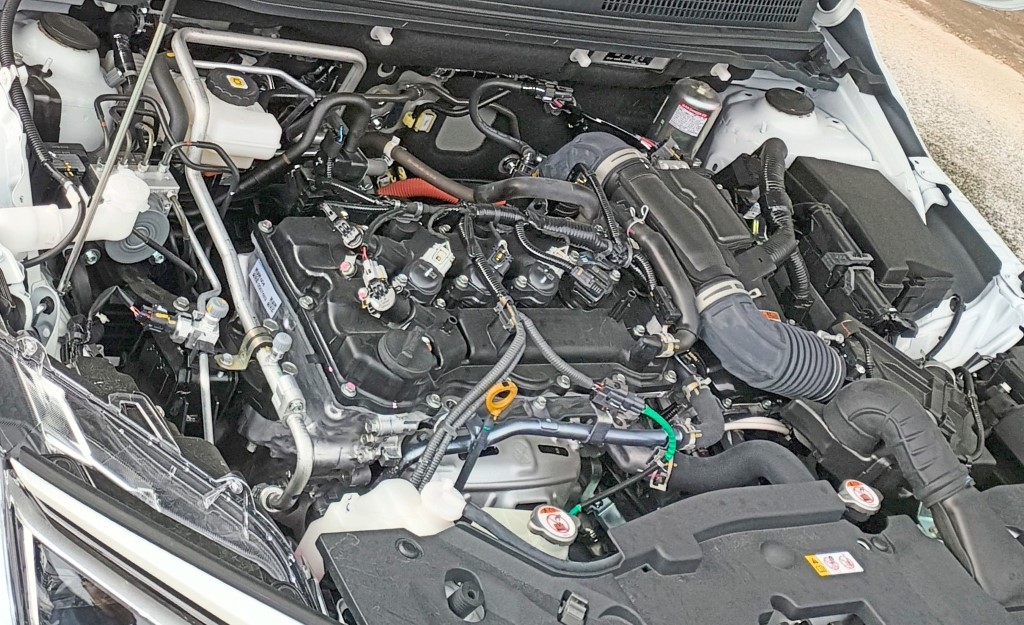
As speed and load rise, the petrol unit soon joins in, while the City e:HEV may allow its engine to rev without a proportional increase in road speed because it is driving the generator as the traction motor drives the wheels.
EV mode in the Vios usually lasts only briefly, but those repeated engine-off stretches help reduce fuel use.
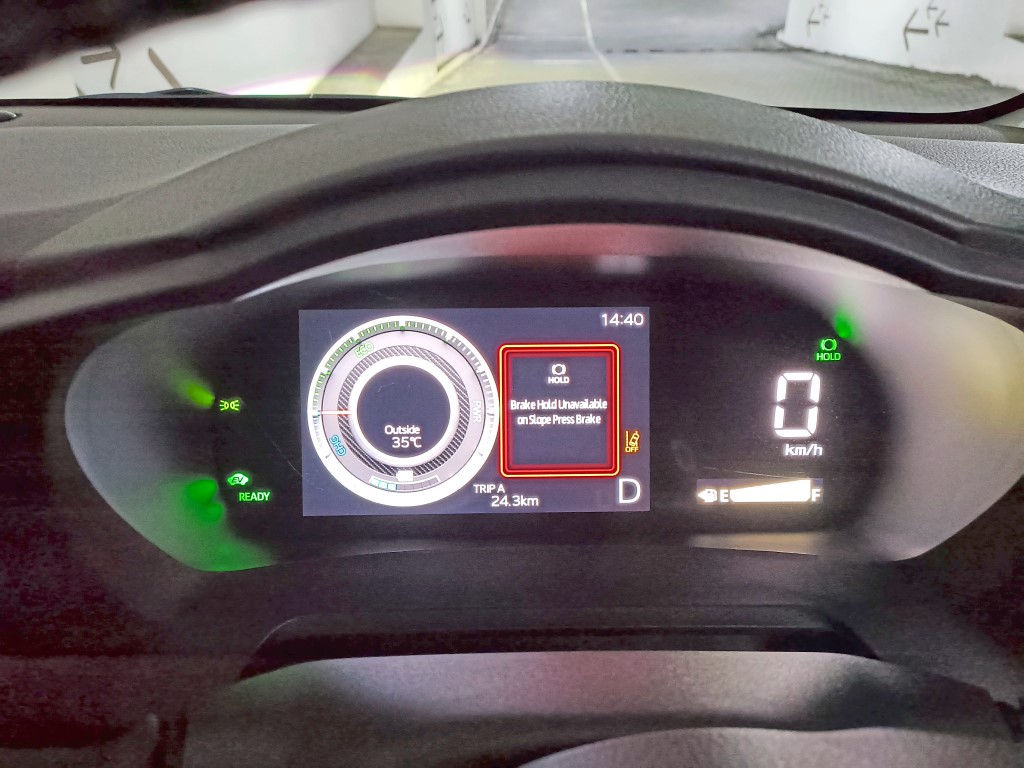
The EV Driving Ratio display shows how much of the trip was completed without the petrol engine running.
The changeover is smooth. A faint electric whine can be heard, but there is little drama when the engine wakes.
Step harder and the Vios gathers speed with useful urgency.
It is not fast, but it does not feel strained when joining a highway, climbing or passing slower traffic.
Power mode raises the revs and keeps them there.
The extra response is handy, though the engine becomes vocal when worked hard.
Beyond about 110kph, engine, tyre and wind noise become more noticeable.
Over 320km of mixed driving, the trip computer recorded an indicated 4.5L/100km, against Toyota’s 3.6L/100km NEDC claim.
That is a respectable indicated result for a B-segment hybrid.
The suspension has a firm edge without becoming harsh.
Body movement is well contained through bends, and the car settles quickly after larger undulations. Broken surfaces and potholes still make themselves felt, although the 195/60 R16 Toyo tyres soften most smaller impacts.
Steering weight felt heavier than expected in our test car.
It remains manageable in town and accurate enough when placing the car, though feedback is limited.
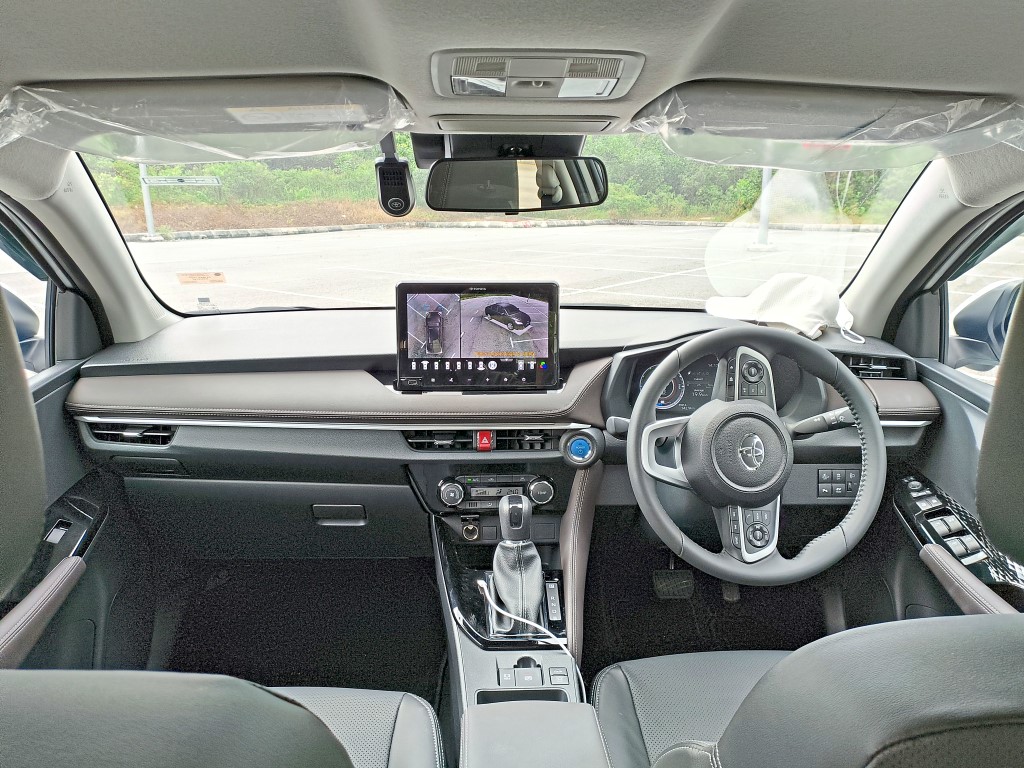
The Vios is generally settled at highway speeds, while adaptive cruise control and lane keeping assistance can ease the workload on longer journeys.
Toyota Safety Sense also includes pre-collision braking, lane departure warning and auto high beam.
Blind-spot monitoring, rear cross-traffic alert, six airbags and a 3D panoramic-view camera round out a strong safety package.
Cabin trade-offs
Inside, hard dashboard plastics are broken up by dark-brown padded trim, while combination-leather seats and 64-colour ambient lighting lift the otherwise black cabin.
The materials are not luxurious, but neither do they look bargain-basement.
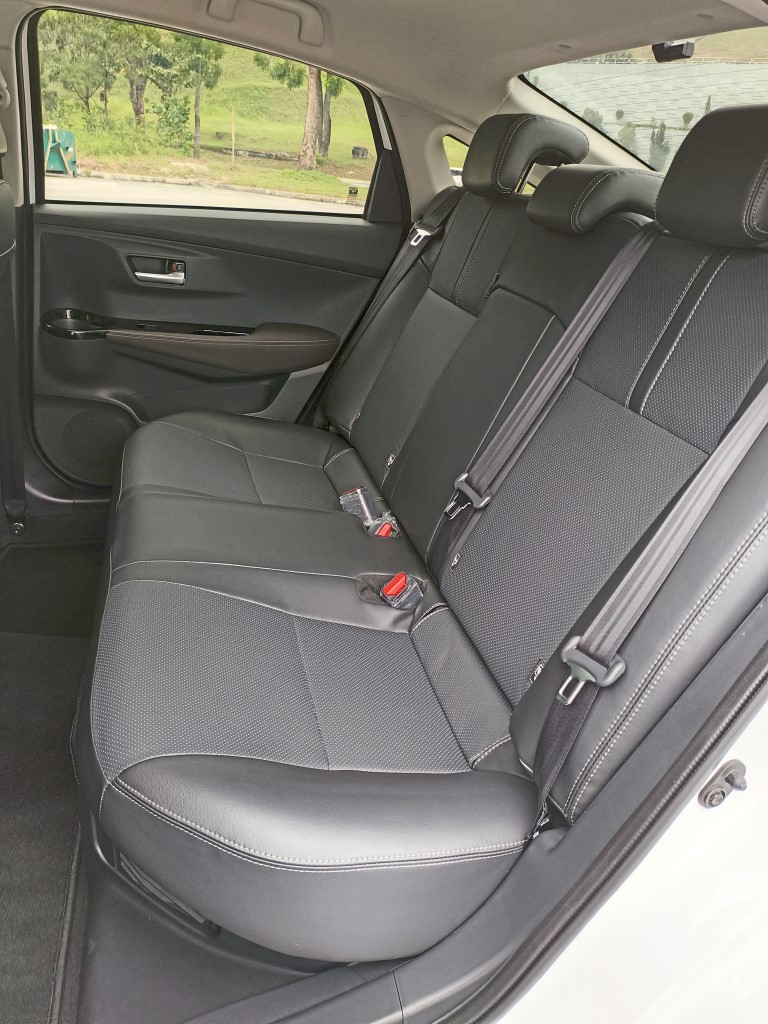
Rear legroom and elbow room are good.
The lithium-ion battery sits under the rear bench, preserving boot space, though taller passengers may brush their heads against the sloping headlining.
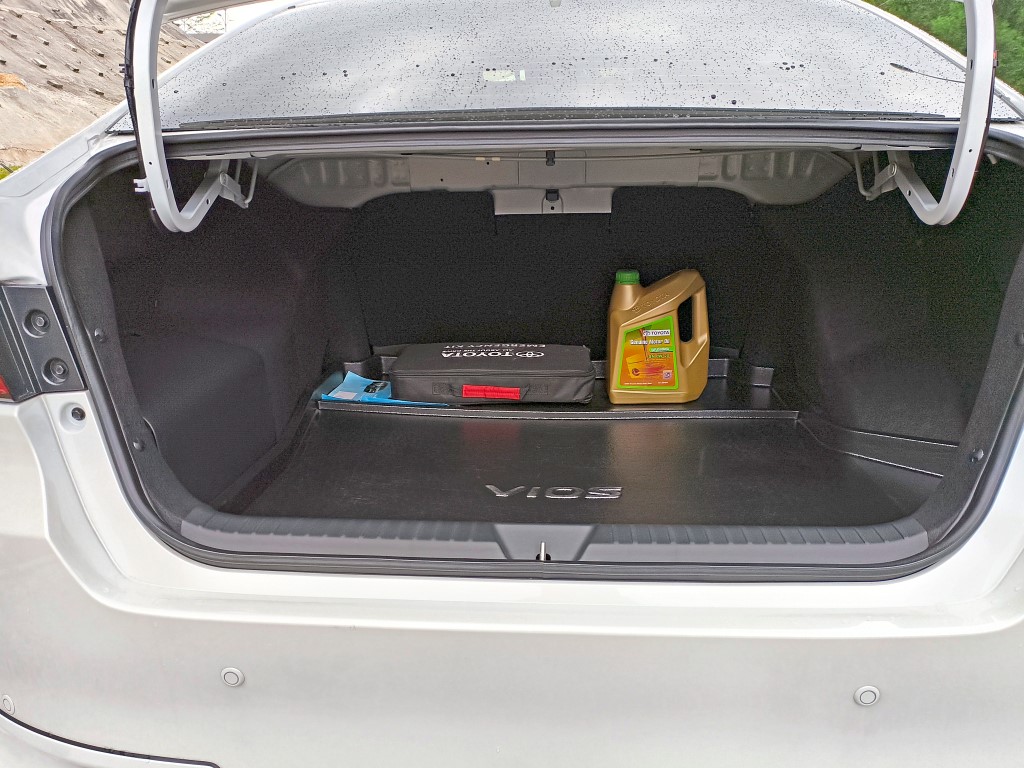
The 460-litre boot is deep enough for family use and includes a full-size spare tyre.
The rear backrest does not fold, and there is no centre armrest.
The glovebox opens without damping, the front seats are manually adjusted and only the driver gets a vanity mirror.
The wireless charging cradle and windscreen-mounted dashcam also look tacked on rather than designed in.
Wireless Android Auto proved cumbersome with our phone, taking more than 30 minutes of menu-poking and restarts before it connected.
A cable worked immediately. The phone may have been partly to blame, but to the owner, it either connects or it does not.
The Vios to buy
The Vios HEV is neither the largest nor the quickest car at this price, and some rivals offer more equipment for less.
For most buyers, the standard HEV makes the most sense.
The petrol versions are cheaper and simpler, while the HEV GR Sport costs RM6,000 more for sportier styling and revised suspension tuning.
The standard HEV occupies the sensible middle ground: quieter in traffic, more economical and more pleasant to use every day without paying extra for the sportier treatment.
SPECIFICATIONS
Toyota Vios 1.5 HEV AT
Engine: 1,496cc 4-cylinder, in-line, 16-valve, DOHC with Dual VVT-i
Maximum power: 90hp at 5,500 rpm
Maximum torque: 121Nm from 4,000-4,800rpm
Electric motor: 79hp (max output); 141Nm (max torque)
Combined system output: 110hp
Hybrid battery: Lithium ion (4.3Ahr or 0.76kWh)
Transmission: E-CVT
Drivetrain: Front-wheel drive
Drive mode: Power/Eco/Normal/EV
Features: Electric power steering, Toyota Safety Sense with pre-collision system, adaptive cruise control, lane keeping control, lane-departure warning and prevention, auto high beam and front departure alert, blindspot monitor with rear cross traffic alert, 3D panoramic-view monitor, six SRS airbags, 10.1-inch touchscreen display audio with wireless Apple CarPlay and Android Auto, 7-inch TFT multi-information display, wireless charger; automatic air-conditioning with rear vents, electronic parking brake with auto hold, auto Bi-LED headlamps, rain-sensing wipers, 64-colour ambient lighting, front digital video recorder
Suspension: Front MacPherson struts; rear torsion beam
Fuel consumption (combined, official): 3.6 litres/100km (NEDC)
Kerb weight: 1,155kg
Turning radius: 4.8m
Boot capacity: 460 litres
Price (OTR without insurance): RM103,900