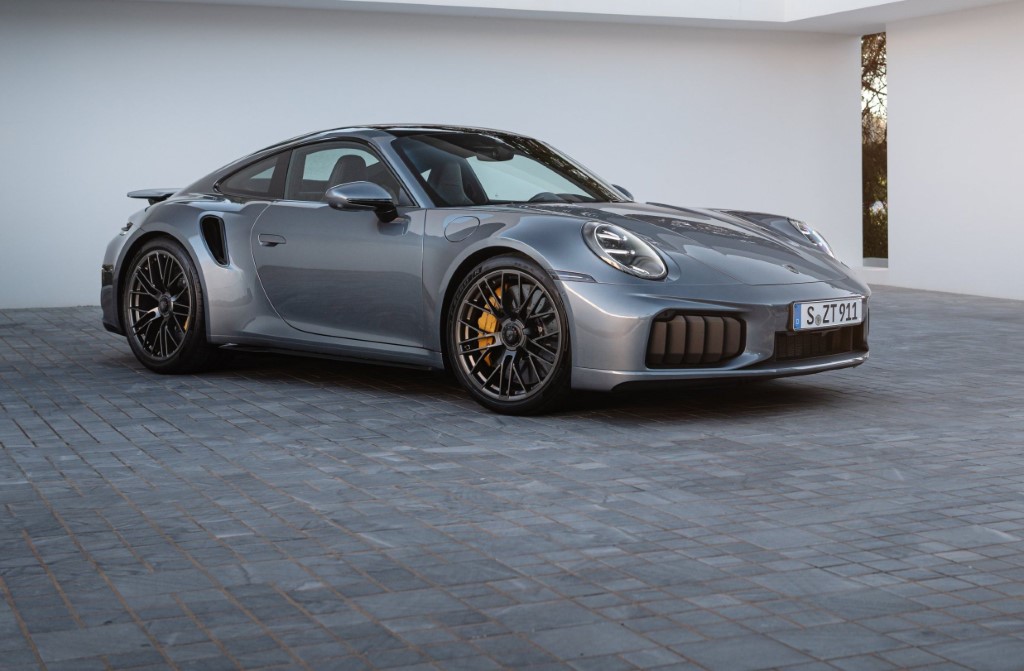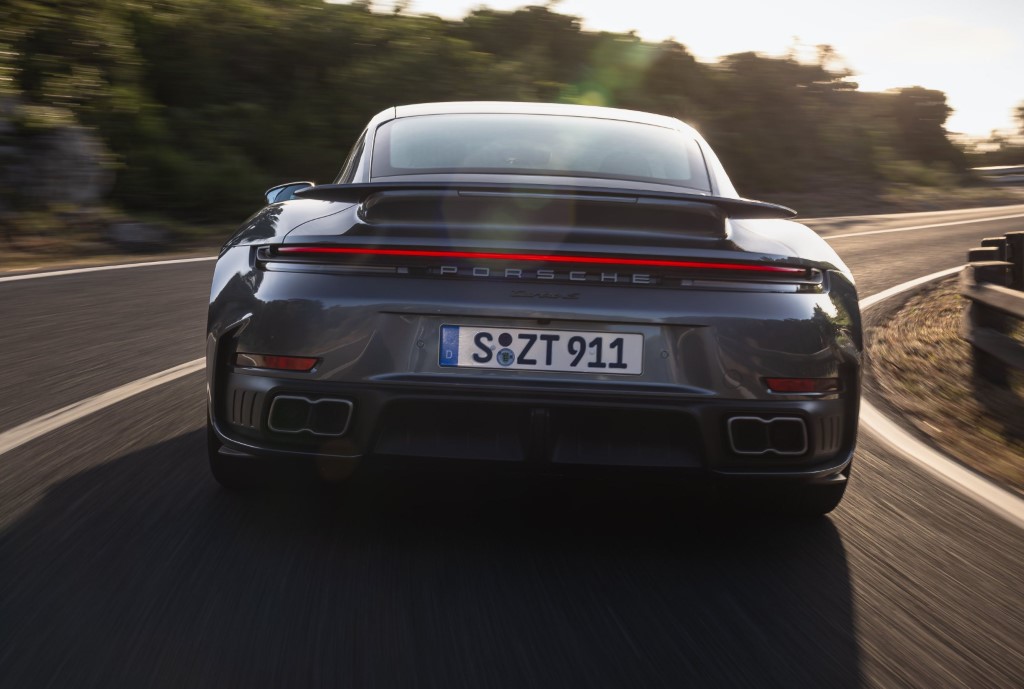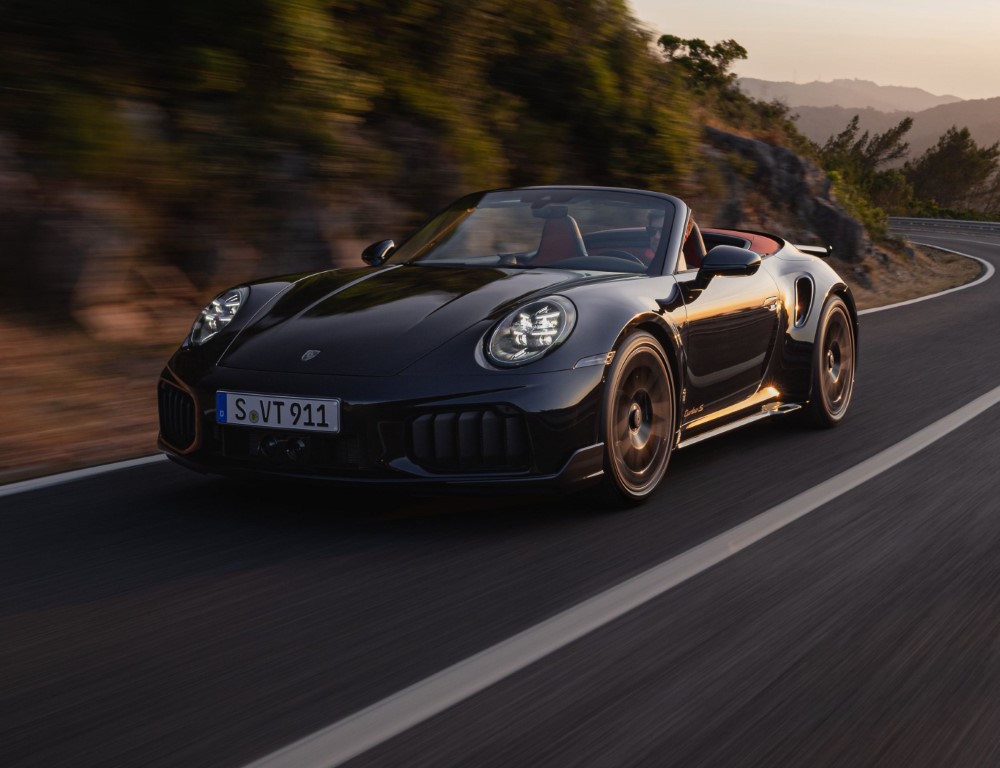
MUNICH: The new Porsche 911 Turbo S is the most powerful production 911 to date, with its innovative twin-turbo powertrain with T-Hybrid technology.
Porsche is presenting the top-of-the-range model of the 911 series at IAA Mobility in Munich (Sept 9 to 14).
"Whether in daily use, on long motorway drives or on the racetrack – we have been able to make the new 911 Turbo S even more comfortable, more individual and significantly faster than its predecessor," said 911 and 718 model line vice president Frank Moser.
Its high-performance powertrain achieves a system output of 523kW (711PS).
Maximum torque is 800Nm and is available over an extremely wide range of 2,300 to 6,000rpm.
The power curve is also characterised by an unusually broad peak: between 6,500 and 7,000rpm, the full power of 711PS is available.
Equipped with lightweight T-Hybrid technology with a 400V system, it increases power by 61PS compared to its predecessor.
A T-Hybrid powertrain first debuted in 2024 in the 911 Carrera GTS.
The technology has been significantly further developed for use in the new 911 Turbo S.
While a single electric exhaust gas turbocharger (eTurbo) is integrated into the T-Hybrid system in the GTS, two eTurbos are used in the new 911 Turbo S.
The compact lightweight high-voltage battery with a capacity of 1.9kWh is the same as the one used in the 911 Carrera GTS.
An eight-speed PDK with an integrated electric motor transmits the power to the Porsche Traction Management (PTM) all-wheel drive system.
The Turbo S Coupé's sprint time of 0-100kph is reduced by 0.2 seconds to 2.5 seconds compared to its predecessor.
It takes 8.4 seconds to reach 200kph, which represents an improvement of 0.5 seconds.
The top speed of the new 911 Turbo S is 322kph.
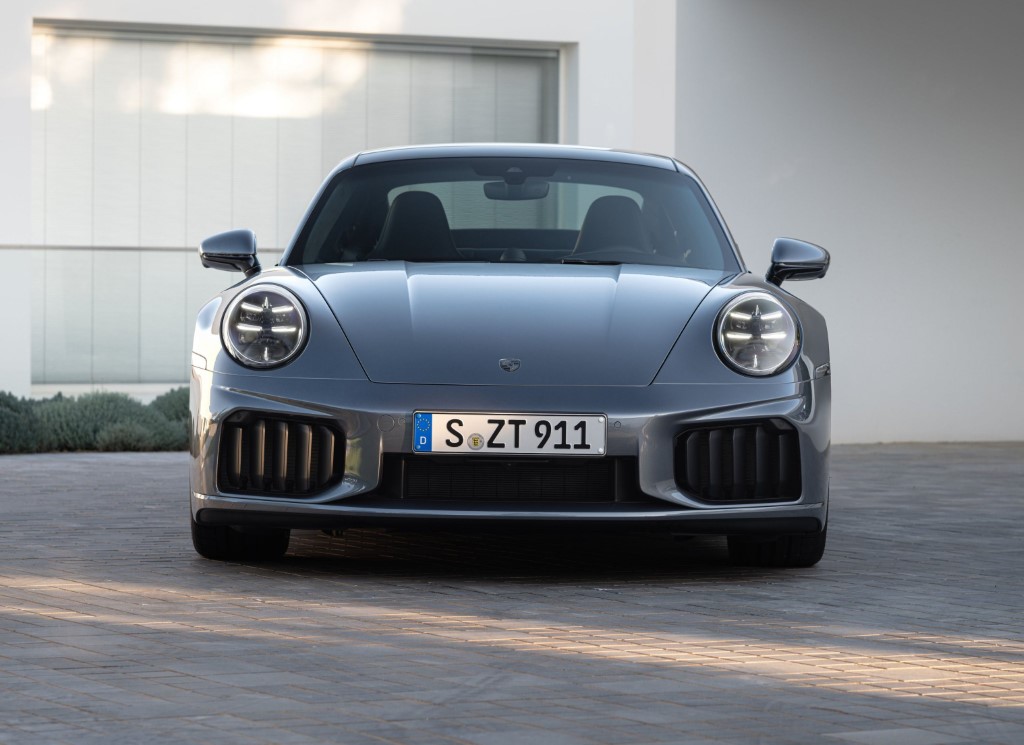
The 911 Turbo S has electro-hydraulically controlled Porsche Dynamic Chassis Control (ehPDCC) as standard, and this reduces the tendency to roll when changing direction and increases agility when entering and exiting corners.
The system works with cross-connected, active coupling rods, in which pressure is built up by oil volume flow depending on the driving situation.
The stabilisers generate support forces and keep the vehicle in balance.
This makes the sports car even more predictable and easier to drive despite the enormous power.
This improves both driving comfort and driving dynamics.
For optimum everyday usability, the electrohydraulic PDCC is available with an optional lift system for the front axle, which acts much faster than its predecessor thanks to its integration into the 400V system.
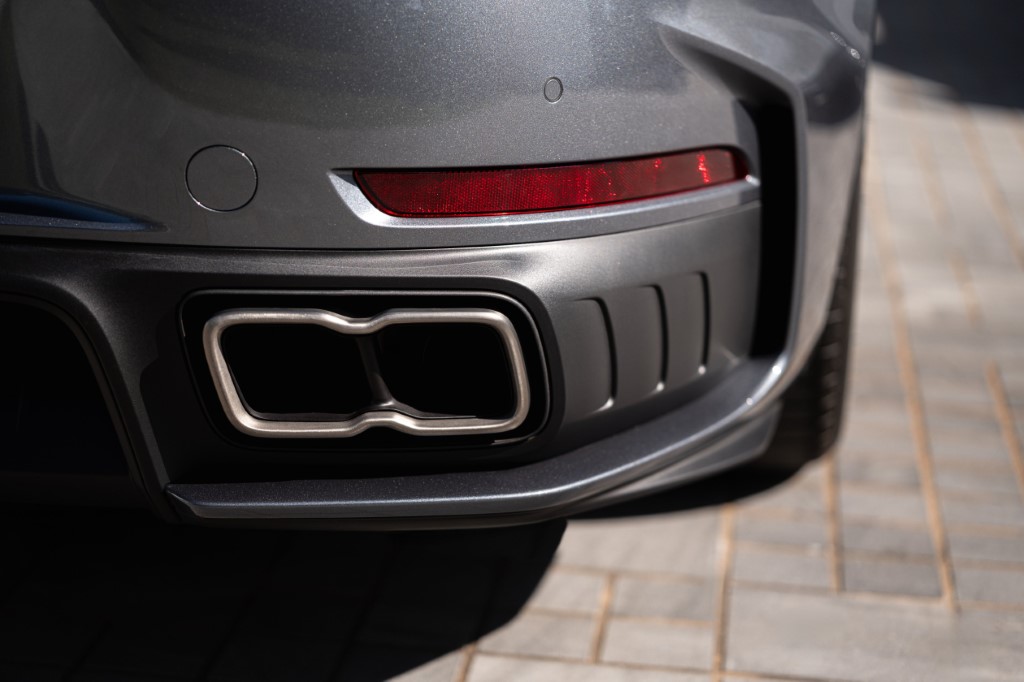
A new standard sports exhaust system with rear silencer and tailpipe trims made of titanium also underscores the position of the 911 Turbo S acoustically.
Its sound was composed especially for the top model.
In addition, the exhaust system saves weight.
Another component of the even more emotional sound image is internal motor upgrades.
The 3.6-litre boxer engine works specifically with asymmetrical timing that adds further frequencies to the engine sound and thus produces a more throaty and sharper sound.
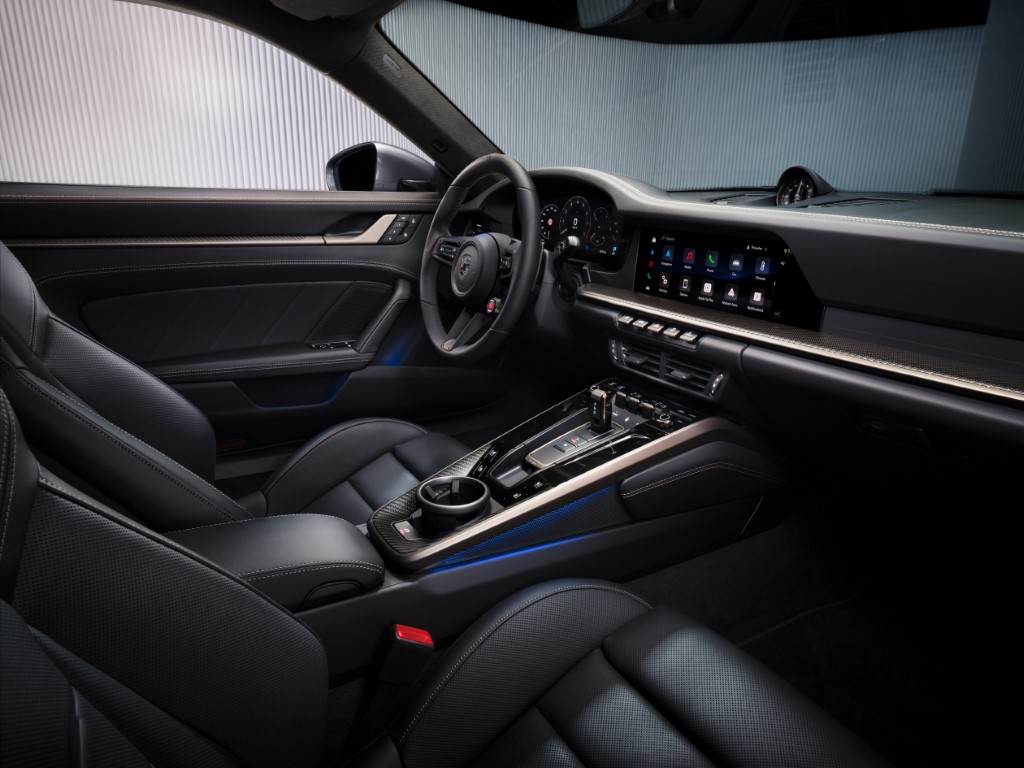
As a coupé, the 911 Turbo S is delivered as a two-seater as standard.
On request, the rear seat system can be configured at no extra charge.
The Cabriolet is generally delivered in a 2+2 configuration.