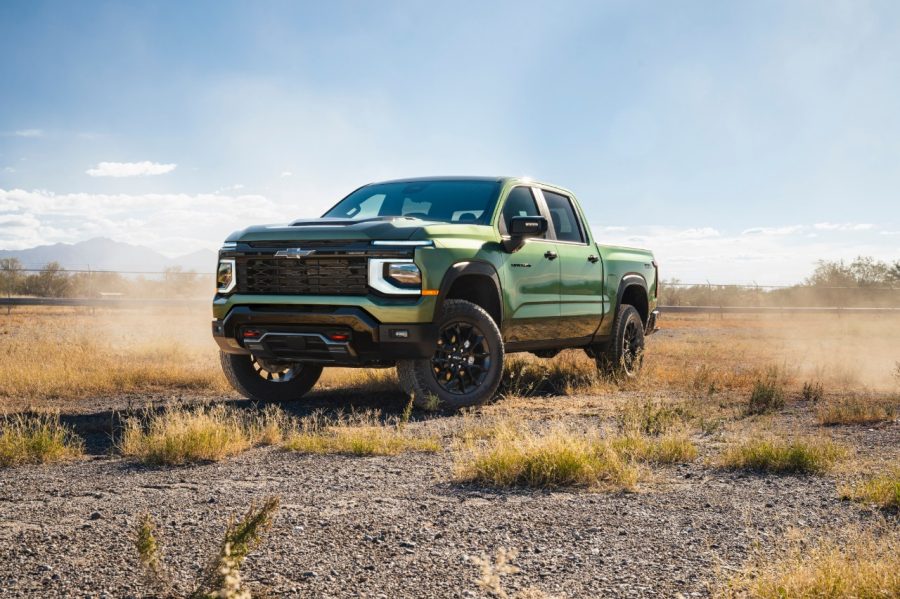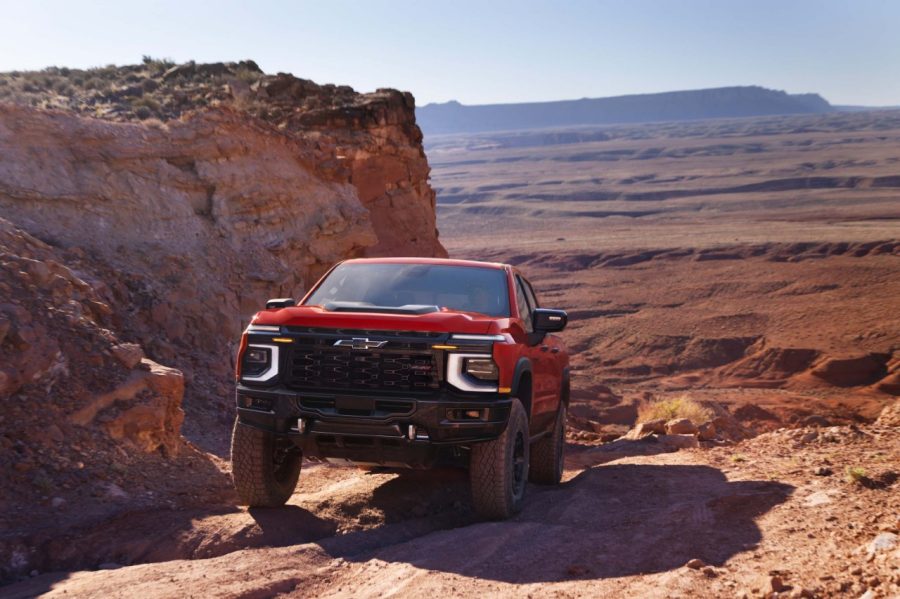
DETROIT: Around 80% of the passive safety engineering work for the 2027 Chevrolet Silverado 1500 pick-up truck was done in the virtual world, generating almost two petabytes of data in the process.
While the 2027 Silverado 1500 was subjected to multiple physical crash tests throughout its development, engineers from the Global Safety Product Integration (GSPI) team performed about 92,000 virtual crash tests.
While physical crash tests are still of utmost importance, the paradigm has shifted towards virtual engineering for occupant safety.
The 2027 Silverado 1500 is emblematic of that shift.
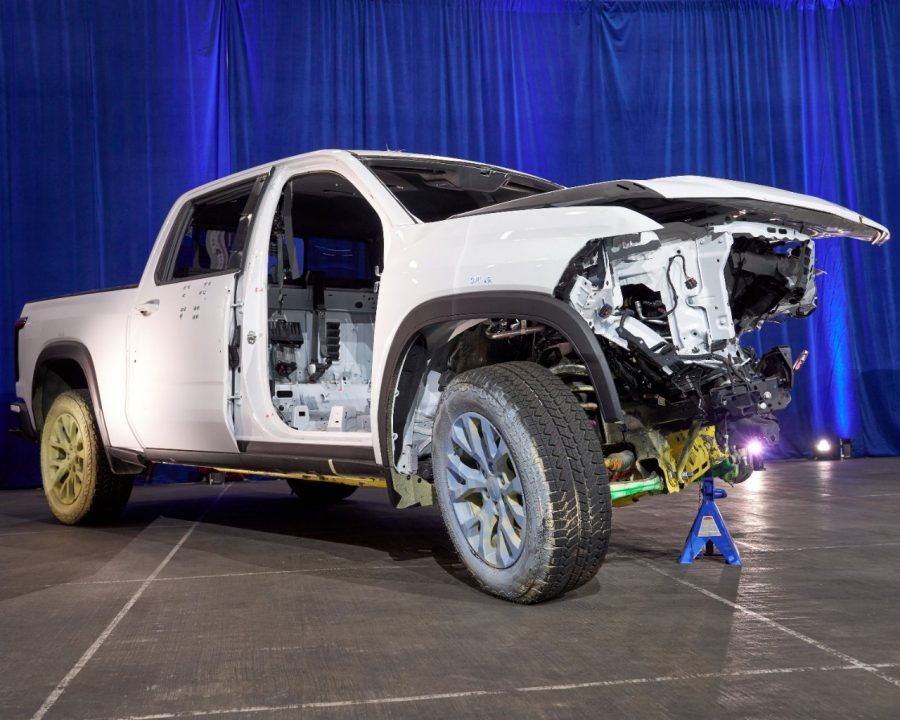
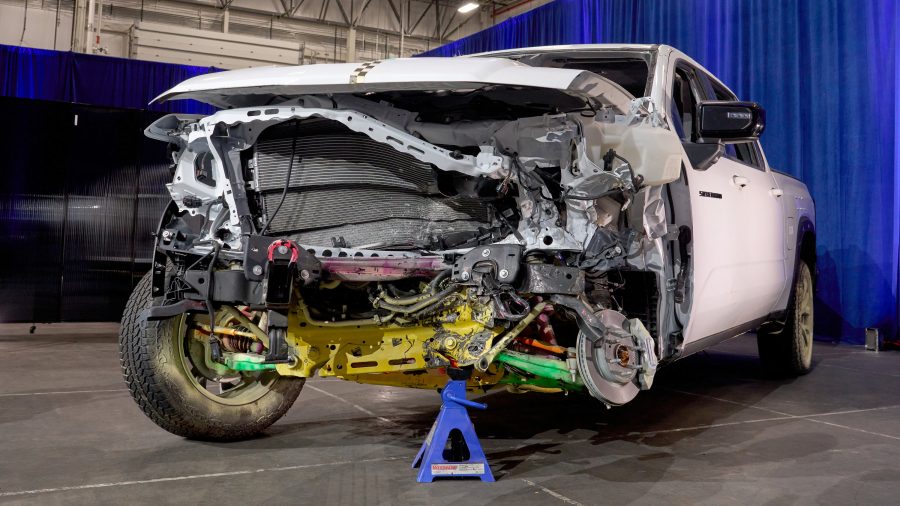
Advancements in Computer-Aided Design (CAD), Computer-Aided Engineering (CAE), and simulation, have allowed safety engineers to do much of their work in a virtual space before performing real-world crash tests like this.
Since physical crash testing is time-consuming and resource intensive—each requires a vehicle that, obviously, can’t be reused — virtual work gives engineers the opportunity to try out far more possibilities, and earlier in development.
“GM is using math-based virtual engineering to run thousands of simulated crashes before physical properties exist,” says GM vice president, global product safety, systems and certification Regina Carto.
“Engineers can evaluate a much broader range of conditions—including different crash modes, occupant sizes, and seating positions. They can examine design details, identify issues earlier and iterate in weeks rather than months.”
The Chevrolet Silverado has been completely redesigned for the 2027 model year, with new powertrains and a more technology-focused cabin.
In place of previous 5.3-litre and 6.2-litre V8 engines, there's a new pair of next-generation small-blocks, the 5.7-litre and 6.6-litre V8s.
Chevrolet’s 2.7-litre turbocharged four-cylinder is now enhanced with 40 more horsepower and gains a 10-speed automatic transmission, replacing the previous eight-speed.
Meanwhile, it’s genuinely hard to comprehend all the data the GSPI team generates on a vehicle programme like this.
Two petabytes is equivalent to around 2.1 million gigabytes; to put it another way, around a trillion pages of text.
Advanced AI will help engineers make sense of these reams of possibilities, helping analyse more variations quickly and arrive at informed design decisions sooner.
That’s critical in helping GM achieve its goal of halving vehicle development time from the current industry standard of four to five years.
AI assists the engineers in processing data, debugging models, and in the near future, assisting with many other repetitive tasks.
That brings us nicely back to this real-world crash test.
“Virtual engineering makes our physical testing more targeted, more efficient, and more informative,” Carto says.
“Virtual models help us explore more possibilities and refine the design; physical tests then confirm those results and help us improve the models. Together, these tools enable us to learn earlier in the process, and with greater fidelity to the real-world conditions our customers may face.”