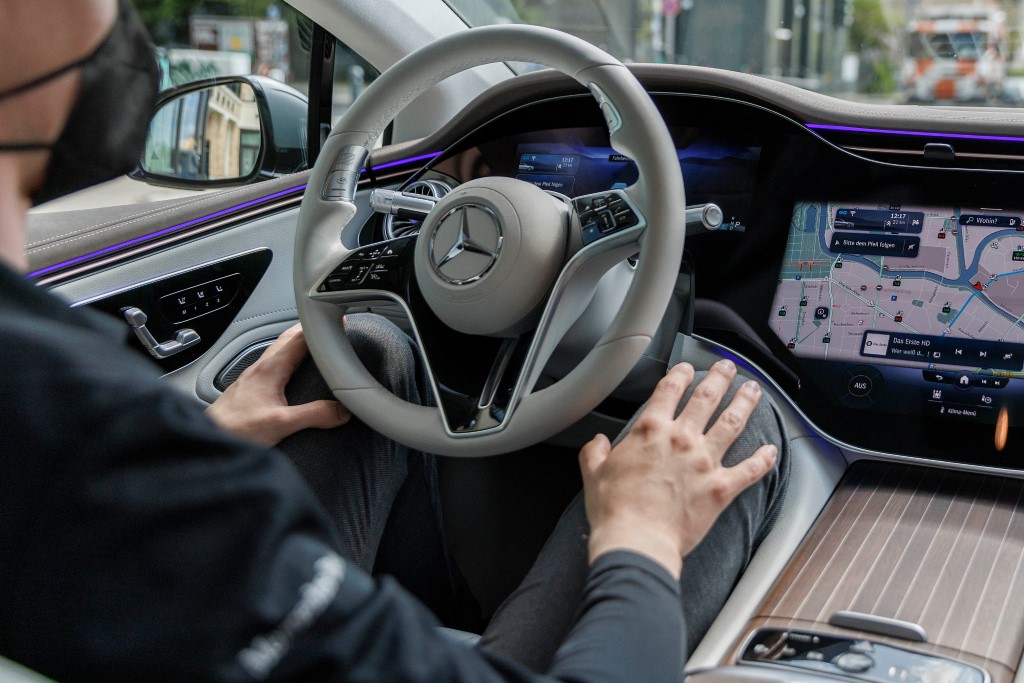
STUTTGART: Sit in the driver's seat of a robot vehicle and you can theoretically take your hands off the steering wheel and even your eyes off the road ahead - but you need to be ready at all times to quickly take control again if alerted.
The problem is that people tend to get drowsy when idly sitting for longer periods.
How best to handle this is the focus of new research in Germany, where scientists are using artificial intelligence to efficiently wake drowsy drivers before they fully nod off.
As it stands, most robot cars on the road are Level 3 (conditional automation), which means the car takes over braking, accelerating and steering.
The person in the driver's seat can look at a smartphone, but must remain awake and be ready to take over at a moment's notice.
Examples include the Mercedes-Benz Drive Pilot on the S-Class and EQS luxury saloons, which allows the car to legally take over driving at up to 95kph on a German motorway under certain conditions.
When Drive Pilot is activated, the driver is legally allowed to enjoy other activities, such as watching a movie.
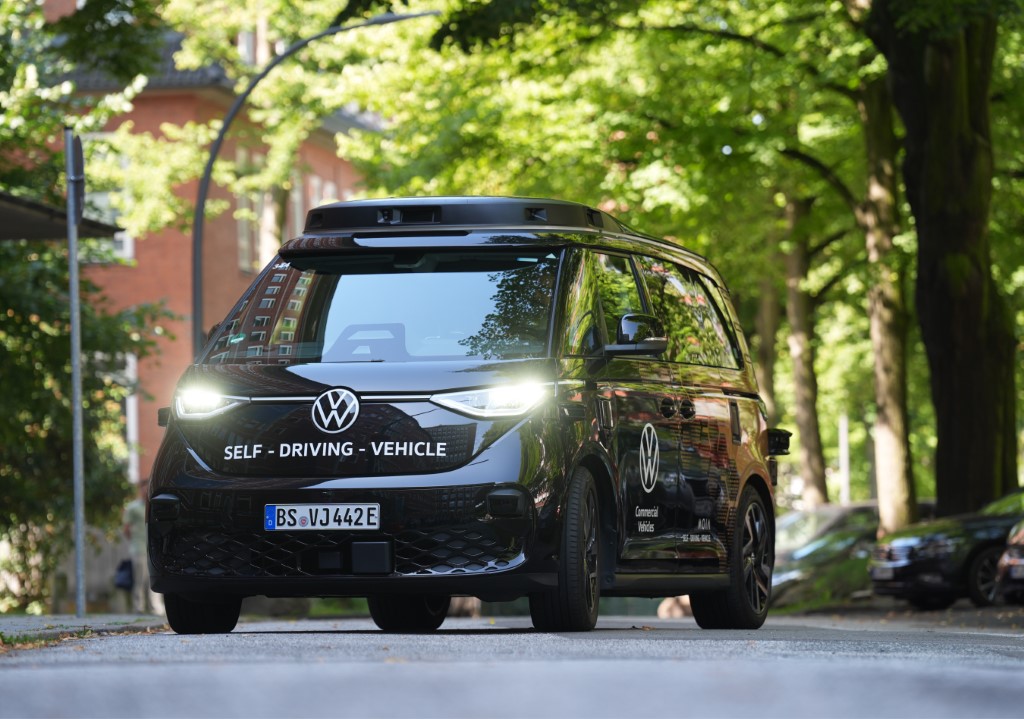
The next stage up is Level 4 (High Automation). Here the car is fully autonomous within specific areas or conditions.
No human interaction is required, though a steering wheel and pedals are still present for manual override. Examples include Waymo and Cruise robotaxis in the United States.
Mercedes says that at Level 3 the car will brake to a standstill if the driver fails to take back control even after increasingly urgent prompting.
Yet a simple buzzer or shrill noise can be ignored just like a bedroom alarm clock - or lead to a startled and potentially hazardous reaction.
At both Level 3 and 4, it is all about overcoming drowsiness or what the experts call "sleep inertia", which can last up to two minutes.
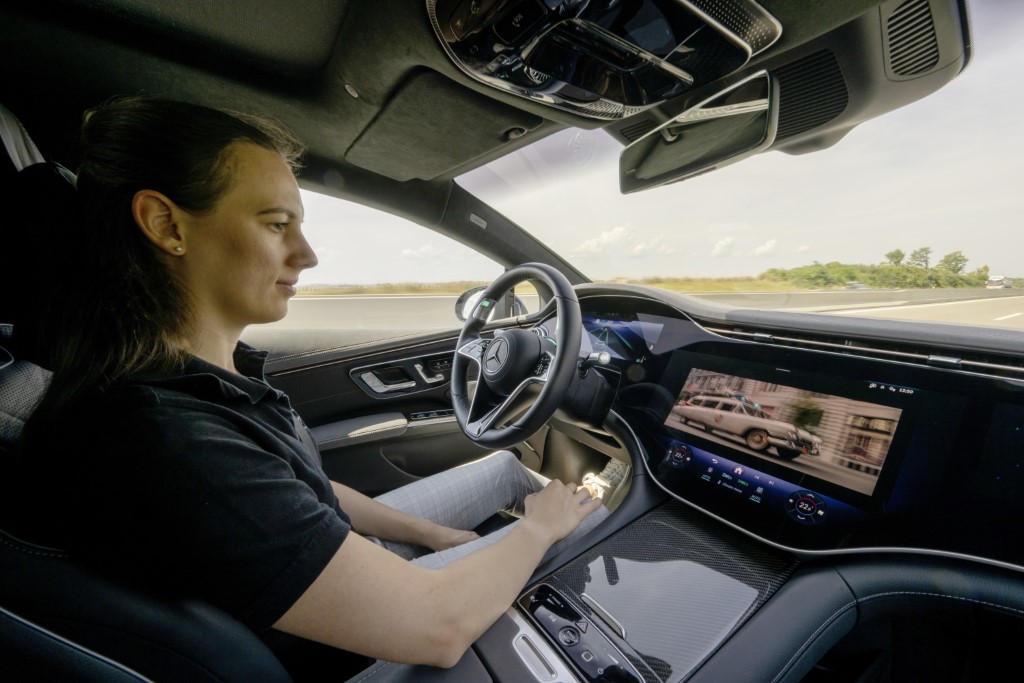
The key to making both levels safer in future is alerting the driver in good time. This is where researchers in Germany have already successfully tested a prototype.
Developers believe AI will be able to do much more than just detect closed eyelids, but also identify nuances that suggest sleep is imminent, such as changes in posture and minimal movements, all captured by interior cameras and analysed in real-time.
The Salsa research project ("Smart, Adaptive and Learnable Systems for All") is backed by a consortium of automotive manufacturers, suppliers, and scientists, driven by the University of Stuttgart and the Fraunhofer Institute for Optronics, System Technologies, and Image Exploitation (IOSB), among others.
The team has developed what they call a "gentle awakening" by identifying a combination of vibrations in the seat and targeted sound elements as the optimal way to bring the driver back to the here and now.
Sensors, like those already installed in production vehicles, track the driver's posture, while scientists simultaneously monitor brain activity using electroencephalography (EEG).
In this process, electrodes on the scalp measure the electrical activity of the cerebrum.
The data obtained serves as a reference to teach the AI to assess a person's actual state as precisely as possible.
This way, the system can "learn" whether a person is merely regenerating or has already sunk into deep sleep.
This is crucial, as the requirements for taking over the driving task differ significantly depending on the personal state of alertness.