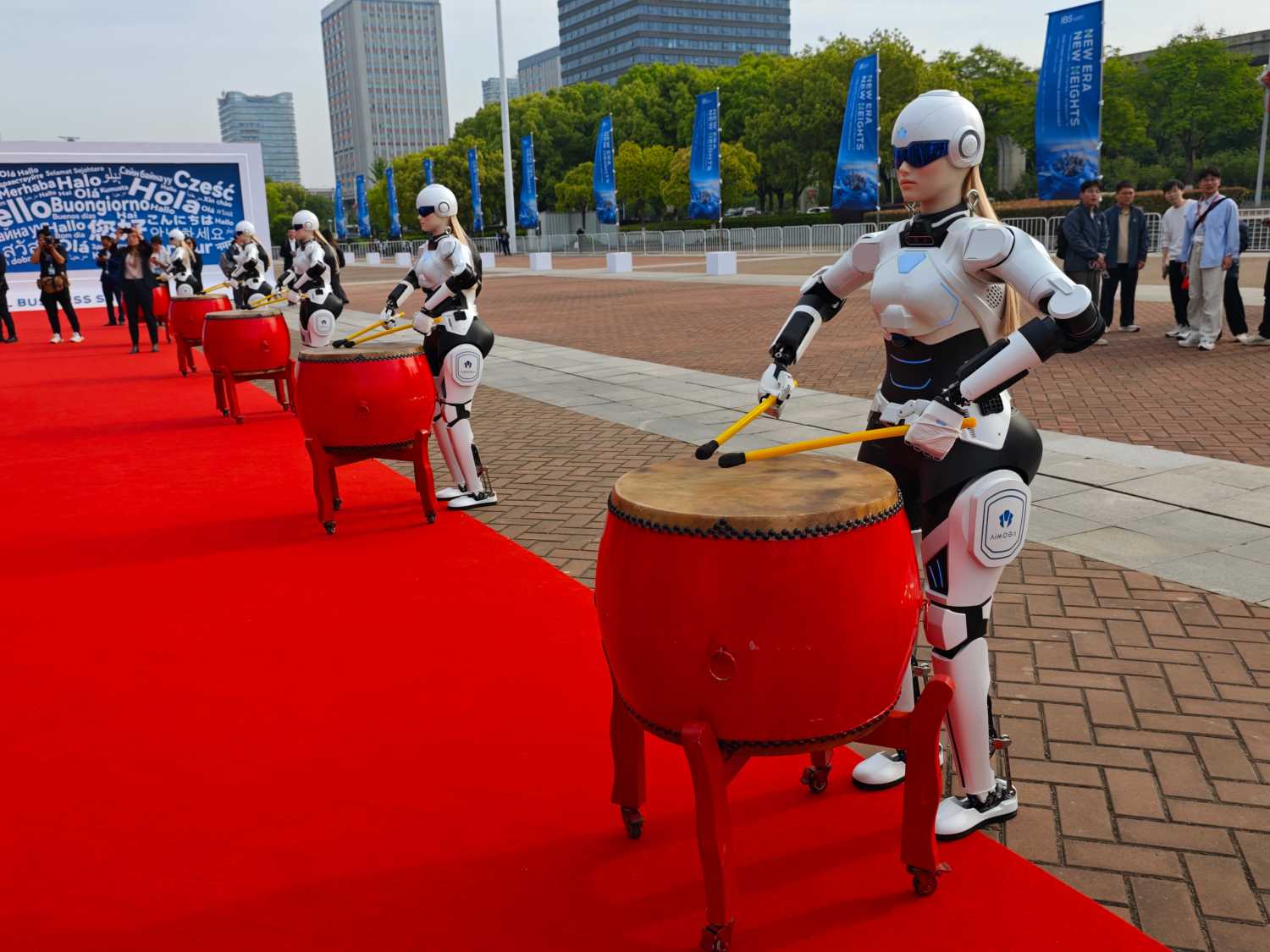
AT the recent Chery Global Intelligent Strategy Conference in Wuhu, China, humanoid robots welcomed delegates with a choreographed drum performance.
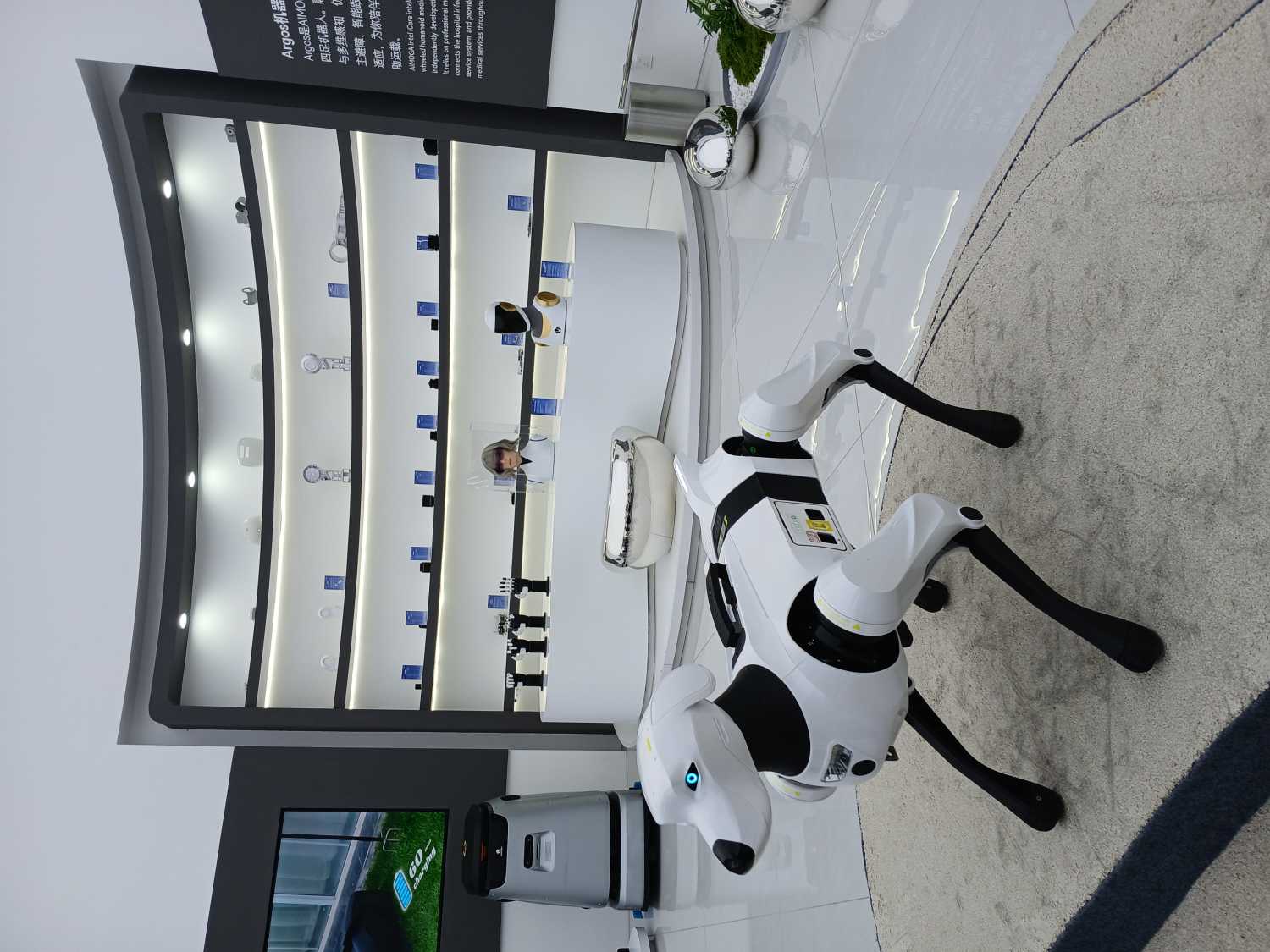
In the concourse area, robot dogs roam freely, performing routines much to the delight of the smartphone-wielding attendees.
The presentation occasionally borders on theatrical, but the message behind it is increasingly serious.
For automakers such as Chery, the future of the automotive industry is no longer being framed purely around engines, performance or even electric vehicles.
Instead, the company is racing to position themselves around artificial intelligence, software integration, robotics and autonomous mobility.
That shift was evident days earlier at the 2026 Beijing International Automotive Exhibition (Auto China 2026), where the Chery Group unveiled more than 50 vehicle models alongside 31 technology exhibits.
Across its portfolio of brands, the company showcased its developments in autonomous driving, intelligent energy management and AI-assisted vehicle systems.
The rise of the software- defined carmaker
As the global EV market becomes increasingly crowded, technology is emerging as the next major competitive battleground.
Chinese automakers in particular are investing heavily in software ecosystems and intelligent driving systems as they compete against its rivals including Tesla and fast-growing domestic brands.
At Chery, that ambition now stretches well beyond conventional vehicle manufacturing.
Thus far the company has presented concepts including the Lingxiao flying car and outlined plans for future robotaxi mobility systems, although many remain firmly in the experimental or developmental phase.
More immediate applications, however, are already beginning to appear across its vehicle platforms.
Chery says it is developing Vehicle Perception Development (VPD) systems designed around driving conditions in overseas markets, including regions prone to extreme heat and heavy rainfall.
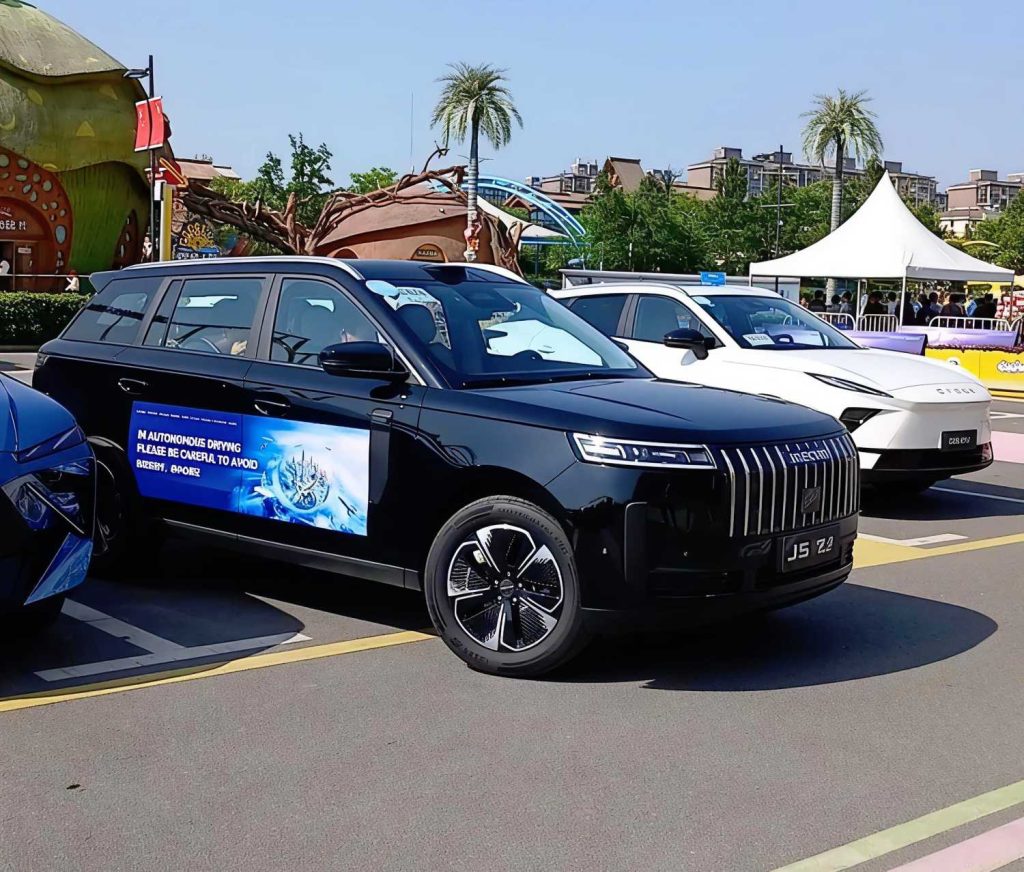
Prototype demonstrations have included vehicle summoning systems, autonomous valet parking and wireless charging technologies.
Artificial intelligence is also becoming increasingly embedded within the vehicle architecture itself.
Chery’s “Healthy Cockpit” technology focuses on in-car interaction and driver monitoring, while its Integrated AI Driving Control Platform is designed to coordinate multiple systems simultaneously.
Its Intelligent Motion Control and Intelligent Energy Management systems combine AI-assisted analysis, multi-sensing technology and data fusion to optimise charging efficiency, energy consumption and route planning.
Much of the technology reflects a broader industry shift where software capabilities are becoming as central to automotive development as mechanical engineering once was.
Robotics moves into everyday use
The company’s ambitions are perhaps most visible through AiMOGA, the group’s robotics division.
While humanoid robots remain associated largely with futuristic demonstrations, Chery is already testing robotics systems in more practical environments.
Traffic control robots have already been deployed in cities including Wuhu and Guangzhou, while medical assistance robots are being developed through partnerships involving hospitals and China’s National Health Commission.
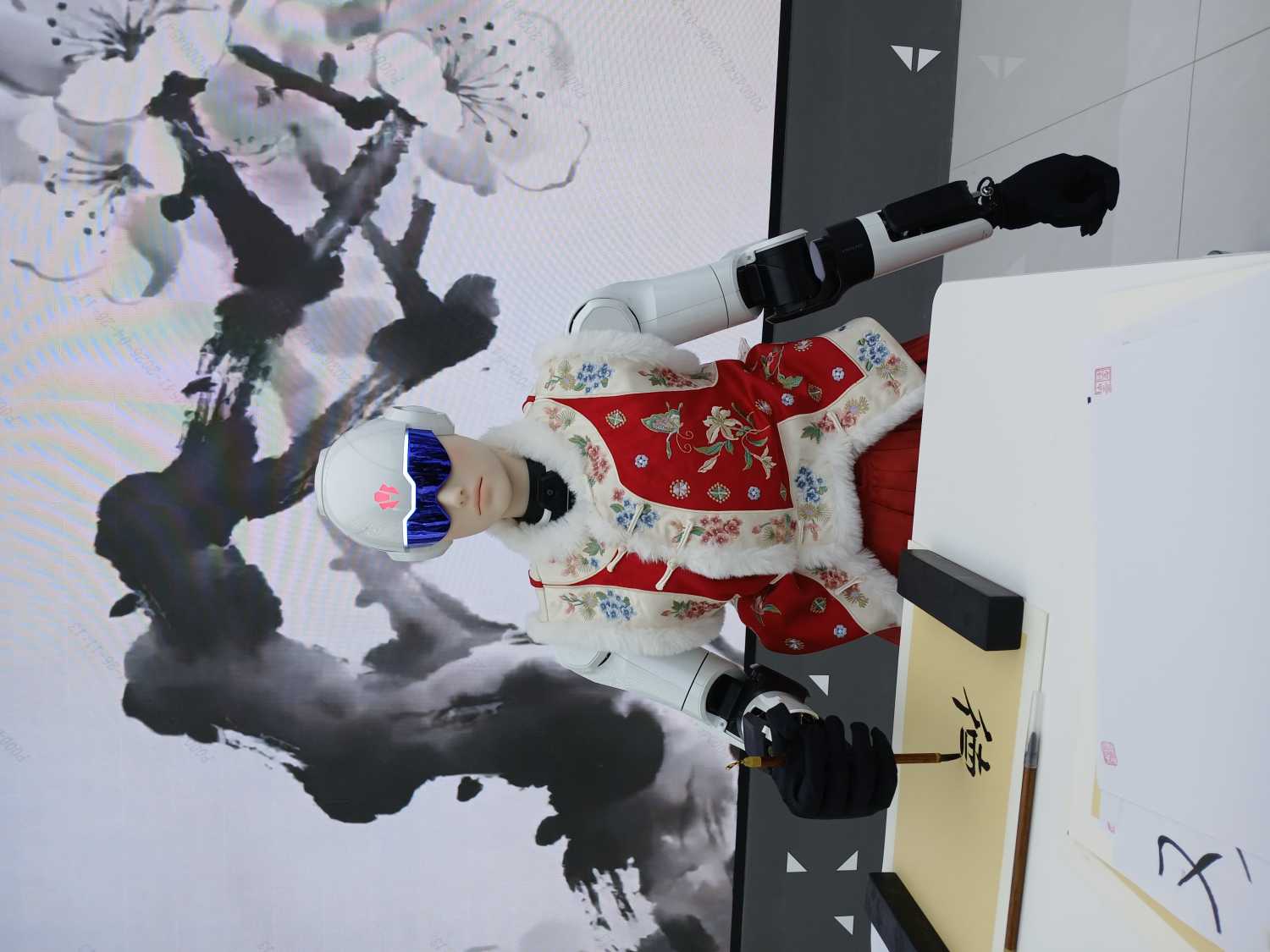
Other applications are aimed at commercial environments, including reception robots for retail spaces and automotive showrooms.
Companion-style robotic pets also form part of the company’s expanding robotics portfolio.
Chery has additionally showcased research into multimodal brain-computer interface technology, reflecting how automotive companies are increasingly exploring sectors once associated more closely with consumer technology firms than traditional manufacturers.
At Chery’s Group headquarter, one display captures that transition clearly: a humanoid robot stands beside the first automobile produced by the Chery Group.
The contrast reflects how rapidly the definition of a modern car company is evolving.
Whether consumers ultimately embrace robot assistants, autonomous mobility ecosystems and AI-driven vehicle experiences at scale remains uncertain.
But for companies like Chery, the race is no longer simply about building better cars.
It is about convincing consumers that the future of mobility will be built around intelligent technology as much as transportation itself. – R Augustin