PARIS/WOLFSBURG: The latest figures make it abundantly clear: The average new car in Germany and many other car-loving western European countries now costs a third more than it did a decade ago.
Stats from the Center Automotive Research (CAR) in Germany show that the price tag has gone up by €14,470 (RM66,136/35%) to €41,300 (RM189,000) in just over 10 years, creating a headache for many cash-strapped buyers seeking fresh family transport.
The price spiral includes models with combustion engine as well as full-electrics.
"If we all need to go out and buy an electric car soon, mobility will become much more expensive," said CAR-director Ferdinand Dudenhöffer,
Among the cheaper electric cars is the Volkswagen ID.3, which is listed at €43,995 in its home market. VW markets it as a Golf for the electric age, even though price is on the steep side.
Even the cheapest options of all are still beyond the reach of many, and the bare-bones Dacia Spring still costs €22,550.
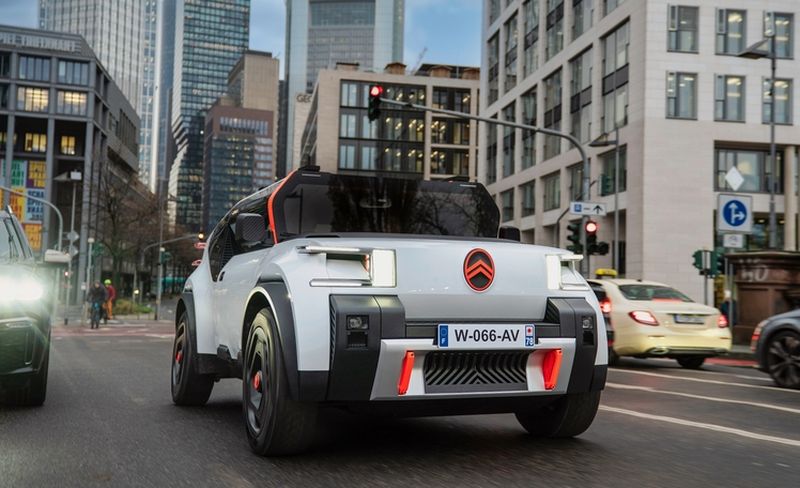
"With prices like these, we will exclude many customers from the new car business in the future," said Bertrand Leherrisier, who works for Citroen. His team is struggling to come up with concepts that will enable everyone to turn onto electric avenue. One of the them is the quirky Oli concept.
For Leherrisier, the one-off showcar is just what a sensible family car should look like in the electric era. Standing at 4 metres, it is big enough for four people. It is also designed to cost around €25,000.
Like any concept, the car has fired the imagination of many and the list of those who would buy a production version is long. People appear not to be put off by the innovative materials it uses such as body elements made of cardboard or an interior fashioned from polyurethane foam, which is created using a 3D printer.
Pricing is central to the Oli concept and car strategists realise that a lot of cost-cutting will be needed in order to make cheap electric cars commercially viable.
The idea is to cut weight, which allows for a smaller and thus cheaper battery, without range suffering too much. A lower top speed means reduced engine power, which also keeps the battery size down.
Buyers who can live with a maximum speed of 110 km/h - which was last common in the 1950s - will be happy as long as the range is at least 400 km. The French expert said this combination may add up to an affordable electric car soon.
To get budget electrics off the ground, the industry needs to go into reverse and back off from overblown luxury models. It should rediscover its roots said the Frenchman, with an eye to the simple cars of yore like the Citroen 2CV and original Mini.
The plan depends to an extent on battery prices, warns Renault board member Guido Haak, who heads the French company's advance development unit. "They still account for a good third of the costs of high-volume cars. And instead of becoming cheaper through large quantities, as computer chips used to be, prices are currently rising steeply due to demand and supply bottlenecks."
According to Leherrisier, the French are not alone with the Oli idea, which is intended more as food for thought than as an actual production car. Several volume manufacturers are currently sharpening their pencils and struggling to pen e-cars that are affordable without resorting to a sandwich-cardboard utility body.
VW is working flat out on the smaller ID.2 based on the ID platform. New brand boss Thomas Schäfer has promised that a car costing less than than €25,000 will emerge. The makers have confirmed that their Skoda and Seat Cupra counterparts will also offer a similar model.
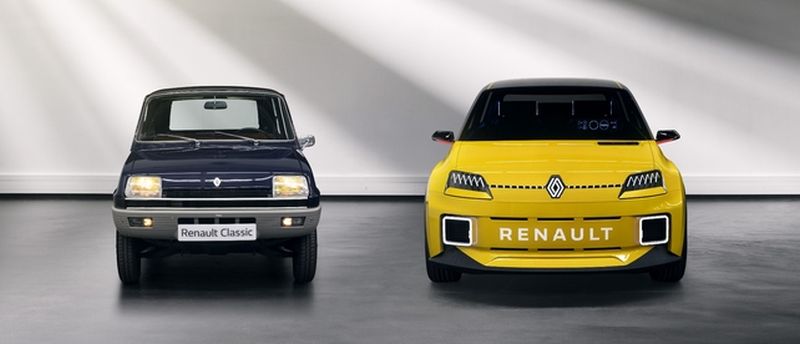
Renault also wants to revive the chunky R5 runabout as an affordable electric mobility. According to company boss Luca de Meo, an entry-level price of around 25,000 euros is the target here too.
The current struggle towards affordable electro-mobility is shown by the number of light cars and micro-mobiles entering the market.

Previously seen as rather jokey mobility aids for people without a car driving licence, models such as the Swiss Microlino or the upcoming Opel Rocks-e are now becoming more like grown-up cars.
"After all, a Rocks-e on lease often costs no more than a monthly ticket for the public transport system and is thus affordable for almost everyone," said Opel boss Florian Hüttl, with reference to the snub-nosed two-seater due to retail in Germany later this year for €7990.
It's a good thing owners do not expect too much of this ultra-compact runabout since its 9 kW/12 hp engine power and 5.5 kWh battery capacity are just enough to haul it up to 45 km/h, with 75 kilometres of travel between charges.
Being made in Germany or indeed in Europe is probably not feasible for budget electric cars either.
"Production in a country with lower labour costs" is one way to keep prices down, said Jan Burgard of strategy consultant Berylls. He is thinking primarily of China, but does not mean the cheap imports of no-name e-scooters sold at many DIY stores.
Burgard means current premium projects such as the next MINI or the new Smart, both of which are being built in Asia with considerable German input. "This is an example that could soon be followed by volume brands in the struggle for lower prices."