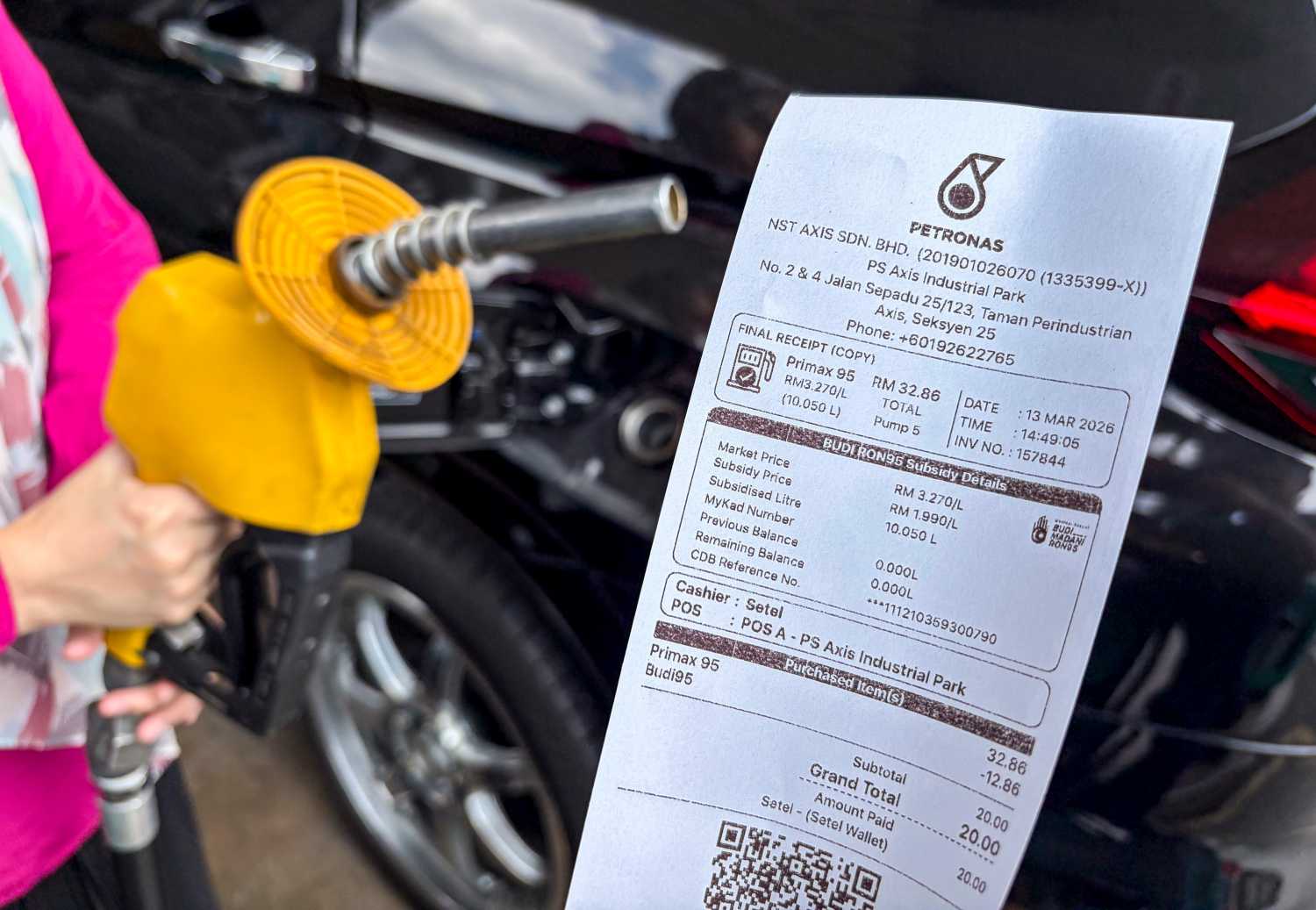
PETALING JAYA: Urging Putrajaya not to be hasty, experts and lawmakers warn that any changes to the fuel subsidy can have spillover effects across households of different income backgrounds.
Commenting on the planned review of the Budi Madani initiative, particularly for higher-income earners, they cautioned the government against rushing to cut subsidies as the move would have wide implications.
Associated Chinese Chambers of Commerce and Industry of Malaysia (ACCCIM) treasurer-general Datuk Koong Lin Loong said the proposal to exclude the Top 20 (T20) income earners from the Budi Madani 95 initiative is not straightforward to implement.
“It is not as simple as saying we can just cut all T20 from the initiative because Malaysia is very diverse.
“We need to look at this from various perspectives,” he said.
Citing an example, Koong said geographical differences must be taken into account, noting that a gross income of RM1,000 in Kelantan carries a very different value compared with the same amount in Kuala Lumpur.
“The cost of living varies significantly between regions, so the same income level does not reflect the same standard of living,” he said, adding that disposable income should also be considered, rather than relying solely on gross income.
“We cannot depend only on gross income without factoring in what is left after essential expenses.
“Living costs in urban areas like Kuala Lumpur are much higher compared to Kelantan, Terengganu or Sabah, which means disposable income is lower even if gross income appears higher,” he said.
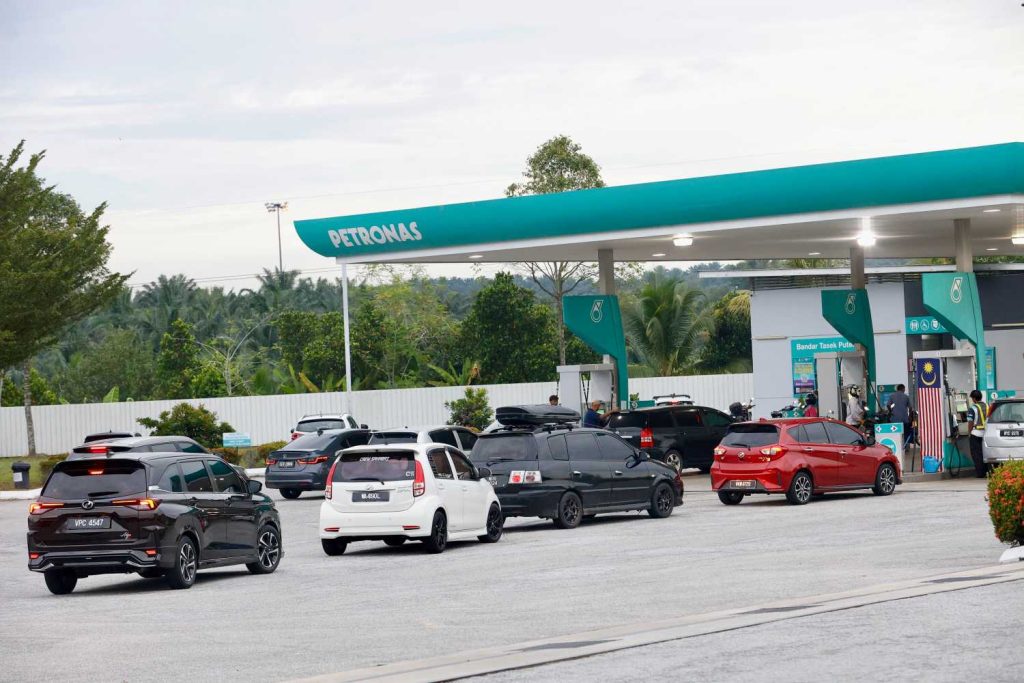
Pasir Gudang MP Hassan Karim, however, said he fully supports the government’s move to exclude T20 income earners from the Budi Madani 95 initiative, saying it could help the government save up to RM1.5bil a month so there would be no need to cut subsidies for important sectors like health.
It is “obscene” to continue a blanket subsidy approach for high-income earners, especially amid global economic pressures and the ongoing energy situation, he said.
According to sources familiar with the matter, the government is also considering further adjustments to the Budi Madani 95 allocation, including a possible reduction of the subsidy quota to 150 litres for the T20 group.
“However, the matter has yet to be finalised,” said a source.
Federation of Malaysian Consumers Associations president Datuk Dr Marimuthu Nadason said instead of immediate cuts, the government should explore other cost-saving measures to sustain the initiative.
“There are other ways we can approach this issue, including saving electricity in offices, for instance.
“What we need right now is behavioural change. Many of us are travelling across the country like nothing is happening. We need to change our mentality first,” he said.
Meanwhile, Klang MP V. Ganabatirau urged the government not to rush into any “bold decisions” without a thorough study, saying it could impact both businesses and the public.
“We need to study each situation properly before making a decision.
“I understand the government wants to make some savings, but we do not want to be accused of acting hastily or for publicity purposes to win support from certain segments of society,” he said, while stressing the importance of using comprehensive data to clearly define T20 and M40 income groups.
“We also need to consider the long-term impact, not just short-term public sentiments,” he said.
Batang Sadong MP Rodiyah Sapiee said any review of the Budi Madani initiative must be carried out carefully, fairly, and transparently, with full understanding of the real cost-of-living pressures still faced by many Malaysians today.
“While efforts to strengthen the country’s fiscal position and improve subsidy targeting are understandable, the issue should not focus only on excluding certain income groups without also seriously addressing larger concerns such as leakages, wastage and efficiency in overall public spending.
“Many rakyat feel that fiscal adjustments should be shared more fairly and not be seen as a burden that falls mainly on ordinary consumers,” she said.
Former Cameron Highlands MP Datuk C. Sivarraaj said he supported the rationalisation move, describing it as a progressive step to improve government spending efficiency.
“I agree with the rationalisation of RON95 subsidies for the T20 group.
“It is a progressive step to ensure national subsidy expenditure is managed and channelled towards infrastructure development and other people-focused initiatives,” he said, calling for the policy be extended to include Cabinet members, state executive councillors, MPs, senators and senior civil servants classified as T20, calling for leaders to “lead by example”.