BEIJING: GEELY Auto Group presented a comprehensive technology ecosystem dubbed Full Domain AI 2.0, which is said to mark the automaker’s transition from an automaker into an intelligent technology company.
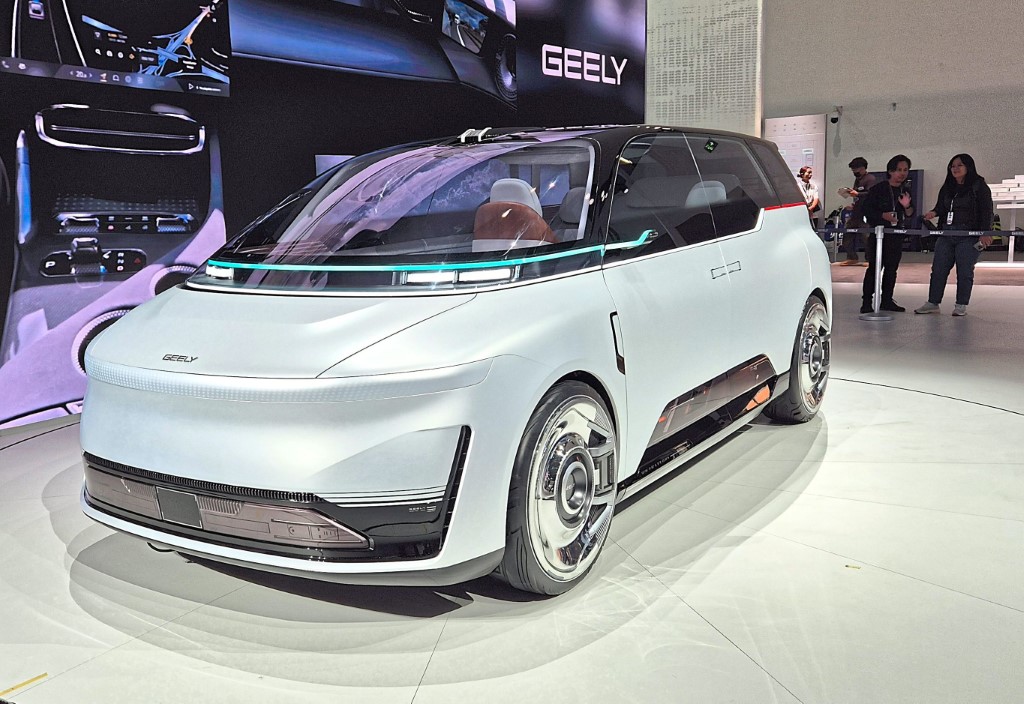
To mark the occasion, the company unveiled its EVA Cab, which is to be China’s first Robotaxi prototype at the recent 2026 Beijing International Automotive Exhibition (Auto China 2026).
Developed in collaboration with AFARI Technology and CaoCao Mobility, the EVA Cab acts as a demonstration of “embodied intelligence”.
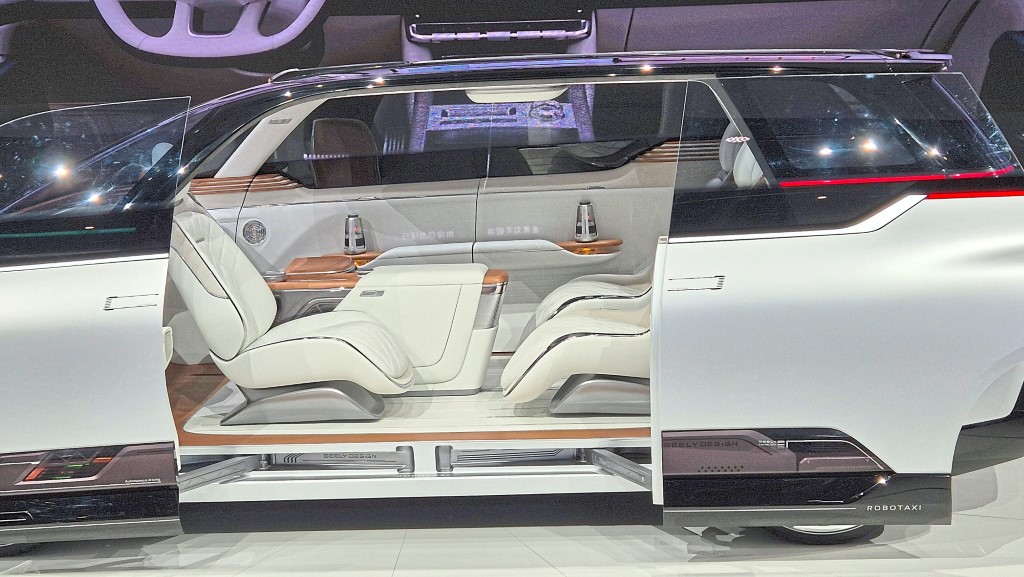
The vehicle’s design philosophy, “Tech-driven Mobility Leading to a Better Life,” features wide-opening electric sliding doors and a face-to-face cabin layout.
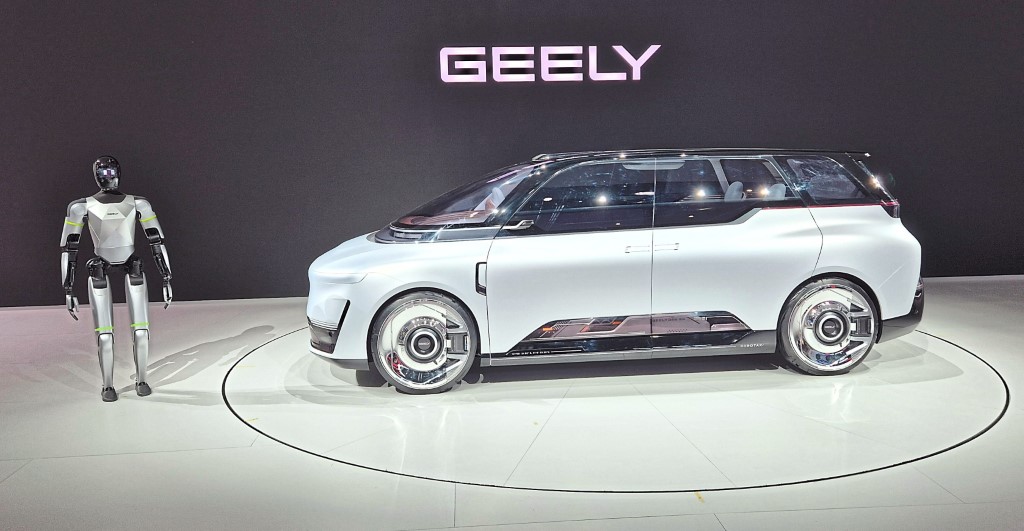
The prototype looks to maximise interior space for the comfort and benefit of its passengers while maintaining a sophisticated interior.
The cabin is said to possess human-centric details, including a “Galaxy Skyroof” ceiling and “Orchid Pavilion and Meandering Streams” armrests.
It highlights world-first technologies that will define the next generation of autonomous hardware.
This includes a 2,160-line digital LiDAR (Light Detection and Ranging) system, capable of imaging 25.92 million points per second with a detection range of 600m.
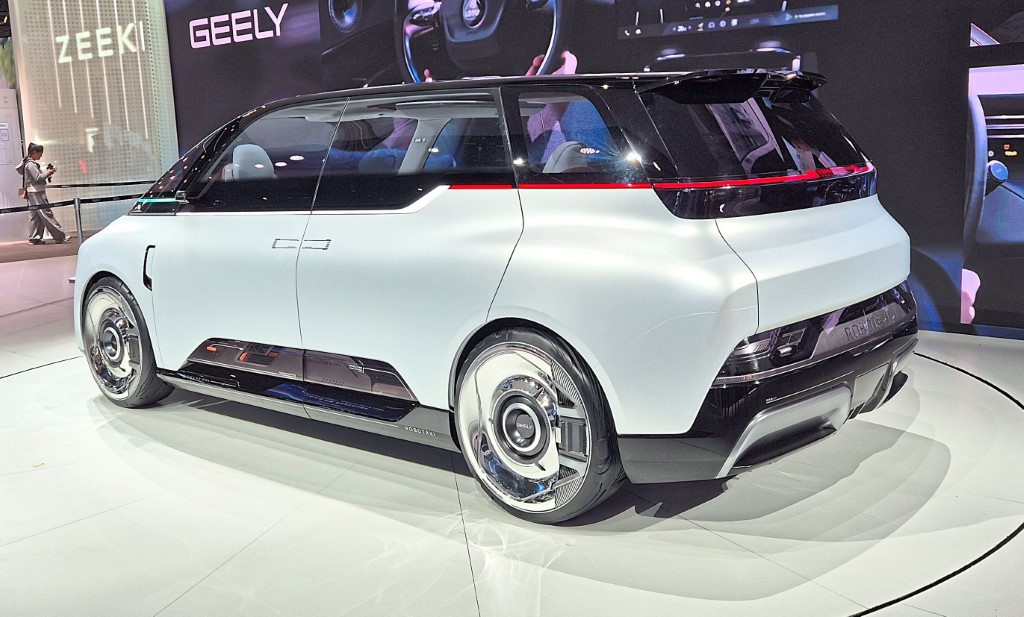
All that data is said to be processed by the industry’s most powerful in-vehicle computing platform, which integrates flagship chips from NVIDIA and Qualcomm.
Doing so will provide the vehicle with a combined computing power exceeding 3,000 TOPS (Tera Operations Per Second), representing a seven-fold increase in the parameter count of the company’s World Action Model (WAM) - or Geely’s “Vehicle Brain”.
Such computing power is equivalent to roughly over a thousand top-tier Intel Core i7 desktop chips operating simultaneously.
Security also remains a critical concern in this hyper-connected era and this is addressed by EEA 4.0 Quantum-Grade AI Electrical/Electronic Architecture.
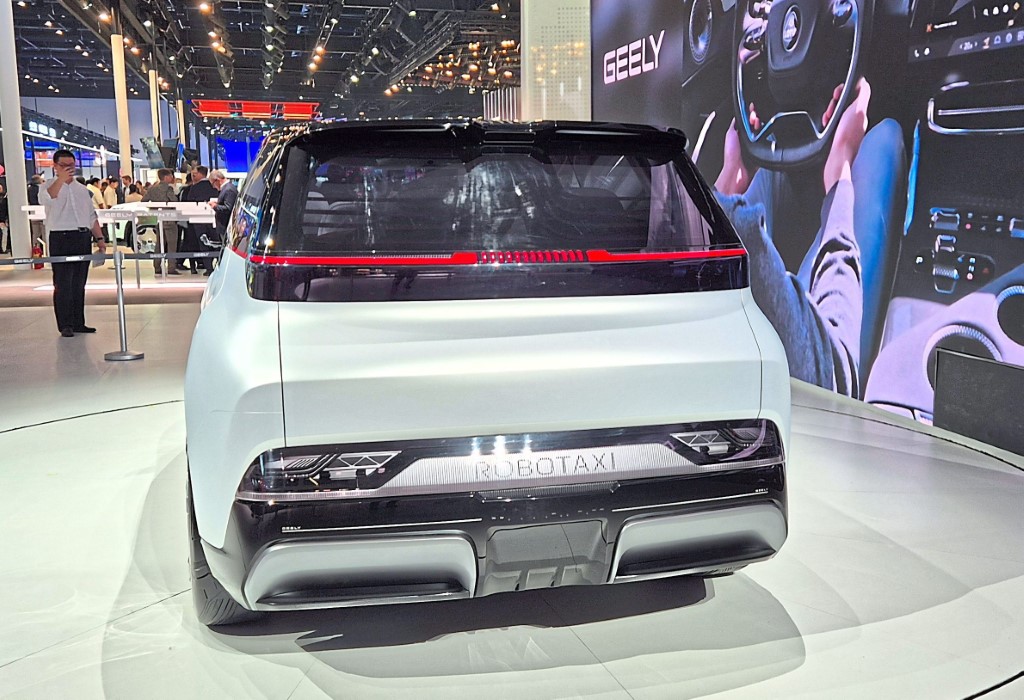
Leveraging on quantum encryption, the system provides end-to-end protection for high-frequency scenarios like remote control, Over-The-Air updates, and data privacy - allowing Geely to become the first automaker to attain an ISO 8800 AI Safety certification.
The software driving the prototype is the AFARI G-ASD L4, the industry’s first mass-production-ready L4-level assisted driving solution.
This software enables fully unmanned shuttle services on open public roads, a feat already being refined through pilot operations in cities like Hangzhou and Suzhou in China.
The automaker plans to launch a customised edition of the EVA Cab for CaoCao Mobility in 2027, thereby accelerating the large-scale commercialisation of Robotaxi services.
The group’s Full-Domain AI 2.0 framework also extends beyond a single prototype, encompassing a vast “Space-Ground” intelligent technology ecosystem.
The transition to AI 2.0 is characterised by the WAM architecture, which manages core agents like the “Smart Egg Cockpit” and Advanced Driver Assistance Systems.
This results in an “integrated cockpit-smart driving” experience where dialogue between the user and the vehicle translates directly into action.
As the EVA Cab evolves into a true “mobility bot,” it will possess the ability to perceive, think, and execute decisions independently.
The company’s ultimate goal is “zero wait, zero congestion, and zero accidents” through its investment in AI infrastructure, totaling more than 250 billion RMB (RM154bil) over the past decade.
Currently, the company’s technological reach includes a 900V electric architecture, 12C ultra-fast charging, and solid-state battery innovations.
Such breakthroughs have been integrated into a “Comprehensive Safety 2.0” framework, which expands the scope of protection to the entire transportation society and is supported by the Geely Safety Center - the world’s largest safety testing facility and holder of five Guinness World Records.