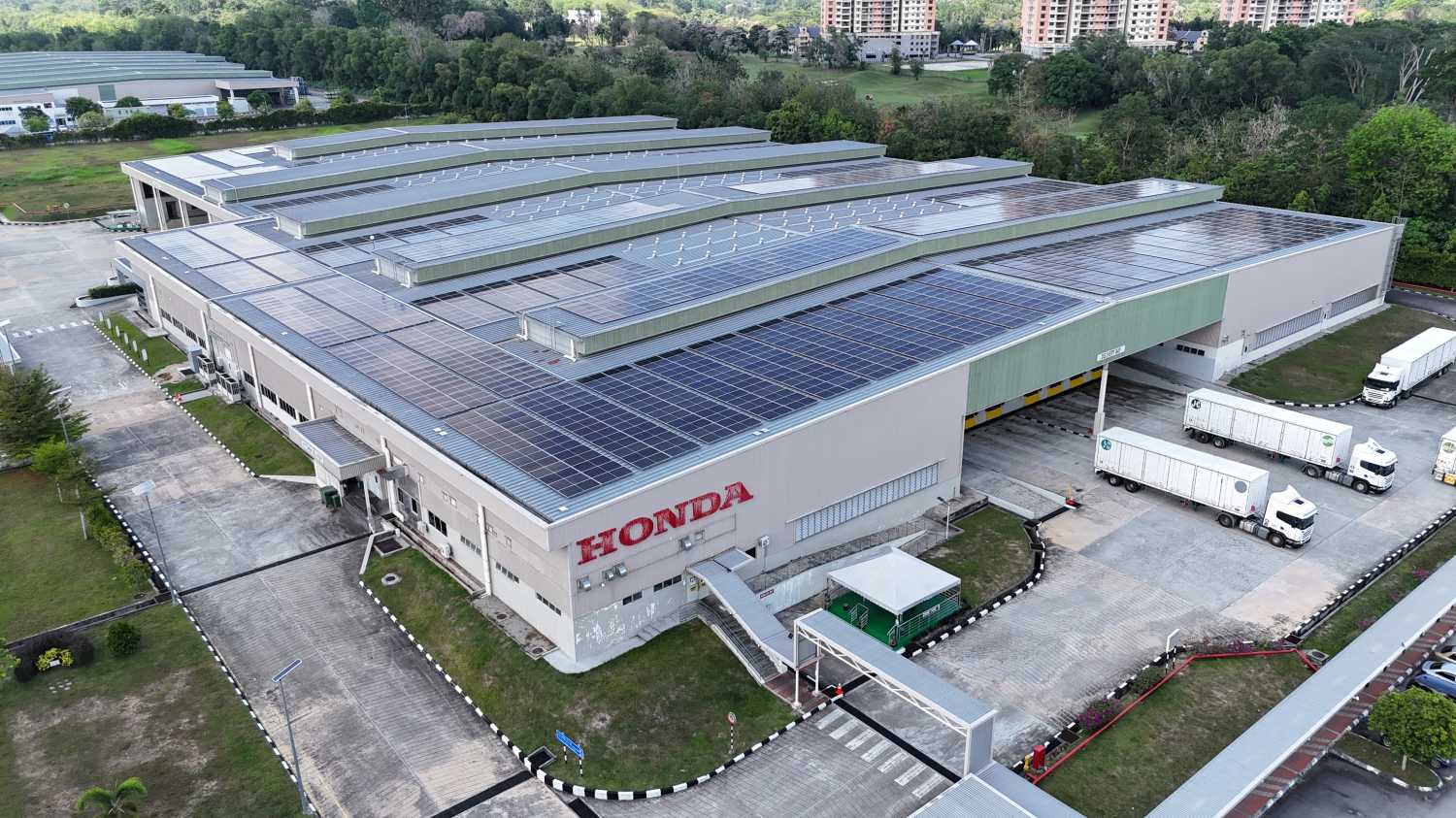
ALOR GAJAH: Honda Malaysia has taken another step towards achieving carbon neutrality with the completion of its first large-scale solar power installation at its Melaka manufacturing plant, backed by a RM14mil investment.
The project, officially commemorated by Melaka Chief Minister Datuk Seri Utama Ab Rauf Yusoh, marks a key milestone in the company's environmental, social and governance (ESG) roadmap as it works towards Honda's global target of achieving carbon neutrality across all products and corporate activities by 2050.
Unlike many renewable energy projects that rely on third-party financing, Honda Malaysia fully funded the initiative, reflecting its long-term commitment to sustainable manufacturing while strengthening operational efficiency.
Installed across the rooftops of the Alor Gajah assembly plant are about 8,960 solar photovoltaic (PV) panels with a combined generating capacity of more than 5.6MW.
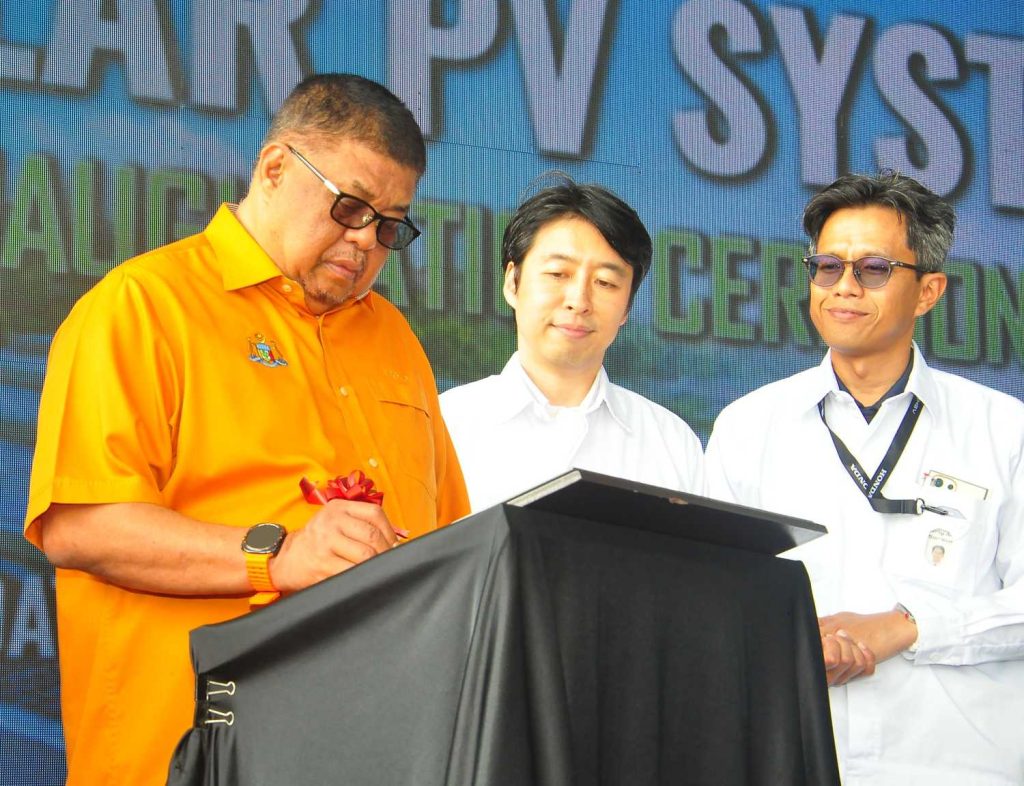
The system is expected to produce approximately 7,042MWh of renewable electricity annually, reducing the plant's carbon dioxide emissions by an estimated 4,584 tonnes each year - equivalent to around 10% of the facility's total carbon emissions.
Beyond generating clean energy, the company has also integrated a Battery Energy Storage System (BESS), making it among the first industrial electricity consumers in Malaysia to deploy the technology on this scale.
The battery system stores surplus solar energy for later use, allowing the plant to maximise renewable energy utilisation while ensuring a more stable electricity supply for production operations.
The initiative is said to also complement the company's recent achievement of a 3.07-star rating under the Climate and Sustainability Industry Readiness Index (COSIRI).
Doing so highlights the company's progress in integrating sustainability across its manufacturing operations and adds that this environmental strategy extends beyond the factory floor.
The company's expanding range of e:HEV hybrid models continues to provide customers with more fuel-efficient mobility solutions while lowering overall environmental impact, complementing efforts to reduce emissions during vehicle production.
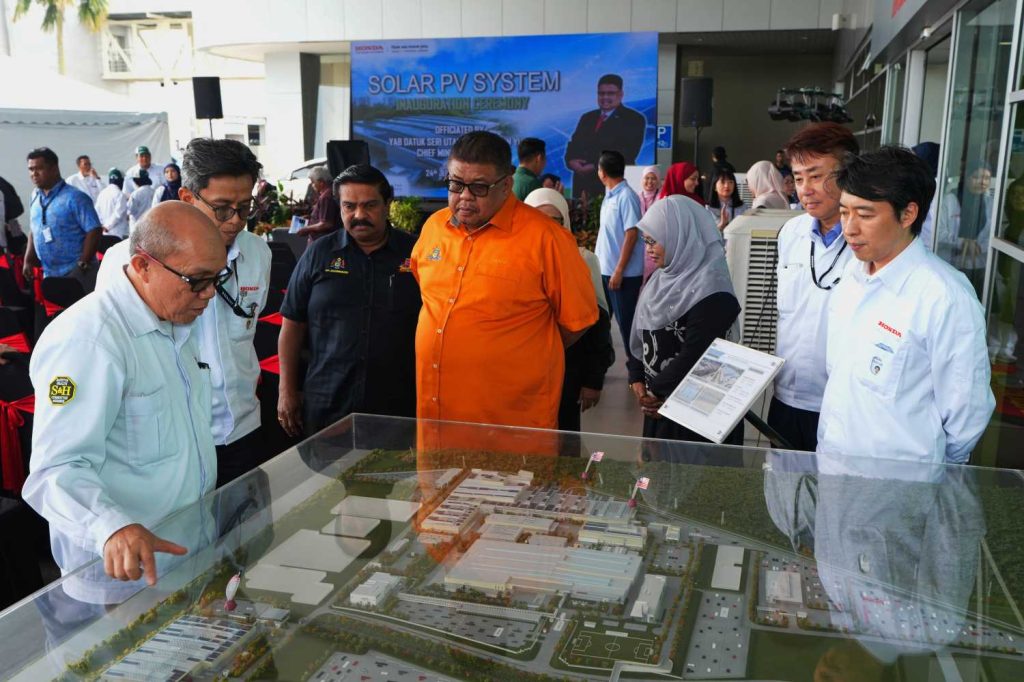
During the launch, Ab Rauf lauded Honda Malaysia and said that companies should follow its example by embracing renewable energy, investing in green technology, and deepening environmental, social, and governance participation in their operations.
"As Melaka advances towards becoming a smart, sustainable, and competitive state, I encourage more manufacturers and industrial players to follow Honda Malaysia's example," said the Melaka chief minister.
"Let us prove that sustainability is not a burden on economic growth. It is an investment in efficiency, resilience, and long-term prosperity," said Ab Rauf.
Honda Malaysia's managing director and chief executive officer Narushi Yazaki, also chimed in by saying that the completion of the solar installation represented more than just a renewable energy project.
"The completion of this solar power project marks an important milestone in Honda Malaysia's sustainability journey. Beyond reducing our environmental footprint, it reflects our commitment to responsible manufacturing and our aspiration to contribute towards a carbon-neutral future," said Yazaki.
The CEO added that the company plans to expand its solar initiative to its Parts Supply Warehouse in Bukit Jelutong, Shah Alam, in 2027 as part of its long-term sustainability strategy.
Yazaki also noted that Honda's environmental efforts extend throughout its dealer network, with many dealerships adopting initiatives such as rainwater harvesting systems and responsible battery disposal programmes.
Honda Malaysia also acknowledged the support of both the Federal and Melaka state governments, particularly through the Green Investment Tax Allowance (GITA), which helped facilitate the implementation of the renewable energy project and that collaborations between the public and private sectors remain crucial in supporting Malaysia's transition towards cleaner energy and a lower-carbon economy.
With the Melaka solar installation now operational and further renewable energy projects already in the pipeline, Honda Malaysia continues to strengthen its commitment to sustainable manufacturing while aligning with Honda's long-term global vision of achieving carbon neutrality by 2050.