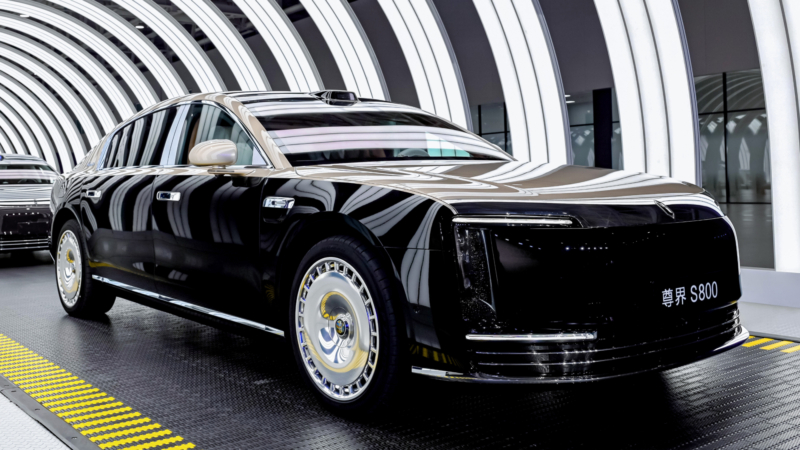
BEIJING: Huawei Technologies Co's ultra-luxury Maextro S800 sedan is so popular in China nowadays, it's outselling Porsche AG's Panamera, Mercedes-Benz Group AG's S-Class and all other vehicles with sticker prices of at least US$100,000 (RM406,300).
It's not even close. Since its May launch, sales of the Maextro overtook those of all others in that price bracket in September and haven't looked back.
Last month, they rolled out of dealerships at numbers greater than those of the Panamera - one of the longtime top sellers - and the BMW 7 Series combined, according to data compiled by ECC Intelligence.
Billed as a ride rivaling that of a Rolls-Royce or Bentley - but at a fraction of the price - Huawei conquered one of the last corners of the Chinese car market that foreign brands had clung on to as a stronghold.
It's the latest illustration of how global automakers, which ceded their lead in mainstream vehicles years ago, keep sliding further behind local companies in the world's biggest auto market, with no end in sight.
"The changing demands of Chinese customers and growing pride in domestic brands have upended the luxury market," said Zhu Yulong, founder of consultancy Zhineng Auto.
Huawei, long known as one of China's top tech companies, has emerged as a dominant force in the country's auto industry in recent years by teaming up with local carmakers.
These partnerships typically involve Huawei providing high-end technology such as driver-assistance software and its vast sales network, while the partner manufactures the vehicle.
Anhui Jianghuai Automobile Group Corp produces the Maextro in its factory in the eastern city of Hefei.
The Maextro, a play on the Italian word for "conductor," starts at 708,000 yuan (RM408,805) and goes up to 1.02 million yuan (RM588,956) for the most premium version.
By comparison, the Panamera starts at 1.1 million yuan (RM635,148) in China.
"Maextro S800 is the first time that a Chinese brand has managed to get a foothold in the 1 million yuan (RM577,408) ultra-luxury segment," Richard Yu, chairman of Huawei's consumer business group, told state broadcaster CCTV.
"We're in the intelligence and electrification era and we're leading through smarter technologies and innovation."
The saloon isn't Huawei's first hit in autos. The Aito M9 sport utility vehicle became China's best-selling luxury vehicle - among those priced 500,000 yuan (RM288,704) or above - within half a year of its launch in late 2023.
In designing the Maextro S800, Huawei and JAC pushed for attention to details rarely seen in Chinese cars.
For example, the seat-adjustment buttons are made of crystal. It also features a starry headliner conjuring up a night sky - like on a Rolls-Royce - using more than 680 optical fibers to smooth its feel, according to Yu.
It also comes with a triple-screen dashboard, a 40-inch movie projector in the back, more than 30 sensors and doors that open automatically.
Prior to Huawei, local carmakers hadn't been able to crack the dominance of storied foreign marques in top-tier luxury segments.
BYD Co's Yangwang has churned out vehicles with sticker prices that can exceed one million yuan (RM577,408) - like the U8 SUV - but sales never reached anything close to those of established players.
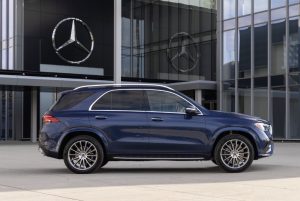
Meanwhile, Germany's three big luxury car brands - BMW, Mercedes and Audi - continue to lose market share in China as they fail to keep up with local Chinese makers' prices and their speed of technological advancements.
To catch up, Volkswagen's Audi is now producing cars like the E5 Sportback, which is only available in China and was developed there, fueling the envy of car enthusiasts in Europe.
But it remains to be seen if Huawei and its manufacturing partners can keep up the investments to maintain long-term success in the premium market, according to Zhineng Auto's Zhu.
"It's a sign of nationalist pride and also the premiumisation of Chinese brands is a big trend," Zhu said. "But how long can this last? We still need to keep watch."