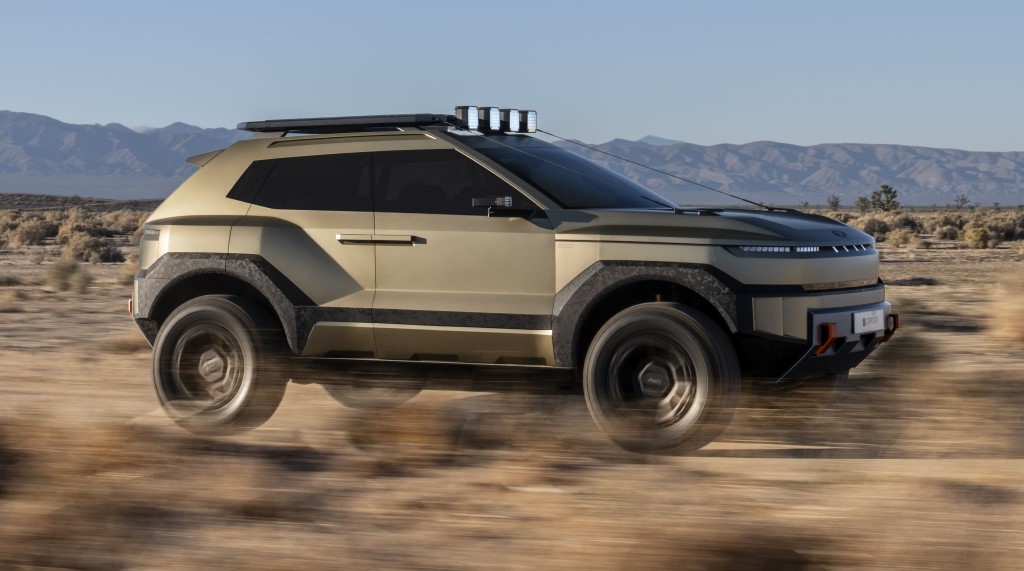
LOS ANGELES: Hyundai Motor America recently presented the global debut of the Crater concept adventure vehicle, which is billed as compact off-road SUV (sport utility vehicle) that visually expressescapability and toughness.
The Crater concept was conceived at Hyundai America Technical Centre (HATCI) in Irvine, California.
The vehicle was crafted with the spirit of XRT, including design elements that showcase protection and connectivity, as seen in Hyundai’s Ioniq 5 XRT, Santa Cruz XRT, and Palisade XRT Pro production models.
The Crater concept will be viewable throughout AutoMobility LA 2025 until Nov 30.
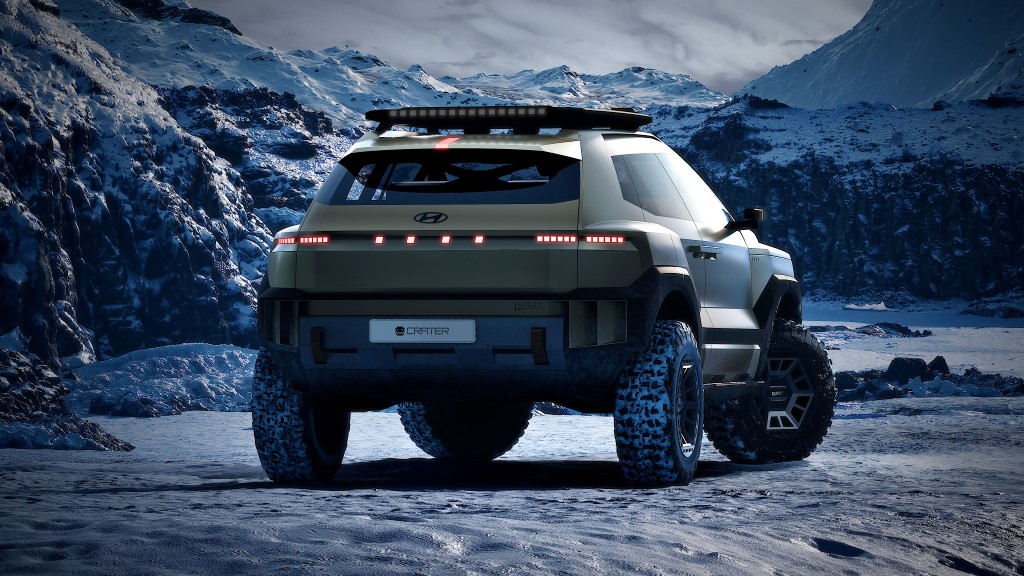
“The Crater began with a question: ‘What does freedom look like?’ This vehicle stands as our answer,” said Hyundai and Genesis Global Design executive vice president and head SangYup Lee.
“It is a vision shaped by our unending drive to explore — to inspire our customers to explore deeper and embrace the impact of adventure.”
The Art of Steel exterior design language transforms the strength and flexibility of steel into a language of sculptural beauty.
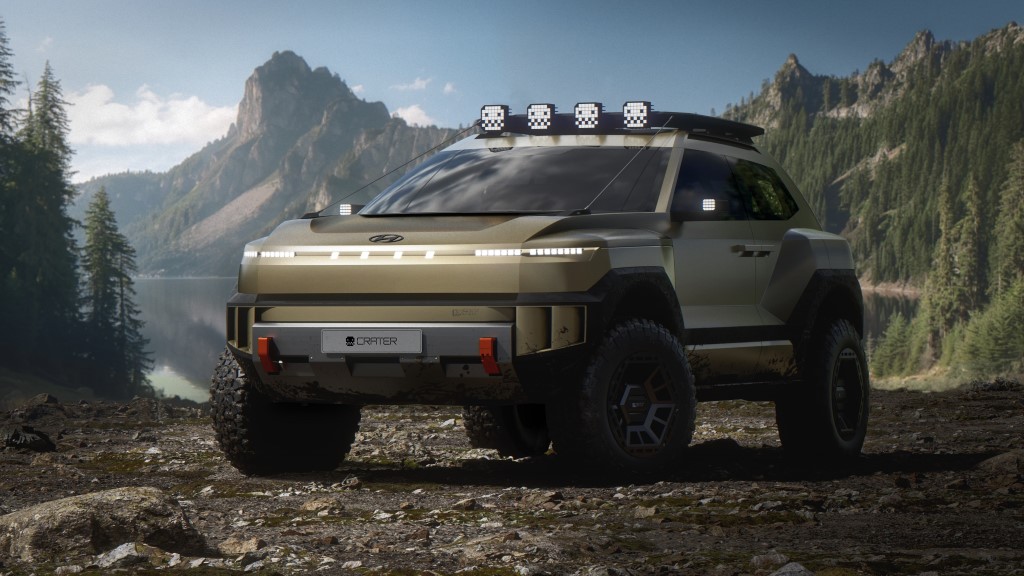
Built on a compact monocoque architecture, the Crater concept is highlighted by its bold silhouette, complemented by its steep approach and departure angles which support serious off-road exploration.
Its 18-inch wheels were inspired by envisioning a hexagonal asteroid impacting a sheer metal landscape.
The wheels are clad in generous 33-inch off-road tyres, enabling superior traction and ground clearance for performance in all environments.
A wide, functional skid plate stretches across Crater concept’s underbody, not only for added protection, but to visually anchor the vehicle.
The roof platform is imagined as the ideal mounting point for auxiliary lighting, additional storage, and other off-road accessories.
A pair of cables stretching from the front hood to the roof promise added protection from low-hanging branches on narrow and overgrown trails.
A sheer fender design emphasises Crater concept’s robotic and sculptural character through wide and prominent shoulders with sheer surfaces.
Pushed to the extreme, this design feature reinforces the vehicle’s confident, planted stance, showcasing Hyundai’s ‘Art of Steel’ exterior design language.
The vehicle’s side-mirror cameras double as flashlights. They can be removed from the vehicle in emergency situations to capture breathtaking views or even record exciting adventures.
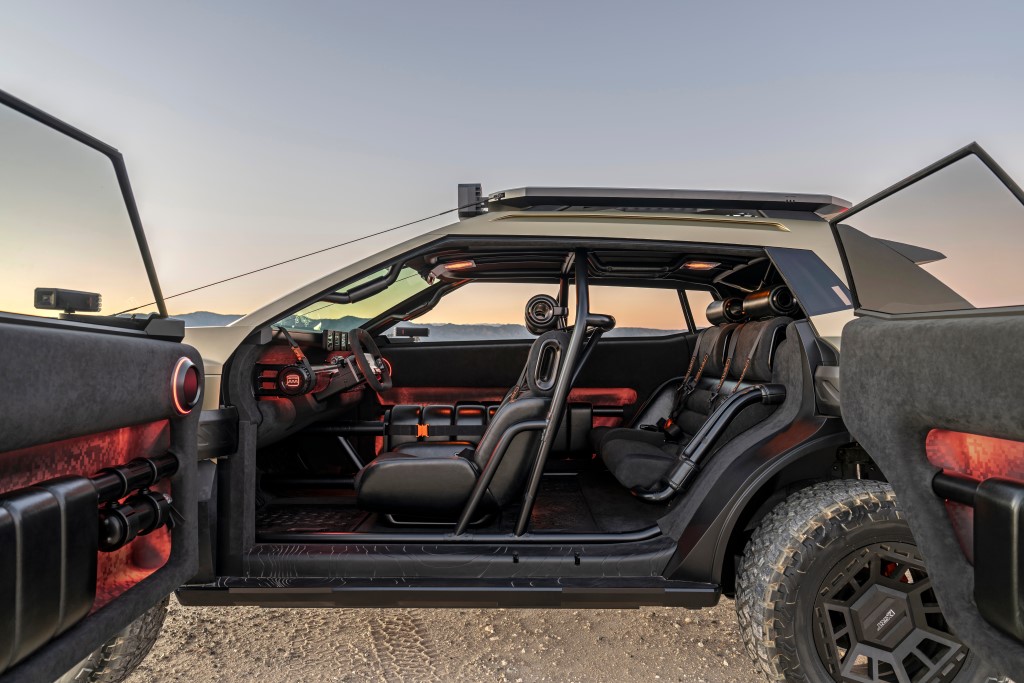
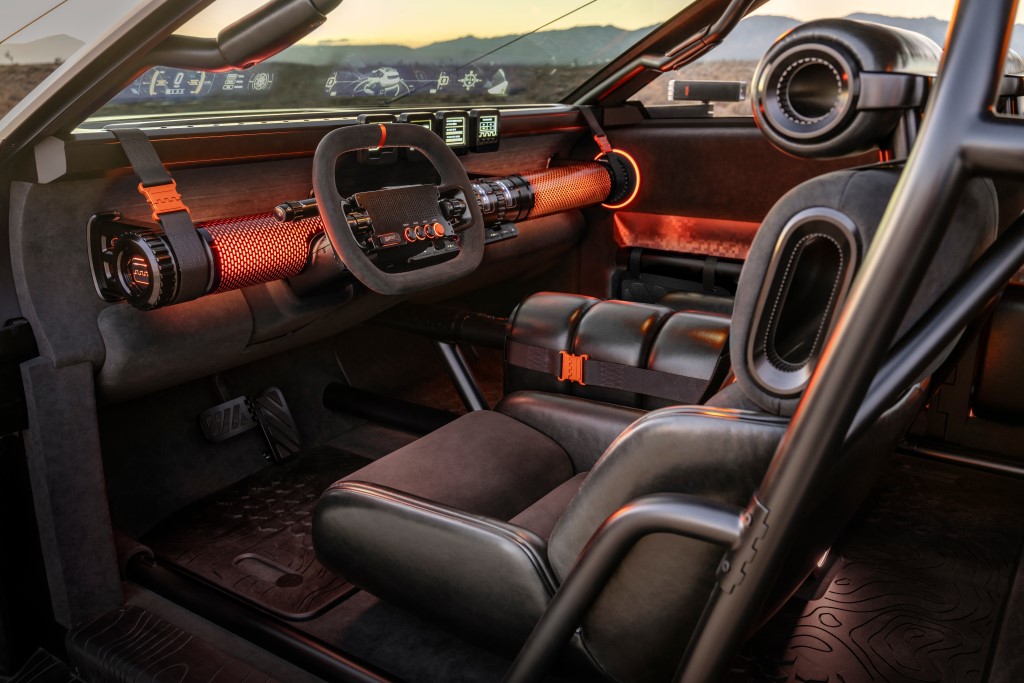
Inside the Crater concept, technical shapes are wrapped in soft-yet-durable materials, resulting in a stylish, natural integration that delivers comfort, support, and practicality in any environment.
Simultaneously tough yet warm, the Crater concept’s singular interior design starts with its high-brow crash pad, which bridges the vehicle’s exterior with its interior.
By leveraging a BYOD (Bring Your Own Device) approach, Hyundai suggests a flexible and customisable digital experience.
The Crater concept’s full-width head-up display is a cutting-edge, multi-function display that includes a novel rearview camera mirror feed.
The unconventional dashboard’s crash pad is shaped like a bent metal sheet, wrapping around the form.
Subtle perforations allow soft light to glow through, creating a refined and distinctive aura unique to the concept.