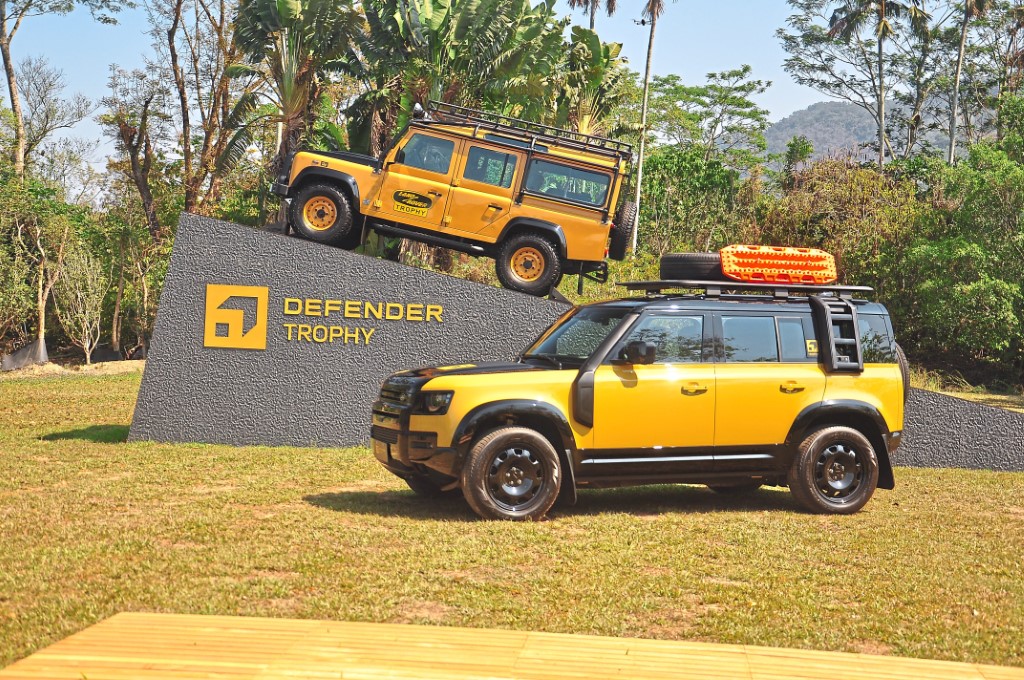
INTRODUCED in Kaohsiung, Taiwan as part of a regional drive programme, the latest Land Rover Defender (L663) marks the continued evolution of a model line that has been in production for more than 70 years.
Originally launched in 1948 as a utility-focused vehicle, the Defender has since developed into a modern SUV that combines off-road capability with improved comfort and technology.
The current model adopts an aluminium monocoque structure in place of the traditional body-on-frame design, while retaining its emphasis on durability and all-terrain performance.
The L663 is regarded as the second generation to carry the Defender name.
Over time, the model has undergone continuous updates to improve capability, safety and usability.
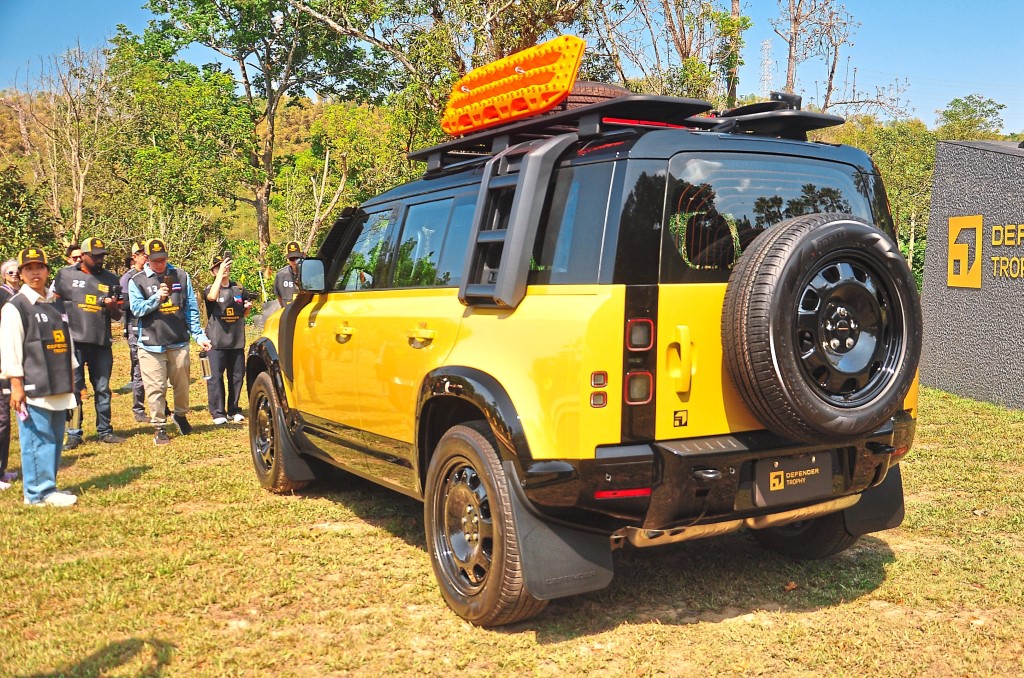
Its reputation was established in part through events such as the Camel Trophy, which ran from 1980 to 2000 and saw vehicles traverse difficult terrain in locations including the Amazon, the Gobi Desert and Sabah in 1993.
This was followed by the G4 Challenge.
Recently, Land Rover introduced the Defender Trophy in the early 2020s, following the launch of the current-generation Defender.
Unlike the earlier long-distance expeditions, this programme focuses on structured off-road challenges designed to demonstrate vehicle capability and driver skill in a controlled environment.
For Malaysia, the Defender will be offered in P400 X-Dynamic SE form.
It is powered by a 3.0-litre inline-six mild-hybrid petrol engine producing 400PS between 5,500 and 6,500rpm, and 550Nm of torque from 2,000 to 5,000rpm.
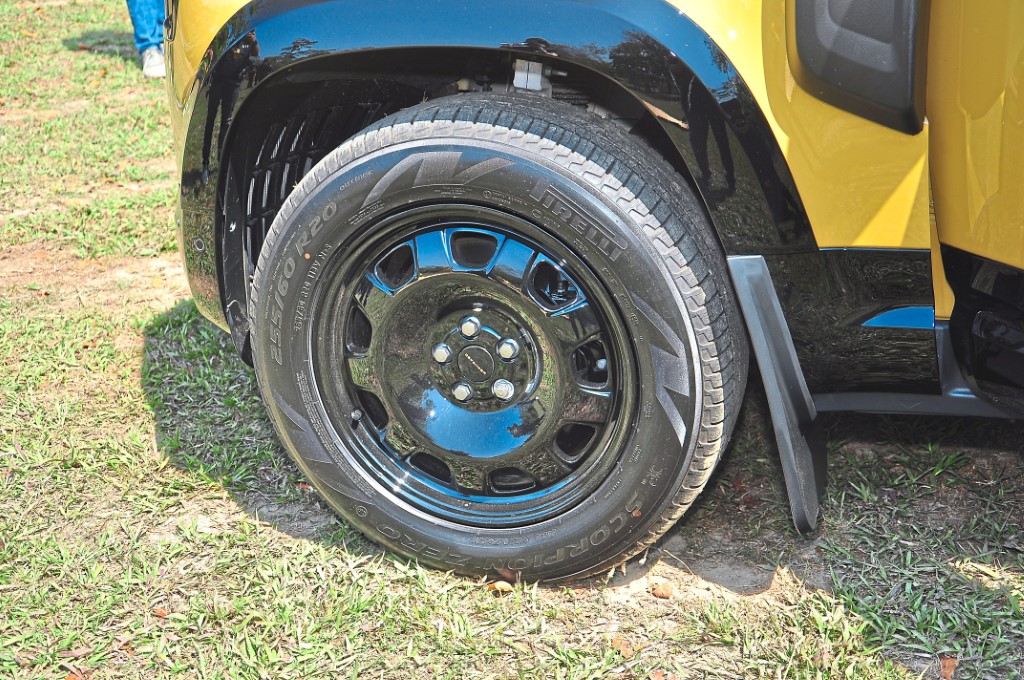
Power is delivered through an eight-speed automatic transmission to an all-wheel drive system - allowing it to accelerate from 0 to 100kph in 6.1 seconds, before reaching a top speed of 191kph.
Combined fuel consumption is rated at 11.2 litres per 100km, with carbon dioxide (CO2) emissions of 255g/km.
In terms of size, the 2,401kg (kerb) Defender has a wheelbase of 3,022mm and measures in at 5,018mm in length, 2,105mm in width and 1,967mm in height.
Off-road capability remains central to the Defender’s design, with ground clearance ranging from 218mm to 293mm, thanks to the inclusion of an air suspension system.
Wading depth has been rated at up to 900mm while its approach, breakover and departure angles are 37.4 degrees, 27.9 degrees and 40 degrees, respectively - all supported by a turning circle of 13.1m.
The model is equipped with Terrain Response, along with systems such as hill descent control and hill launch assist.
Safety features include emergency braking, blind spot assist, adaptive cruise control, lane keep assist and a driver attention monitor.
Exterior updates include revised LED daytime running light graphics and smoked LED rear light clusters.
Inside, the cabin is equipped with 14-way heated and cooled powered memory seats finished in Windsor leather.
A 13.1-inch Pivi Pro touchscreen, Meridian sound system and a heads-up display are also included.
Additional features such as a ClearSight rear-view mirror, configurable cabin lighting and dual-zone climate controls are also fitted.
Meanwhile, exposed structural elements such as the cross-car beam, finished in Light Cloud Powder Coat, remain part of the interior as part of the Defender’s heritage.
The updated Defender is expected to arrive in Malaysia later in 2026, with pricing likely to remain around RM1 mil, in line with current P400 variants.
As it enters the Taiwanese market ahead of its Malaysian introduction, the Defender continues to build on its established position as a model focused on all-terrain capability, supported by updated engineering, safety systems and interior features.