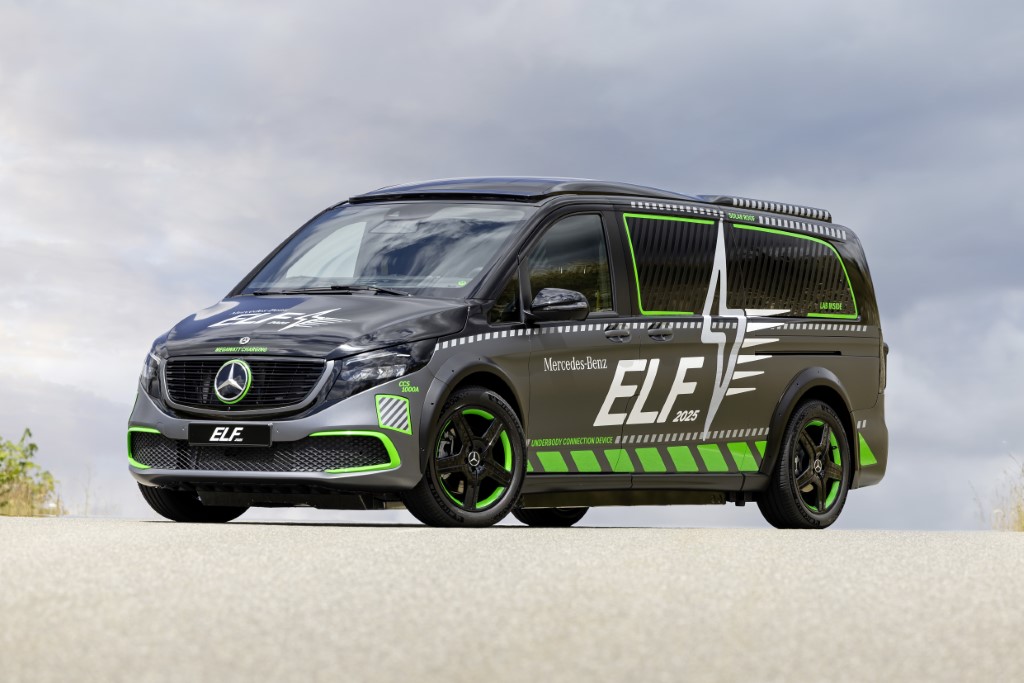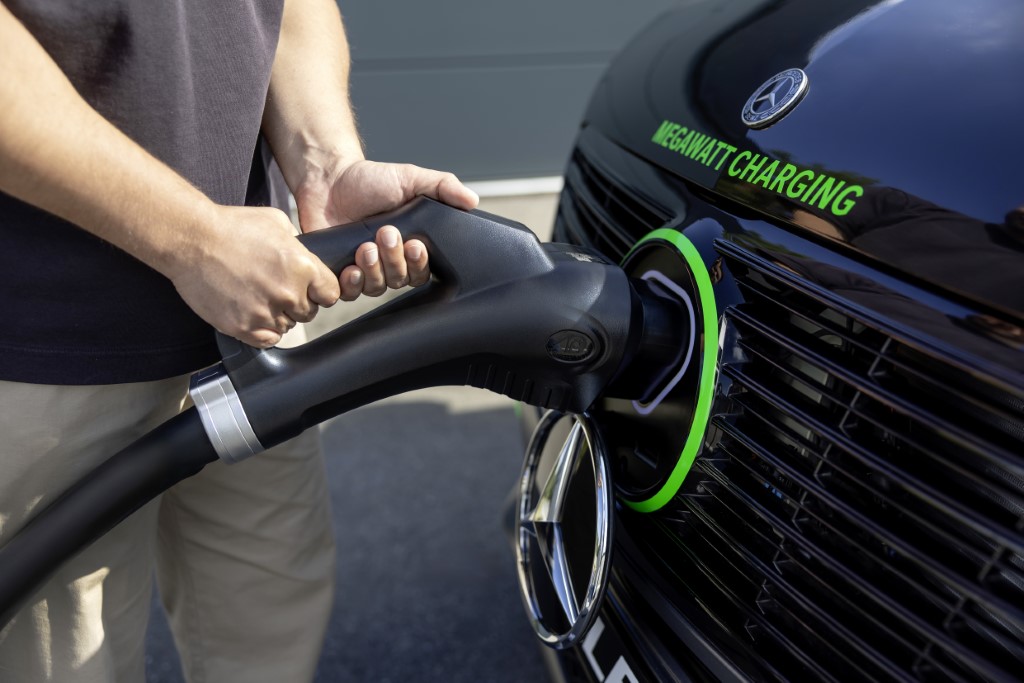
STUTTGART: Mercedes-Benz is making the case for sustainable innovation with its ELF experimental charging vehicle.
ELF is a nickname derived from the German term Experimental-Lade-Fahrzeug – which translates to Experimental Charging Vehicle.
With the ELF experimental vehicle, Mercedes-Benz is exploring the limits of what is technically feasible – both in the vehicle and at the charging station.
To this end, the experimental vehicle is equipped with two fast charging systems:
MCS connector (Megawatt Charging System):
Originally developed for heavy-duty transport, this system allows charging capacities in the megawatt range.
In the ELF, MCS serves as a research tool for testing the thermal resilience and performance limits of high-voltage batteries, power electronics, charging cables and other components under extreme conditions.
The findings are being incorporated into the development of long-distance vehicles and fleet solutions with short downtimes.
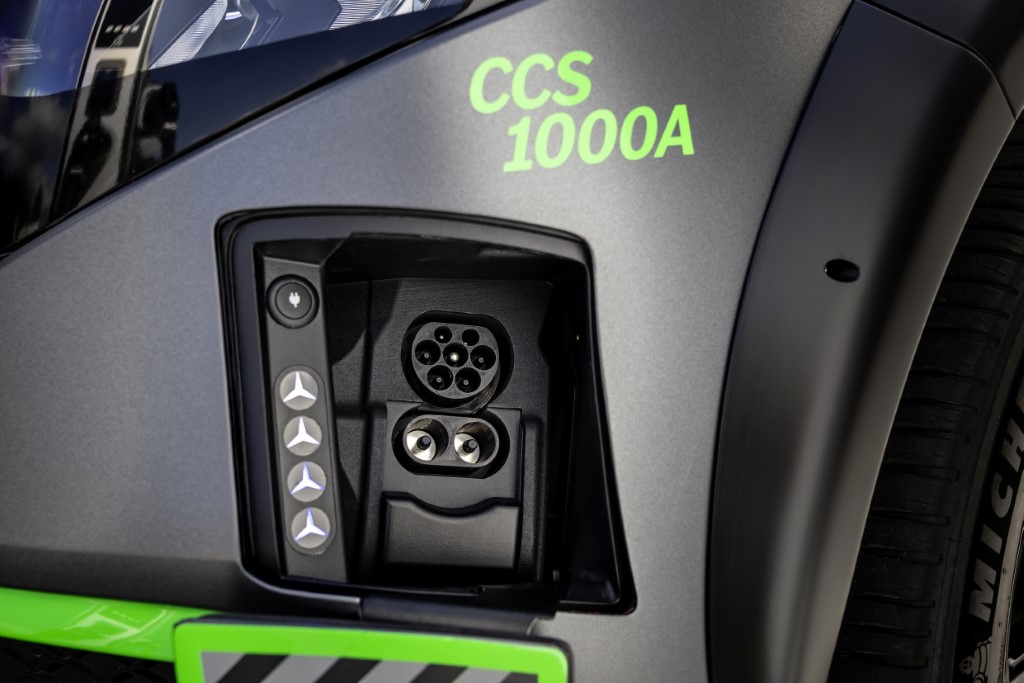
CCS connector (Combined Charging System):
CCS is used as the standard for passenger cars to test near-series components such as cables, connectors, cooling and charge control under everyday conditions.
Mercedes-Benz is testing the technical limits of CCS in order to create the conditions for even higher charging capacities.
The ELF can achieve a charging capacity of up to 900 kW. This means that 100 kWh can be charged in 10 minutes.
The vehicle simulates typical charging scenarios that occur in everyday customer use, such as at fast charging stations along motorways or in urban areas.
The components used, such as the battery, charging control and CCS hardware, are already close to series production and will be incorporated into future Mercedes-Benz models.
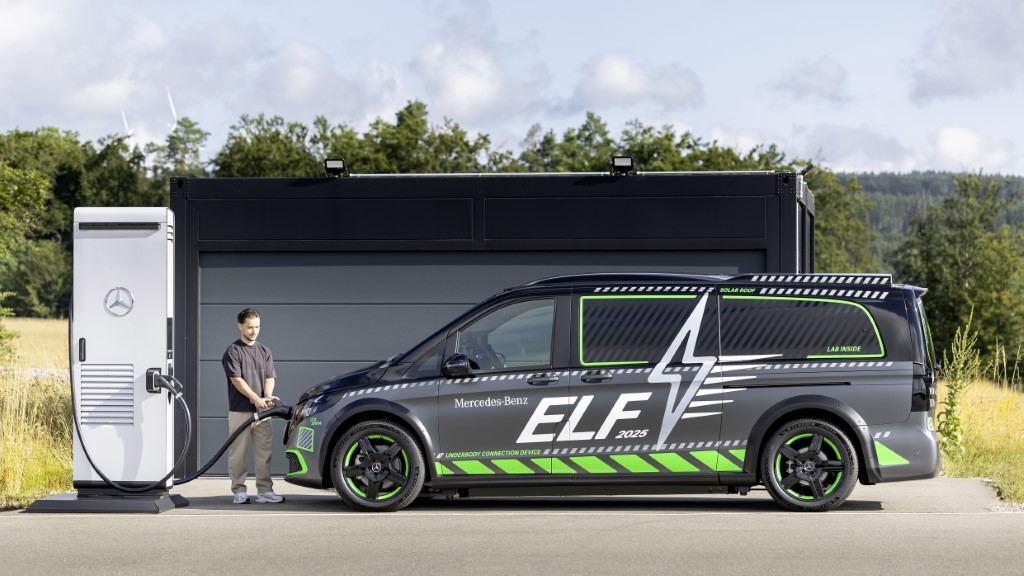
With the ELF, Mercedes-Benz is exploring the full potential of bidirectional charging technology: not only absorbing electricity, but also feeding it into the home (Vehicle-to-Home; V2H), into the grid (Vehicle-to-Grid; V2G) or directly to electrical devices (Vehicle-to-Load; V2L).
This allows electric vehicles to become an active part of a sustainable energy system.
In the future, they will offer customers greater independence and potential cost savings.
The ELF tests bidirectional charging in real-world scenarios. The findings are fed directly into the series development of future models.
Also, the ELF is capable of both AC and DC bidirectional charging.
AC (alternating current) enables the power supply of electrical devices (V2L) and the return of energy via a bidirectional AC wallbox directly into the home network – for applications such as Vehicle-to-Home (V2H) or Vehicle-to-Building (V2B) or into the public power grid (V2G).
An advantage is that the infrastructure is more cost-effective.
A disadvantage is that standardisation becomes more complex as the vehicle must meet the requirements of different power grids.
DC (direct current) allows for direct energy recovery with a bidirectional DC wallbox into the public power grid (V2G) and directly into the home or building network (V2H; V2B), depending on the infrastructure used.
An advantage is high efficiency, especially when using a hybrid inverter for bidirectional charging.
With photovoltaics and home storage, it is easier to meet grid requirements.
A possible disadvantage could be the slightly higher investment costs for the charging infrastructure.