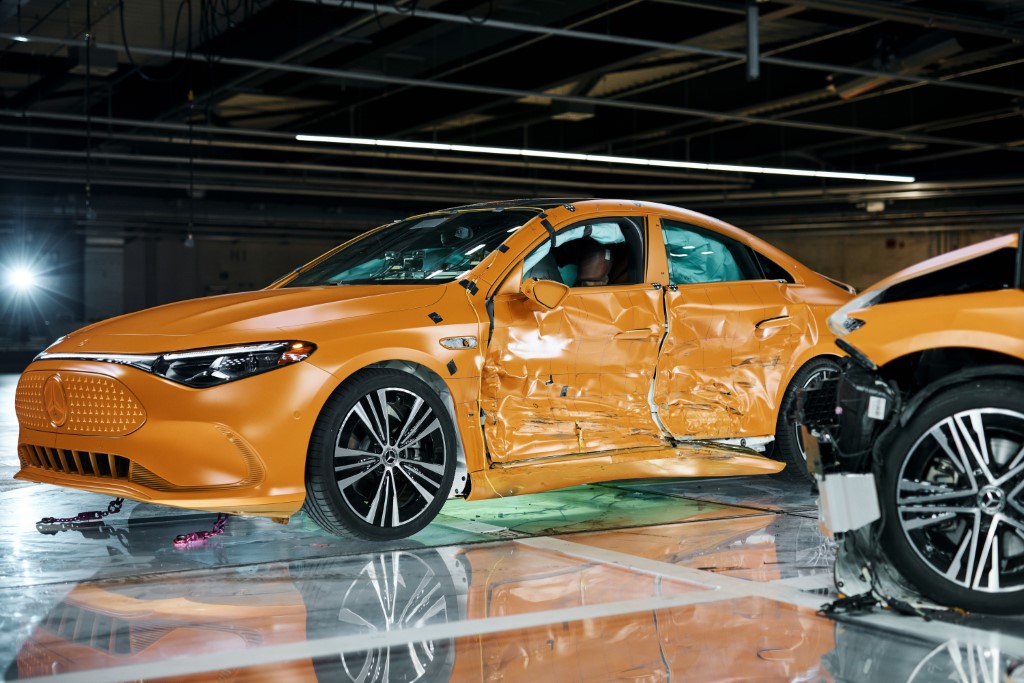
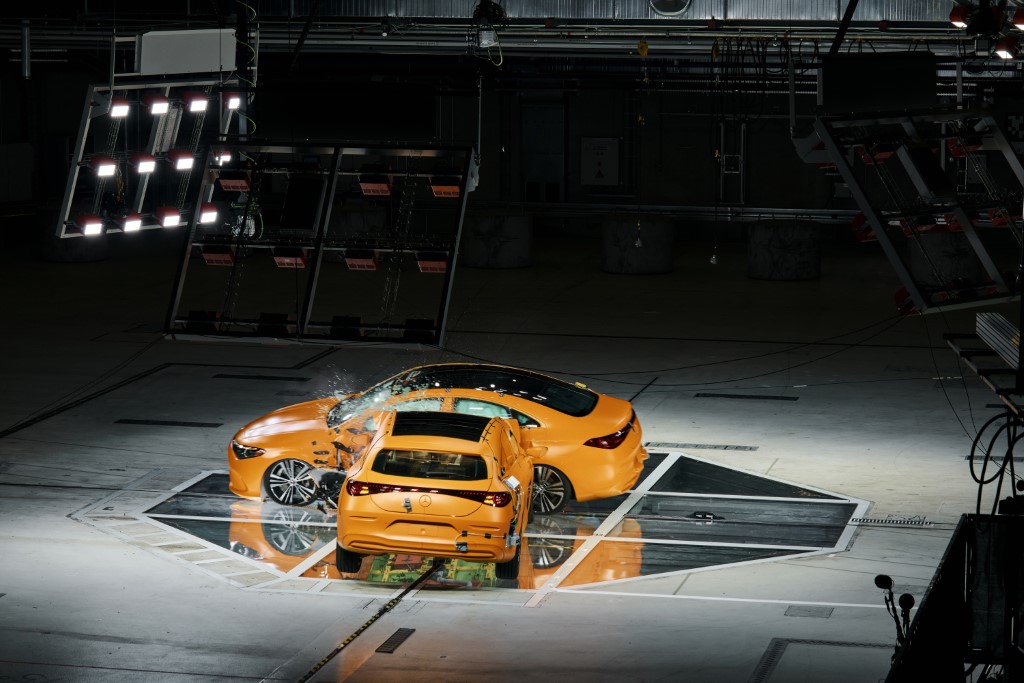
STUTTGART: Mercedes‑Benz has shown the world's first live high-speed side-impact crash test with two production vehicles.
Both vehicles were travelling at 56kph – an exceptionally demanding practical test for the safety of the new CLA.
In everyday traffic, the CLA’s modern driver assistance systems would help drivers to avoid such a collision or reduce its severity.
To test the two vehicles, each weighing more than two tonnes, Mercedes‑Benz conducted the crash test – as is customary for such tests – without prior braking.
A CLA Shooting Brake with electrified combustion engine drove directly into the driver’s side of an all-electric CLA.
That is a high-speed and extremely severe side-impact collision.
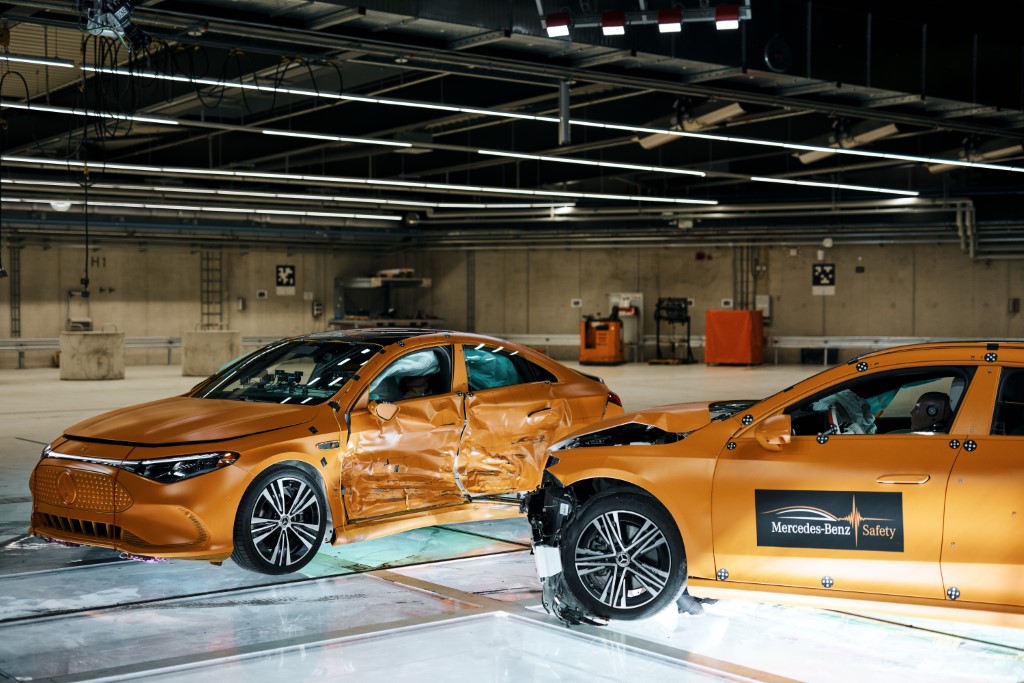
According to Mercedes-Benz’s own accident research, a speed of 56kph for both vehicles is at the upper end of junction accidents that occur in real-world traffic scenarios.
This type of crash test scenario is considered one of the most critical types of accident for occupants and the vehicle structure.
The chosen scenario is also particularly challenging, as the all-electric CLA is struck in the side by the other vehicle.
These are precisely the areas that require the highest level of protection: the passenger compartment and, in the case of fully electric vehicles, the high-voltage battery housed in the underbody.
The passenger compartments of both vehicles remained intact.
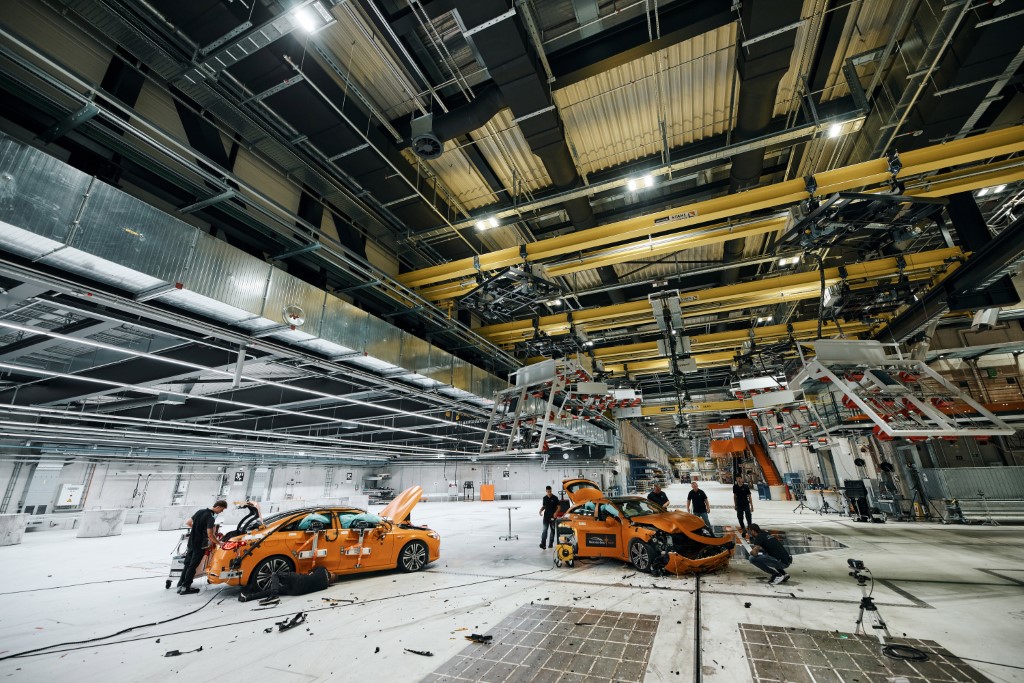
The readings from all eight crash-test dummies, representing four adults and four children, remained below the relevant biomechanical limits.
The results indicate that there is a low risk of serious or life-threatening injuries to the occupants.
Also, the high-voltage battery itself remained intact and undamaged, despite the direct and severe side impact.
“If you want to build the safest vehicles, you need to incorporate insights from real-world accidents into your vehicle development requirements. We call this Real-Life Safety. This test involving two CLA models demonstrates how we successfully translate that approach into reality,” said Mercedes-Benz AG director of vehicle safety Paul Dick.
Mercedes‑Benz has been investigating and reconstructing real-life accidents since 1969.
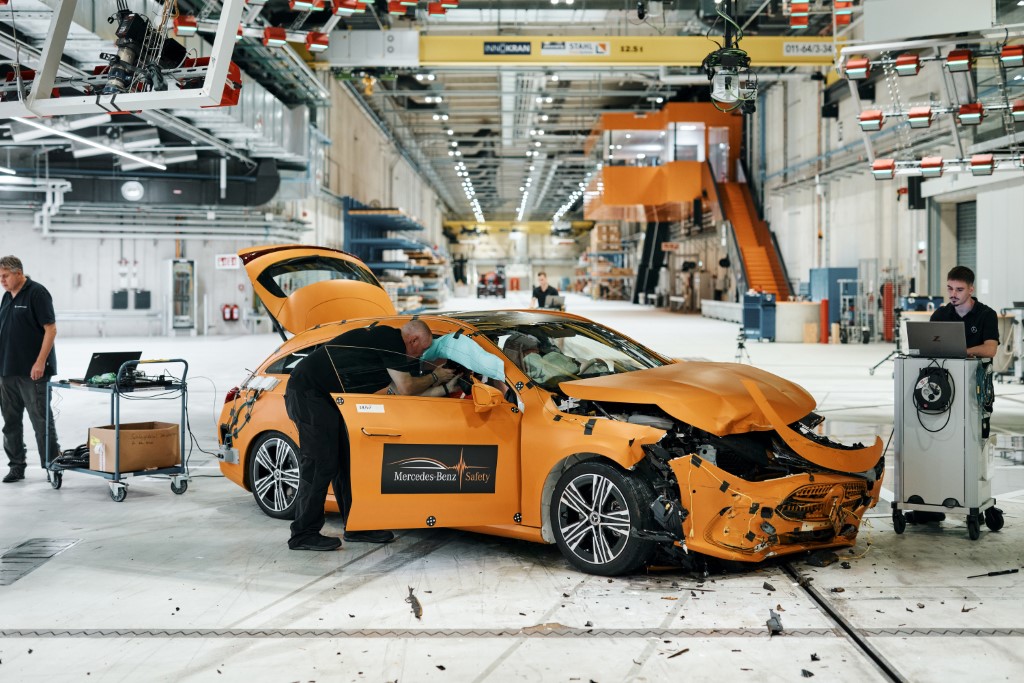
A total of around 6,000 accidents were analysed – jointly by research teams in Germany, China and India.
The findings are incorporated into body structures, restraint systems and the company’s own requirements.
Long before a new Mercedes‑Benz vehicle is subjected to a physical crash test, it has already completed extensive virtual testing.
During the development process, every new model undergoes around 15,000 crash simulations.
Overall, Mercedes‑Benz carries out around 150 physical crash tests for a new model, going well beyond legal requirements in pursuit of the high safety standards.
Also, the car manufacturer has unveiled ‘Mercedes‑Benz Rescue Intelligence’ for the first time.
The system is set to be rolled out gradually from 2027 onwards and will then establish a direct link between vehicles involved in accidents and the emergency services.
This will enable the fire service to access accident-related information whilst en route.
The system can display the number of occupants, the status of airbags and seat belts, which doors are open, the battery temperature and the condition of the high-voltage system.
This information can help emergency services gain an overview of the situation even before they arrive.