MUNICH: The launch of the Neue Klasse marks the first time BMW will offer an expanded portfolio of active safety assistance systems as standard across multiple model series.
Among them is an exit warning function with active door opening delay, helping to prevent so-called dooring accidents.
The BMW iX3 was the first Neue Klasse production model to feature these technologies, with further models including the i3, X5 and 7 Series to follow.
BMW Symbiotic Drive takes driver assistance in BMW’s new vehicle generation to a new level by creating an intuitive partnership between driver and vehicle.
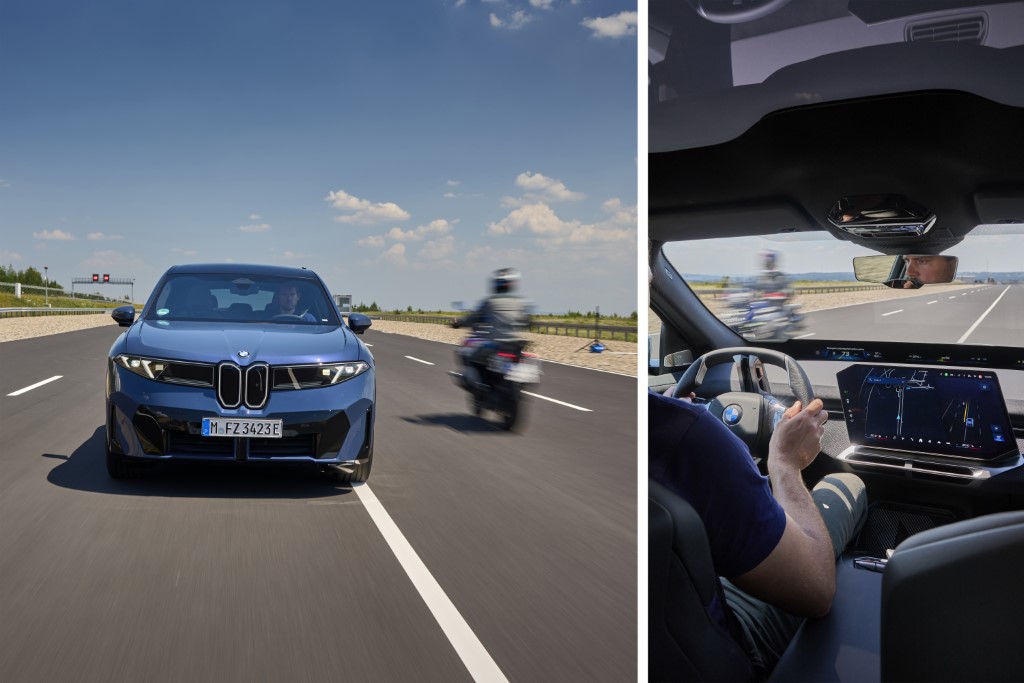
The system understands the driver’s intentions through steering inputs and line of sight, enabling assistance functions to intervene only when necessary.
As a result, functions such as the Lane Keeping Assistant only provide warnings or steering interventions when the vehicle detects an unintended lane departure or an imminent collision.
When a manoeuvre is initiated deliberately by the driver, the system does not intervene, provided there is no foreseeable risk of a collision or the vehicle leaving the roadway.
Indicators of driver intent include activating the turn signal, making an active steering input or performing a shoulder check.
The new iX3 received the top rating of five stars in the latest safety test conducted by the independent testing organisation Euro NCAP, significantly exceeding the required scores.
With the launch of the Neue Klasse, the exit warning feature is being expanded as standard to include active door opening delay.
Using side radars, the system continuously monitors the traffic area around the parked vehicle and detects approaching vehicles, bicycles, or other road users.
If a risk of collision is detected, the electronic door lock specifically delays the opening of the door until the danger has passed.
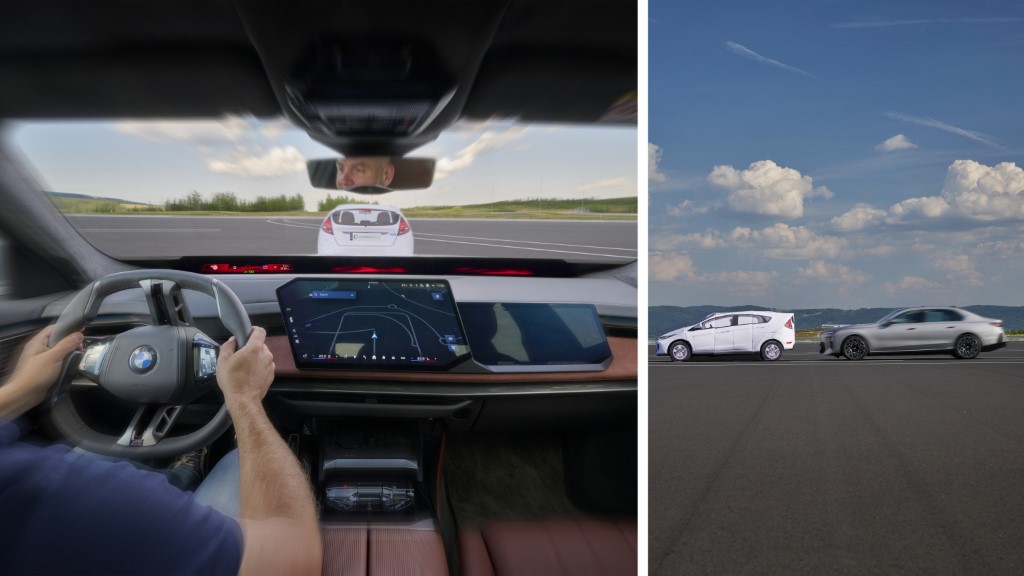
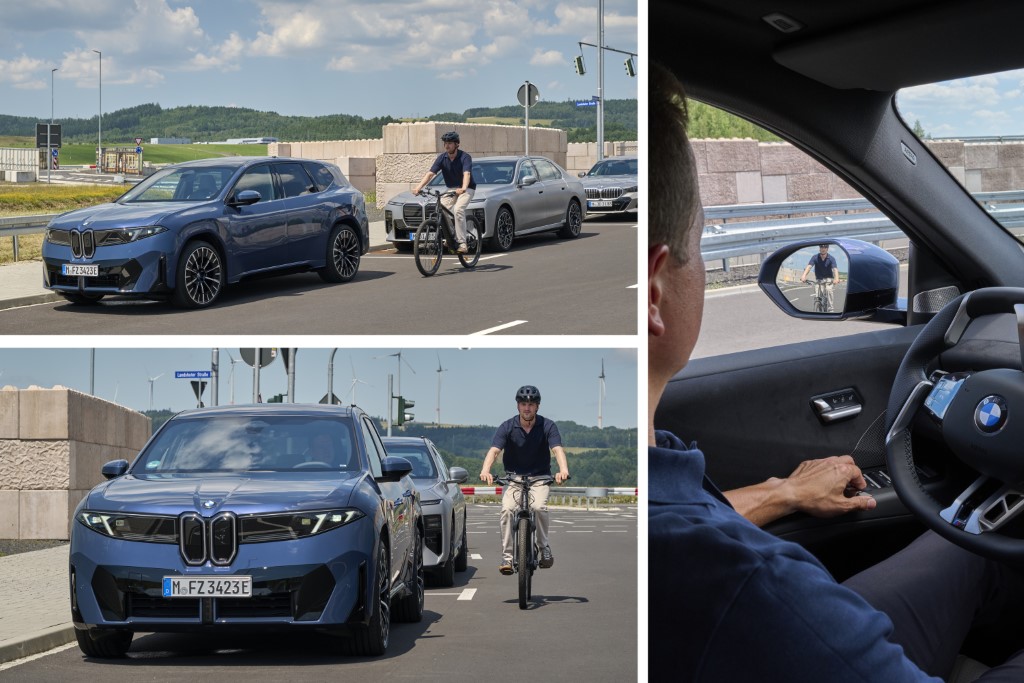
Also, for the first time, the emergency steering intervention automatically steer the vehicle around an obstacle while keeping it within its own lane – for example, if a person steps onto the road between two vehicles after a breakdown, or if a cyclist is overlooked in low-light conditions.
This feature is currently unique among competitors.
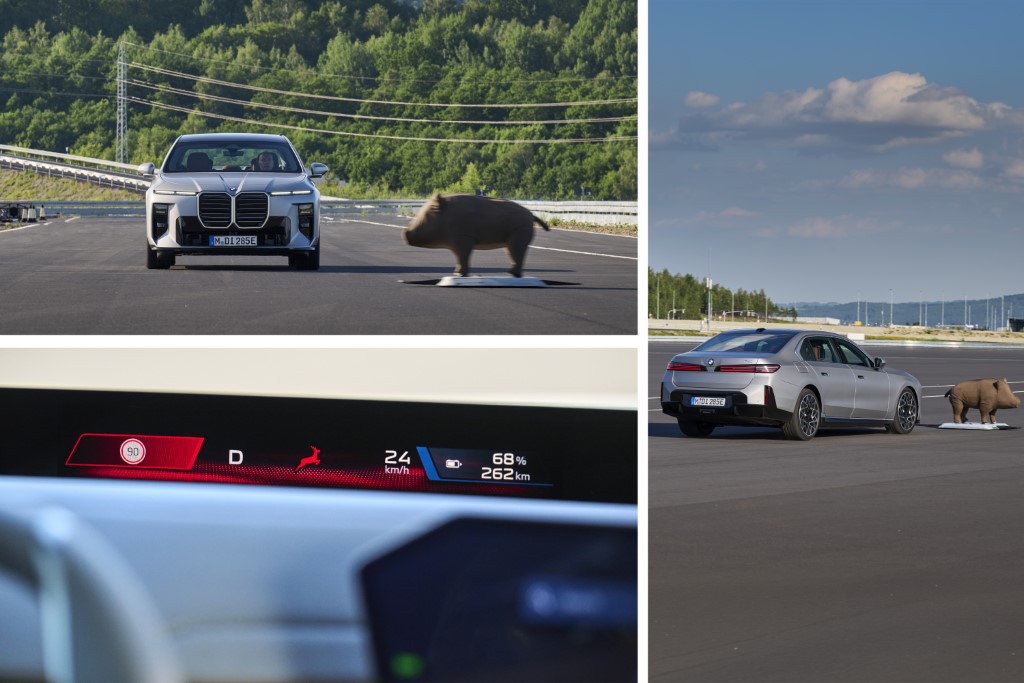
In situations with a risk of a side-impact collision, the emergency steering intervention also helps prevent accidents – for example, when another vehicle is getting dangerously close.
A brief, active steering intervention gently steers the vehicle away from the object within its own lane, given sufficient space to maneuver has been detected.
The Emergency Brake Assistant with evasive steering support helps prevent imminent head-on collisions. It can automatically apply the brakes up to full deceleration.
Thanks to improved sensor technology, the feature can also assist in situations involving animals on the road and wildlife crossings.
The Road Priority Warning now assists drivers even more effectively by displaying recognised traffic signs in the BMW Panoramic Vision display directly in the driver's field of view.
In addition to red traffic lights, yield signs, stop signs, and no-entry signs, this now also includes warnings at crosswalks.
The Attentiveness Assistant with emergency stop can provide support in medical emergencies. If the driver camera detects that the driver is no longer fit to drive, the system temporarily takes control of the vehicle.
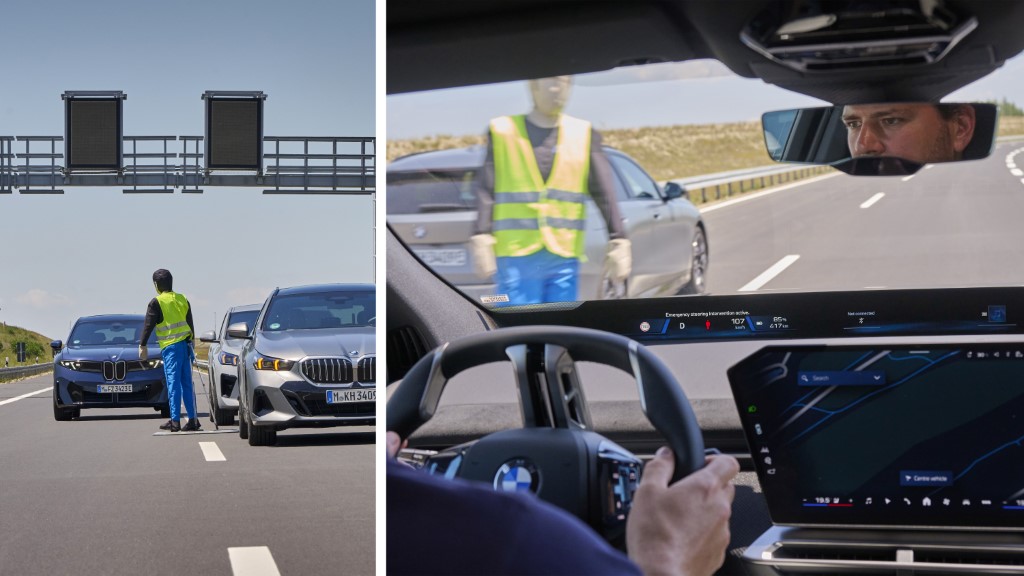
It brings the vehicle to a controlled stop. In doing so, it automatically activates the hazard lights and triggers an eCall. The driver can override the system at any time.
Meanwhile, Active Park Distance Control can prevent collisions using ultrasonic sensors and surround-view cameras.
The feature applies the brakes at the rear – and, for the first time, on the sides as well – to bring the vehicle to a stop when it detects stationary or moving objects.
When backing out of a parking space onto busy streets – a maneuver that often offers limited visibility – the emergency braking function for cross-traffic can prevent serious accidents involving cyclists and other road users.
The rear side radars scan the surrounding area. The rearview camera and the bird’s-eye-view display on the Central Display provide additional visibility.
The standard start monitoring detects potential pedal misapplications. A typical example is confusing the accelerator with the brake.
If the system detects an obstacle less than one meter away at speeds of up to 2kph and, at the same time, an unusually rapid and forceful depression of the accelerator pedal, it intervenes.
The vehicle then brakes in a controlled manner, either forward or backward, until it comes to a stop.