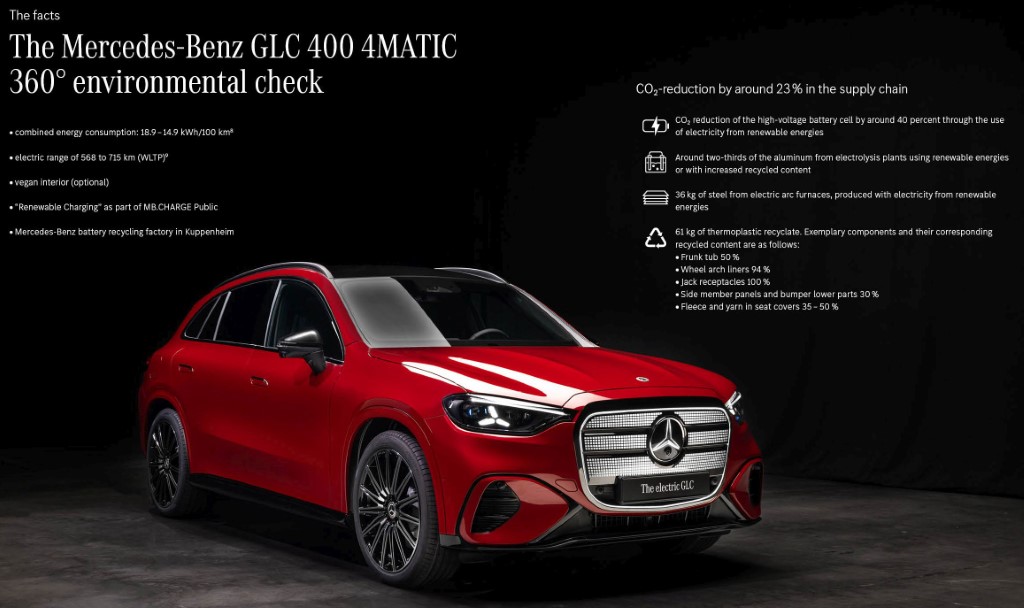
STUTTGART: Mercedes‑Benz has published its 360-degree Environmental Check for the all‑new electric GLC, documenting in detail the environmental performance of this midsize SUV (sport utility vehicle).
The comprehensive lifecycle assessment, verified by independent auditors, reveals how the electrified bestseller achieves a two‑thirds reduction in carbon emissions across its entire lifecycle compared to the current combustion engine-powered GLC.
This remarkable result is thanks to the consistent implementation of carbon reduction measures – from carbon-reduced aluminum to carbon reduction measures in the high-voltage battery cells.
There is also a marked increase in the use of recycled materials, as well as the option of the world’s first vehicle interior certified by The Vegan Society.
For the manufacturing phase alone, Mercedes-Benz has negotiated targeted CO2 reduction measures with suppliers, resulting in a 23 percent overall reduction of emissions during production of the GLC 400 4MATIC electric.
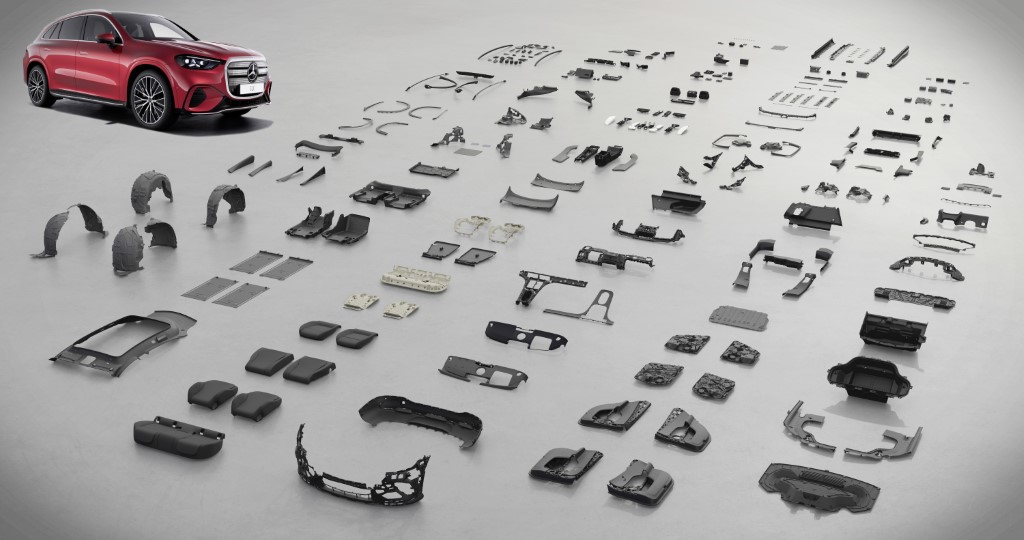
These achievements reflect a holistic approach addressing the most carbon-intensive materials and components: battery cells, aluminum, steel and thermoplastics.
The key environmental benefits are highlighted by the following measures:
Carbon-reduced battery: 40 percent reduction in carbon footprint per cell compared to conventional production through renewable energy deployment in cell manufacturing and low-carbon production of cathode, anode and cell housing materials – saving 3.4 tonnes of CO2 per battery.
Expanded use of recycled materials: 134 pounds or 61kg of secondary-material thermoplastics is used throughout the vehicle, with 35 percent sourced from post-consumer recycled material, including jack mounting points manufactured entirely from recycled bumpers from scrap vehicles.
Sustainable aluminum sourcing: About two-thirds of aluminum supplied by renewable energy electrolysis or recycled content, delivering 1.2 tonnes of CO2 savings.
Certified vegan interior: The Vegan Society independently verified 100 material components in the vehicle's soft-touch interior surfaces – from seat upholstery to carpeting – confirming the absence of any animal-derived products.