Next-gen BMW iX3: Reduced environmental footprint
By CARSIFU | 05 August 2025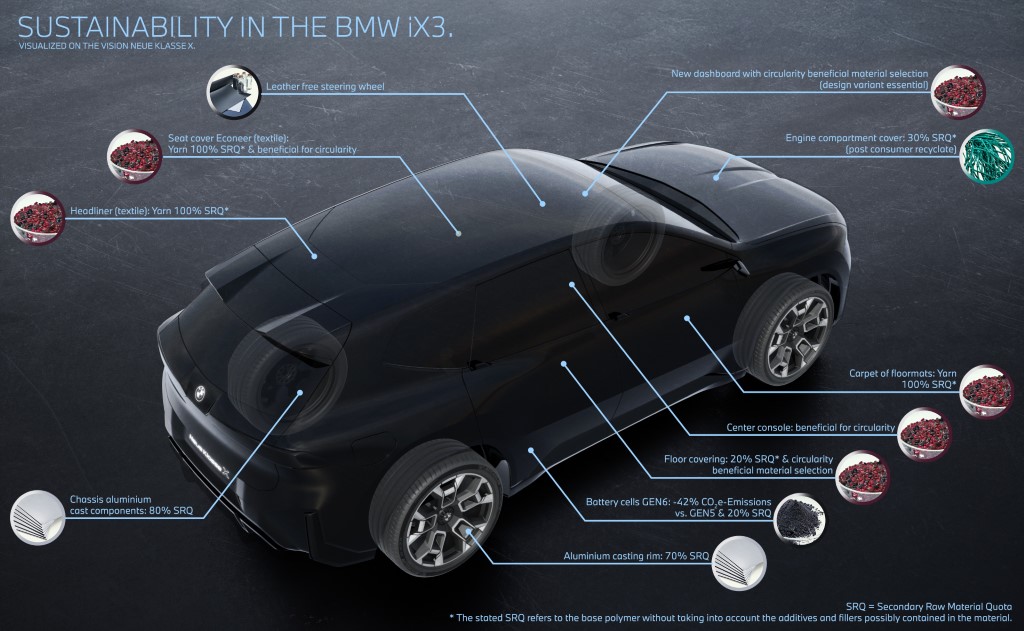
MUNICH: The new iX3 demonstrates the BMW Group's take on implementing a holistic approach to product sustainability across the entire life cycle.
The next-generation BMW iX3 will celebrate its world premiere at the IAA Mobility 2025 in Munich in September.
In a statement, BMW says the energy consumption of the new Sports Activity Vehicle (SAV) is 20% lower than in the predecessor model (WLTP combined).
This significant improvement is primarily based on optimized aerodynamic properties, reduced rolling resistance and on-board power consumption as well as the drive’s unparalleled combination of efficiency and dynamics.
BMW says when charged with electricity from the European energy mix, the CO₂e footprint of the new BMW iX3 50 xDrive is lower than that of a comparable model with a combustion engine after about 21,500 kilometers (WLTP combined).
Meanwhile, the Gen6 battery cells of the BMW iX3 high-voltage storage system are made of 50% secondary cobalt, lithium, and nickel materials.
In addition, renewable energies are harnessed in the anode and cathode materials and cell production.
This is how CO₂e emissions per watt hour were reduced by 42% compared to the Gen5 cell of the previous model.
The BMW Group is increasingly focused on the use of innovative and secondary materials in other components as well.
For instance, 30% of the secondary raw material used for the engine compartment cover and the storage compartment under the front hatch is recycled maritime plastic.
This post-consumer material consists of old fishing nets and ropes, preventing these materials from potentially being dumped in the ocean.
Secondary aluminum accounts for 80% of the wheel carriers and swivel bearings as well as 70% of the cast aluminum wheels.
Tags
7.8
Kawasaki Z900: Great streetfighter
GWM ORA 5 HEV: Cute and efficient
8.1
Mazda CX-60 2.5 (2WD High): Bigger ambitions
8.7
Perodua QV-E: Spirited heart

General Tire Altimax GS6: A little extra for everyone
7.2
Toyota Vios 1.5 HEV AT: Old strengths, new pressure
7.6
Moto Morini X-Cape 1200: Punching above the price
8.3
BMW X3 30 M Sport: Staying ahead of rivals

BYD Atto2's rotating centre display

Zeekr Space Sunway City Video

Honda Civic Type R Ultimate Edition: Last 40 Units for Europ...

Bentley Unveils Bentayga Speed: Most Powerful Luxury SUV wit...