GOTHENBURG: Polestar Automotive Holding UK Plc expects growth in deliveries to slow this year, tailoring sales to a volatile electric-vehicle market.
The EV maker now targets sales to rise in the low double-digit range this year, the company said Wednesday after previously guiding for annual growth of as much as 35% over three years.
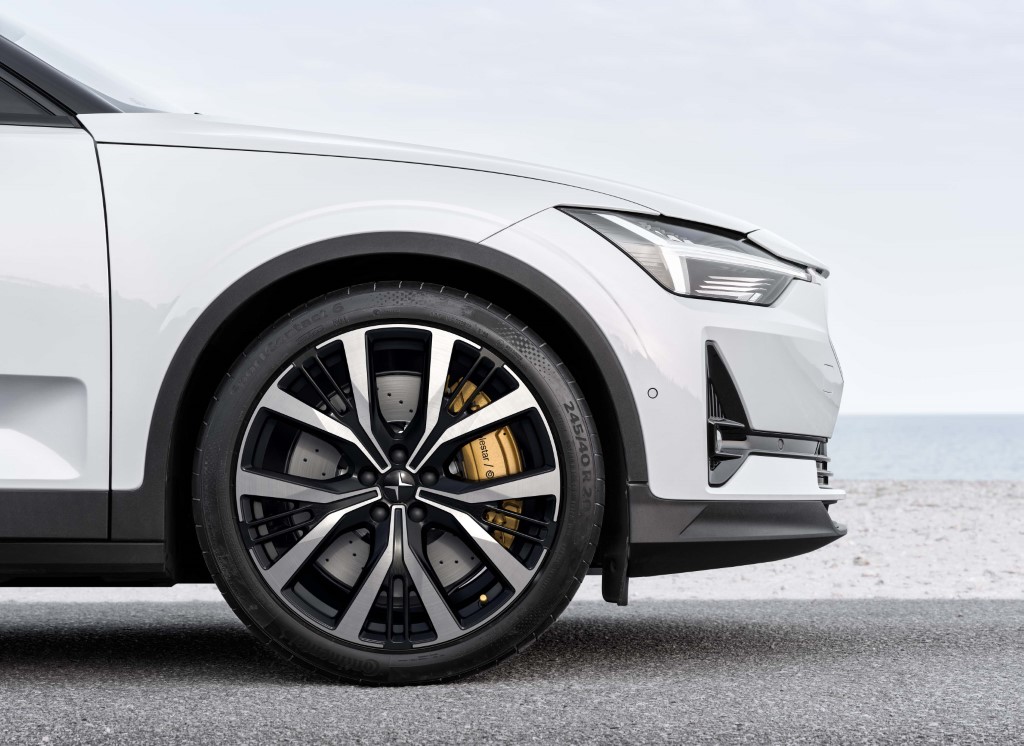
The loss-making manufacturer of the Polestar 4 crossover last year boosted deliveries by 34% to 60,100 units, led by gains in the UK.
"Of course we want to grow - we want to be above 100,000 as quickly as we can," Chief Executive Officer Michael Lohscheller said at the company's headquarters in Gothenburg, Sweden.
"But what matters most is establishing Polestar as a premium company."
The manufacturer, which shares facilities with sister brand Volvo Car AB, has been showing signs of turnaround efforts taking hold, with parent Zhejiang Geely Holding Group Co helping the company survive with several cash injections.
Former Opel head Lohscheller has overhauled the business to slash costs, also in light of slower EV demand growth and US tariffs.
While the company tempered delivery growth targets for now, it's still planning its largest product offensive to date, accelerating model launches and expanding output to compete in more segments.
Polestar is set to put out four new models over the next three years, according to an updated strategy.
It's also looking to continue its retail network expansion.
"We are targeting now the big profit pools of the battery-vehicle segment and that's what we should have done in the first place," Lohscheller told reporters, referring to compact SUV's, the fastest growing part of the market.
The lineup will include a new variant of the company's current best-seller, the Polestar 4, later this year, combining estate and SUV characteristics.
A next-generation Polestar 2 sedan is scheduled for early 2027, while the compact premium SUV, the Polestar 7, is planned for 2028.
The new Polestar 4 derivative will be produced in Busan, South Korea, at a facility shared with Renault SA and Geely while the Polestar 2 successor will be built at a Geely plant in China before reaching European markets.
Polestar has sought to position itself as a more design-led, performance-oriented premium alternative to sister-brand Volvo's safety-focused lineup.
Still, the upcoming Polestar 7 compact SUV will target buyers similar to those of Volvo's upcoming fully-electric mid-size EX60 SUV.
Within Geely's sprawling auto empire, Polestar is a small but strategic premium electric-vehicle marque alongside higher-volume brands such as Zeekr and Volvo.
Billionaire founder Li Shufu has continued to support the brand with new funding, reflecting its role in the group's global premium EV ambitions.
"The biggest differentiator I see actually on sustainability," said Lohscheller.
"Tell me a car company which publicly talks about sustainability in these days."
Polestar is due to issue financial guidance as part of its 2025 full-year results in April, after putting on hold targets except for delivery goals.