SUBANG JAYA: Proton marked a major milestone in its sustainability journey, becoming the first passenger vehicle manufacturer in Malaysia to achieve the ISO 50001 certification for Energy Management Systems (EnMS).
The achievement, awarded by the British Standards Institution (BSI), reinforces the national carmaker's commitment to advancing energy efficiency and supporting Malaysia’s transition towards a low-carbon future.
The certification is consistent with the Malaysian government’s push for more robust energy management practices under the Energy Efficiency & Conservation Act 2024 (EECA 2024).
Furthermore, it supports broader national initiatives including the National Energy Transition Roadmap (NETR) and the net-zero ambitions of Proton’s parent company, DRB-Hicom.
Proton Deputy Chief Executive Officer Datuk Abdul Rashid Musa said efficiency and sustainability would be key to long-term competitiveness as the automotive industry evolves.
"For Proton, this means strengthening our capabilities today to ensure our operations remain future-ready, adaptable, and aligned with the direction of global automotive manufacturing," he said.
The ISO 50001: 2018 certification recognises Proton's investment into a structured framework to monitor, control and continuously improve energy performance across operations.
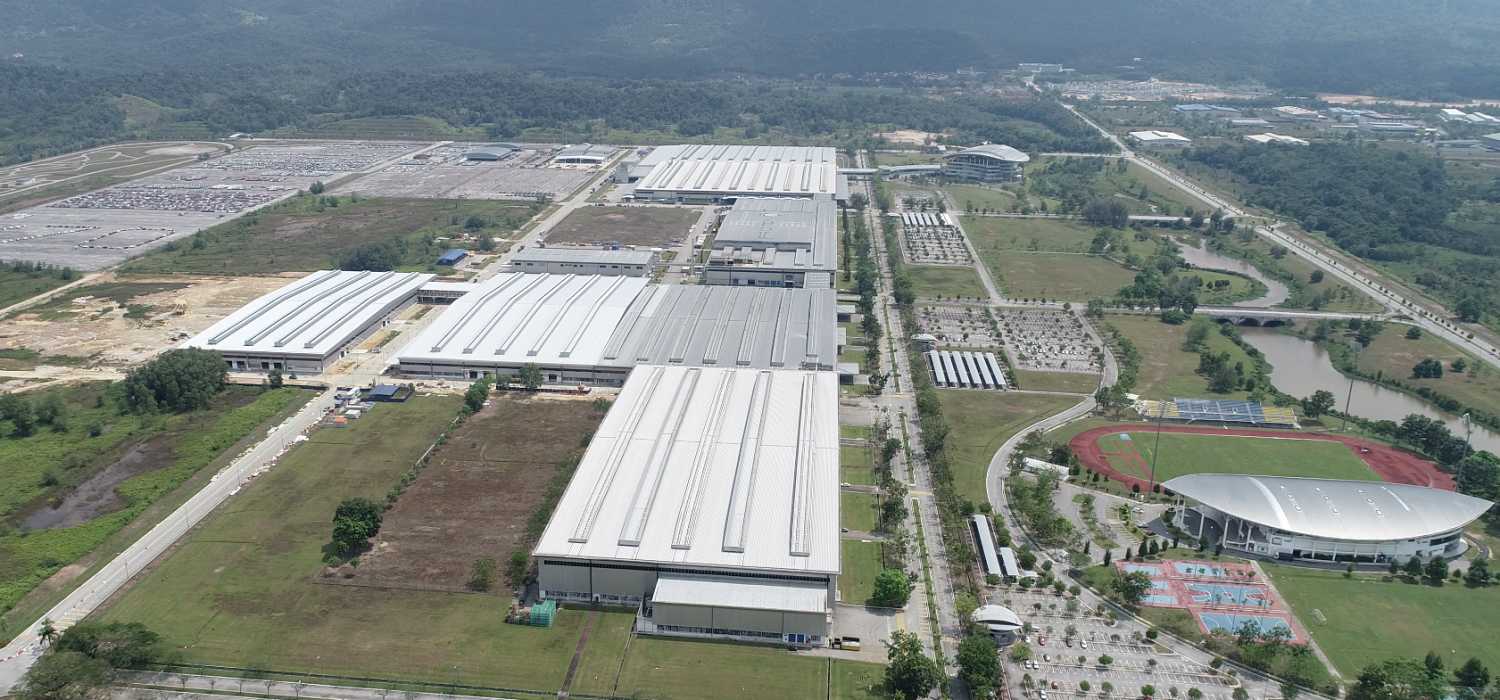
This framework is implemented across Proton's manufacturing operations, including the Proton Tanjung Malim plant in Perak, which has an annual production capacity of up to 250,000 vehicles.
Energy consumption is linked to production output, making efficiency at the per-vehicle level a critical focus area where even incremental improvements in energy usage per unit can deliver significant impact across total production volume.
Under this system, Proton is targeting a 2% annual improvement in energy efficiency, in line with production growth and long-term manufacturing sustainability goals.
This has been driven by a structured multi-phase energy roadmap implemented at its Tanjung Malim plant, covering key initiatives such as large-scale solar photovoltaic (PV) deployment, energy digitalisation and real-time monitoring, LED lighting upgrades, fan and chiller system optimisation, compressor efficiency improvements, as well as Battery Energy Storage System (BESS) implementation in the future to manage peak demand.
The roadmap also includes continuous shopfloor-level efficiency programmes across production areas including Stamping, Body, Painting, Trim & Final (TF), and Assembly.
Up to December last year, the solar energy array has reduced CO2 emissions by approximately 48,450 tonnes, equivalent to removing 10,500 internal combustion engine-powered vehicles from Malaysian roads for an entire year.