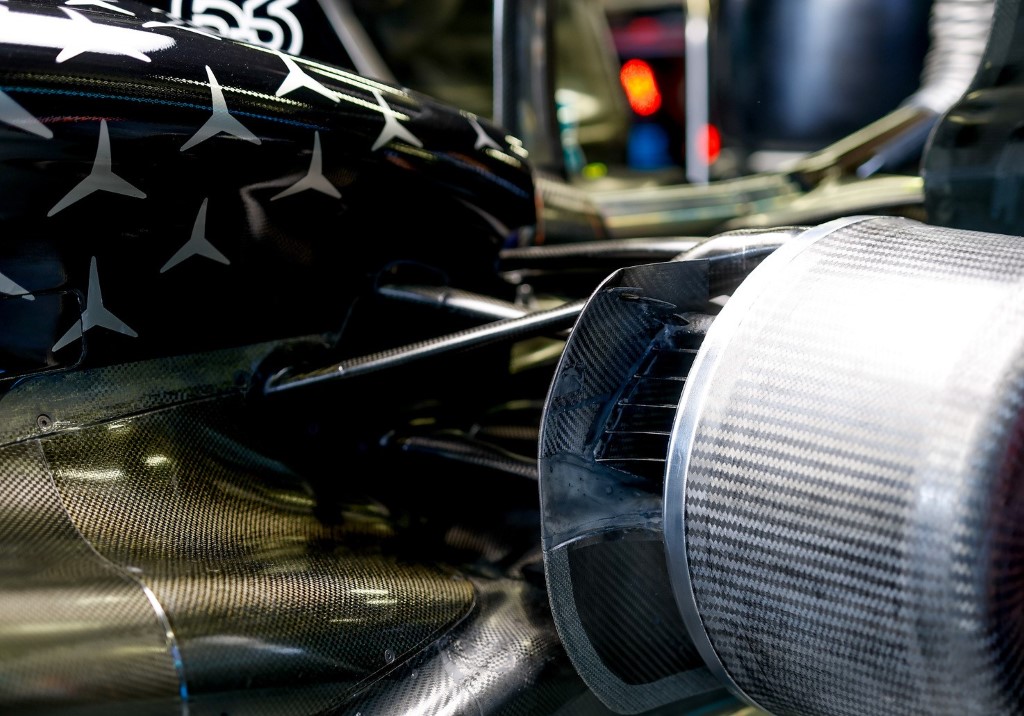
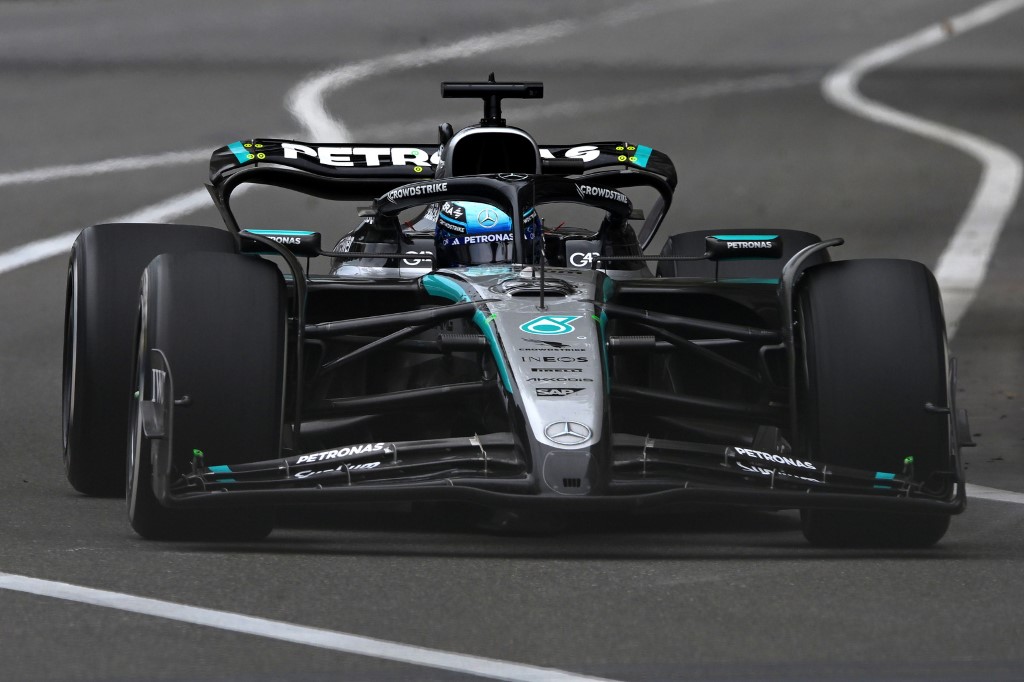
BAKU, Azerbaijan: The Mercedes-AMG Petronas F1 team has successfully debuted bio-based carbon fibre composite material on the rear wheel shields of the W16 race car.
In a statement, the team said the successful use of a bio-based resin on the rear brake duct wheel shields of the #63 W16 – which crossed the line in second place at the Baku City Circuit – followed efforts to qualify and apply sustainable carbon fibre composites.
"This groundbreaking development sees sustainable carbon fibre composites on a high-performance area of our race car for the first time, replacing 30% of the traditional resin material with those derived from renewable sources," said the team.
Applying these materials to the rear brake duct wheel shields, with their intricate aerodynamic surfaces, demonstrates the technology can withstand the extreme conditions of Formula One racing, and its potential for widespread adoption across the sport.
This innovative technology is a crucial step in the transition towards a more sustainable sport.
It also marks the first time that the team has integrated sustainable carbon fibre composites on a technically performant component in race conditions.
Mercedes-AMG Petronas F1 team principal and CEO Toto Wolff said, “In an era where innovation drives performance and shapes industry futures, the pursuit of smarter, faster, and more efficient technologies has become a defining challenge of our time."
"This project not only reflects our commitment to sustainability but also highlights the role of Formula One as a test bed for pioneering technologies that can benefit a range of industries. Our sport is the world’s fastest test lab, and these innovations represent our relentless pursuit of performance and appetite to contribute beyond the grid.”
The development of this bio-based material application was made possible through close collaboration with Syensqo.
Syensqo Composite Materials president Rodrigo Elizondo said, "We are pleased to see our project with the Mercedes-AMG Petronas F1 team come to life on the W16 race car. Our bio-based resin technology represents a significant step forward in sustainable materials innovation."
"By replacing traditional petroleum-based components with those derived from renewable sources, we are not only introducing circularity in our product design but also paving the way for future innovations. We are very pleased to see this material applied in such a high-performing environment, showcasing its potential for broader applications," he added.