KUALA LUMPUR: In light of escalating fuel prices, the government should strongly consider subsidising up to RM1 per litre of RON95 fuel, says Lee Heng Guie.
The Socio-Economic Research Centre’s executive director said it is time for the government to “bite the bullet” and begin re-prioritising the country’s expenditure.
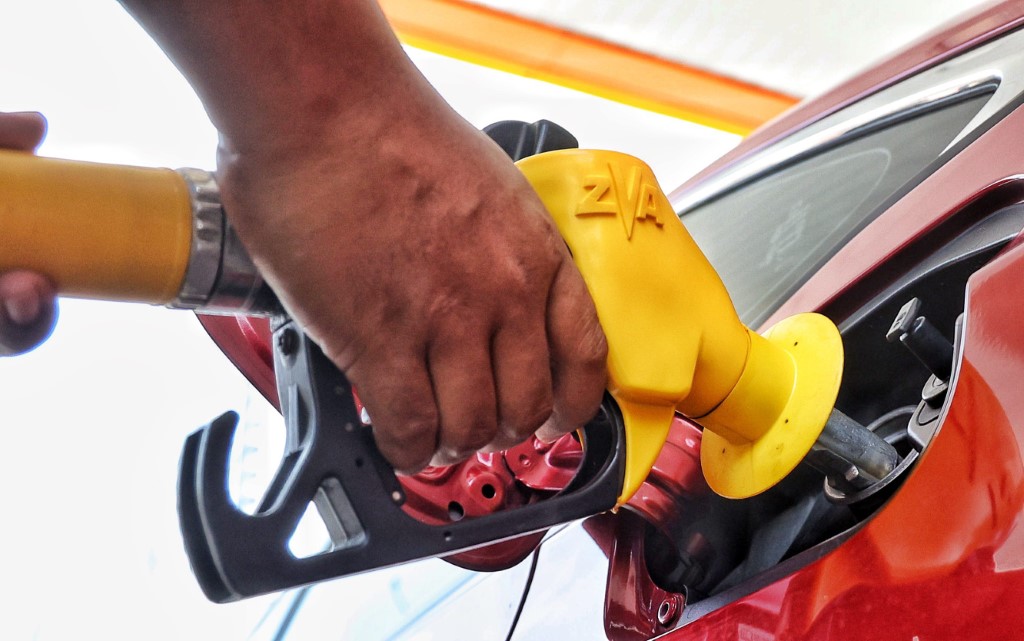
For context, the current market price for RON95 is RM3.87 per litre, and right now, Malaysians pay RM1.99 per litre – which means the government subsidises RM1.88 for every litre.
The monthly subsidy bill has surged to about RM4bil from RM700mil previously.
According to Lee, a proposal had been sent to the government that included this recommendation.
“Our proposal mentioned adjusting the fuel price, perhaps by 30 sen at every adjustment.
“It needs to be gradual. But the lines of communications must be open and very transparent,” he told reporters during Malaysia’s Quarterly Economy Tracker briefing.
Notably, Prime Minister Datuk Seri Anwar Ibrahim announced last week that under the Budi95 scheme, the standard monthly subsidised quota will be reduced to 200 litres from 300 litres previously.
Lee said that if Brent crude oil price remains at US$100 per barrel, Malaysia is set to gain RM10.5bil.
He also said the country needs to step up monitoring and enforcement, as there are still reports of individuals involved in fuel smuggling.
“A combination of stepping up enforcement and real-time tracking, intensive border surveillance, and inter-agency coordination is needed to curb fuel smuggling,” he opined, adding that it needs to be a whole-of-government approach.
While most sectors like agriculture, plastics, tourism, aviation, and construction are being negatively impacted, some industries could benefit from the surge in oil prices.
“Higher oil prices could be a positive for Malaysia’s oil and gas exports. There are some companies that will benefit.
“This is why I think the government will ask Petroliam Nasional Bhd (PETRONAS) for a special dividend this year to support fiscal consolidation and cushion revenue.”
Previously, PETRONAS had announced a RM20bil dividend for this year.
Back in 2022, PETRONAS more than doubled its dividend to RM50bil compared with the previous year, comprising its scheduled dividend and an additional RM25bil following a request from the government.
Lee is hopeful the oil and gas conglomerate can match the RM50bil this time as well, should the war continue.
“Right now, there is limited fiscal space, and we should be prepared for what might happen if the war continues.
“How will this impact the economy and all of us today?”
Using three different scenarios as baselines to illustrate oil shocks, Lee said assuming the war goes on for another one to two months, he expects the situation to remain manageable.
However, if the conflict persists for six months, Brent crude oil could reach US$120 per barrel, and in a worst-case scenario, climb as high as US$180 per barrel.
“Gross domestic product could fall to minus 5% and inflation could hit between 5% and 6%.
“There would be prolonged energy supply disruptions and significant destruction of energy infrastructure and facilities.”
Lee acknowledged that while Malaysia is not in a state of energy crisis, he urged people not to be complacent.
“Malaysia is in a position of strength to withstand a perfect oil storm, but global economic fallout from persistent oil shocks will transmit through domestic economic growth, inflation and financial channels,” he said.
Against this backdrop, Lee said Malaysia needs a coordinated approach to mitigate the impact through a mix of targeted, time-limited fiscal support for vulnerable households, businesses, and sectors.
He said there are guiding principles to consider when designing these options.
“The main thing is to preserve fiscal space, target the most vulnerable and needy, and facilitate gradual adjustments to energy supply shocks.”
Lee added that another critical, interconnected sector requiring attention is energy and food security.