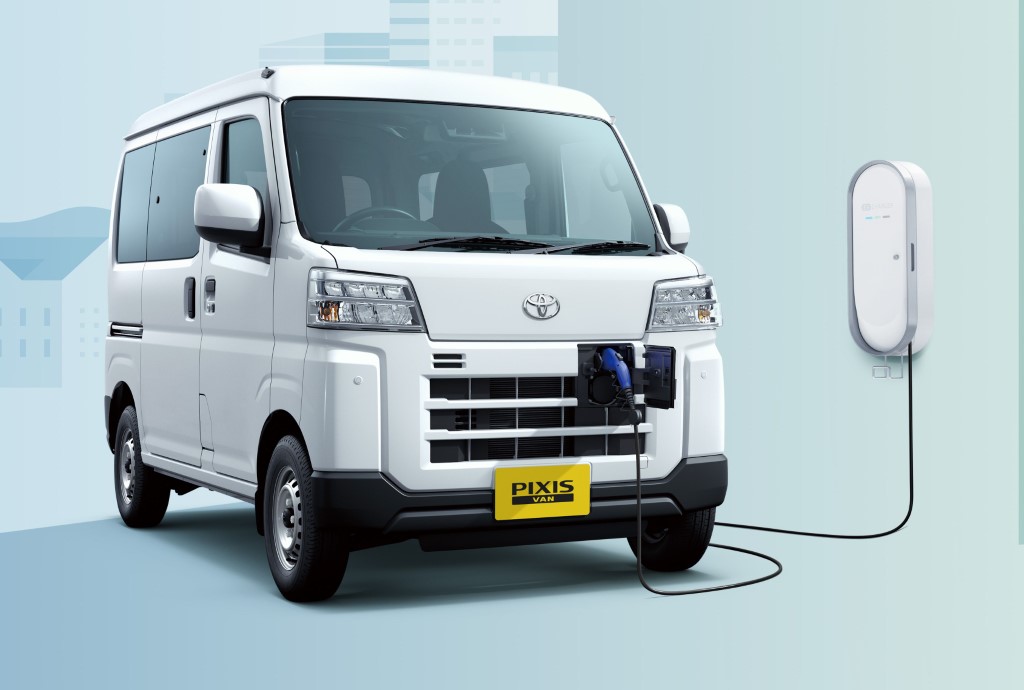
TOKYO: The Toyota lineup of Pixis van kei commercial vehicles in Japan is now offered with a rear-wheel drive battery electric vehicle (BEV) variant.
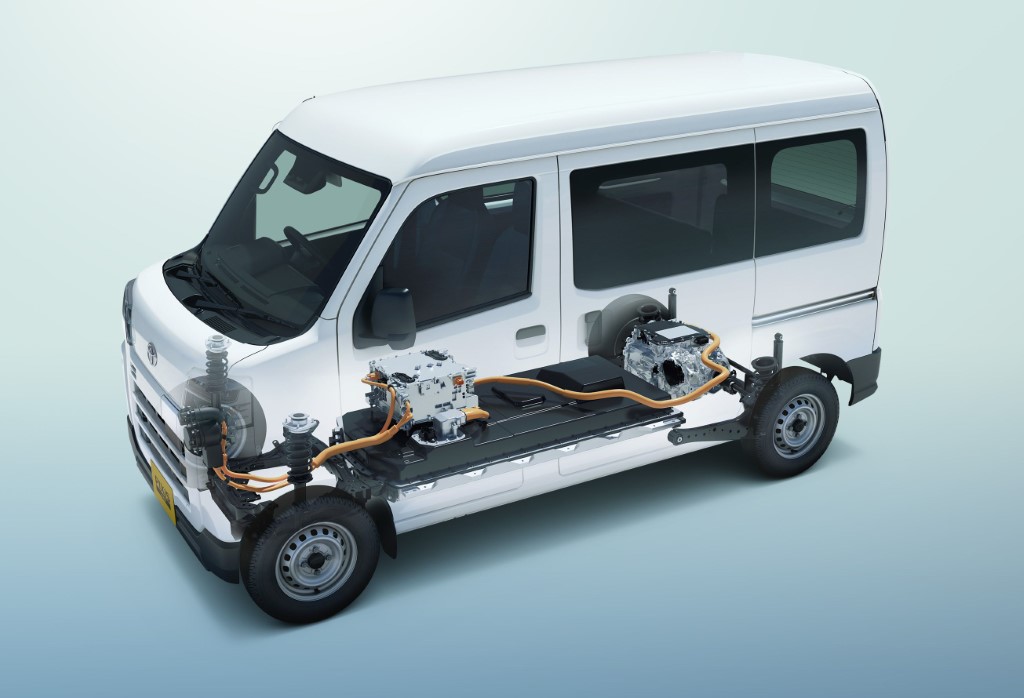
With a thin, high-capacity 36.6kWh lithium-ion battery, it has a cruising range of 257km per charge, the longest among kei commercial van BEVs.
The rear wheels feature an eAxle that integrates the motor, inverter, and reduction gear, providing an ample maximum output of 47kW and peak torque of 126Nm from startup.
Rapid charging takes 50 minutes to reach 80% of full charge, from when the low battery light comes on.
Normal charging takes six hours at 6kW output.
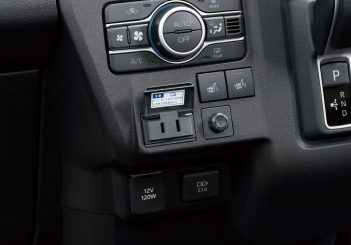
It has a maximum 1,500W (AC 100V) external power supply function as standard, with an accessory outlet located below the instrument panel.
This allows for the use and charging of electric tools with high power consumption.
It also enables power supply even while driving, reducing unnecessary waiting time and significantly boosting work efficiency.
It is also compatible as standard with Vehicle to Home (V2H), thus enabling the vehicle to be used as a storage battery during blackouts and other emergencies.
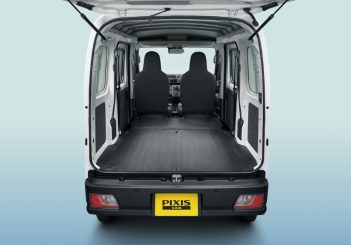
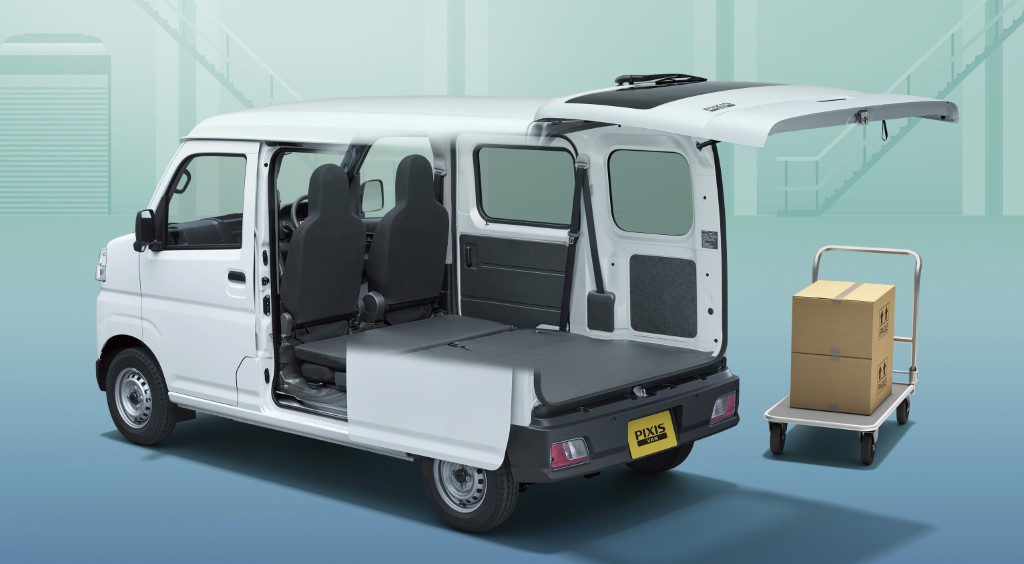
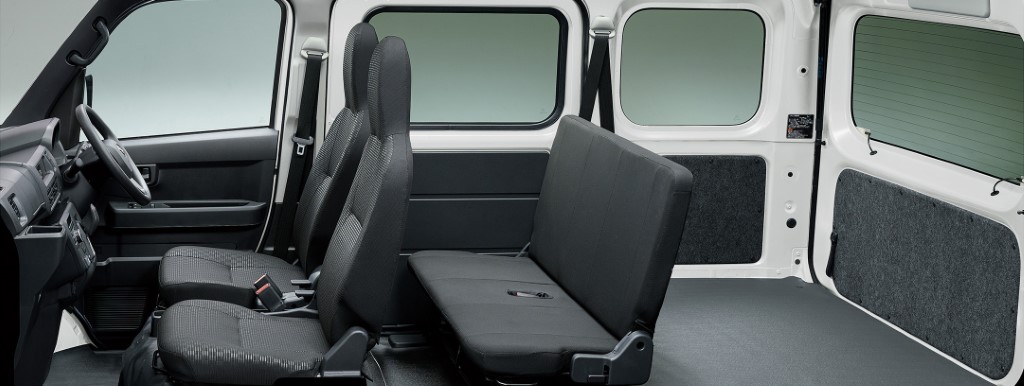
The Pixis Van BEV offers cargo space equivalent to the petrol model and a maximum load capacity of 350kg.
It achieves the largest loading space among kei cab-over vans (cargo length 1,920mm x width 1,270mm x height 1,250mm ), along with a cargo floor height of 630mm for easy loading and unloading.
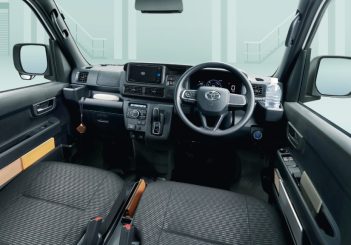
It has space-efficient overhead shelving and water-resistant full fabric seat upholstery that can be easily wiped clean.
Energy-efficient seat heaters (driver and passenger seats) help reduce power consumption and minimise impact on cruising range.
It has features like automatic air conditioning and USB outlets.
It has the latest Smart Assist active safety system. The Collision Warning Function and Collision-Avoidance Support Braking Function recognise vehicles traveling straight in the oncoming lane when turning right at an intersection, as well as pedestrians crossing from the opposite direction when turning right or left at an intersection.
A newly designed trailing-link rigid-axle rear suspension is used to achieve both reduced unsprung weight and improved road-following performance.
In addition, optimised spring rates enable a high level of both handling stability and ride comfort.
The Pixis Van BEV has the e-Smart Electric BEV system, which utilised Suzuki and Daihatsu's know-how in manufacturing kei vehicles and Toyota's electrification technology.
Kei commercial vehicles leverage their small size to navigate narrow roads and are important in supporting last-mile logistics in Japan.
They account for 60% of the total commercial vehicle fleet in Japan (based on the number of vehicles owned, as of September 2025).