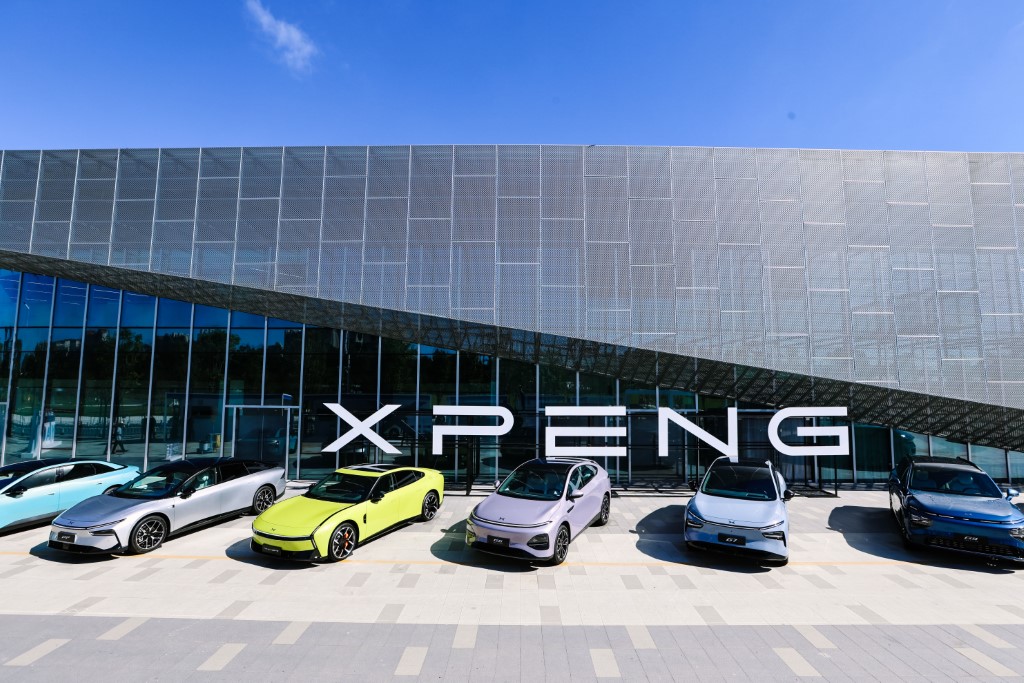
GUANGZHOU, China: The recent 2025 Xpeng AI (artificial intelligence) Day saw the automaker unveiling its new VLA 2.0 large model for AI, as well as technology for robotaxis, humanoid robots and flying cars.
Chairman and CEO He Xiaopeng also announced that Xpeng's positioning is "a mobility explorer in the physical AI world and a global embodied intelligence company".
Xpeng launched its VLA 2.0 large model, which is touted as adopting a new "Vision-Implicit Token-Action" path, innovatively eliminating the "language translation" step, and for the first time, achieving end-to-end direct generation from visual signals to action commands.
VLA 2.0 is billed as both an action generative model and a physical world model for understanding and prediction.
It is said to be able to perform self-evolving learning while understanding the interaction laws of the real world.
This model can be cross-domain driven and applied to AI cars, humanoid robots, and flying cars simultaneously.
By end-2025, Xpeng will invite pioneer users to co-create and experience the VLA 2.0, and in the first quarter of 2026, it will fully roll out the VLA 2.0 to Xpeng Ultra models.
"To accelerate the global application of physical AI and the co-construction of its ecosystem, Xpeng VLA 2.0 large model will be open-sourced to global business partners," said He.
He also announced that Volkswagen will be the first customer to use VLA 2.0.
Xpeng also presented a physical AI future mobility map involving three embodied intelligent products, namely robotaxis, humanoid robots and flying cars.
Xpeng will launch three robotaxi models in 2026.
They will be China's first full-stack self-developed and mass-produced robotaxis.
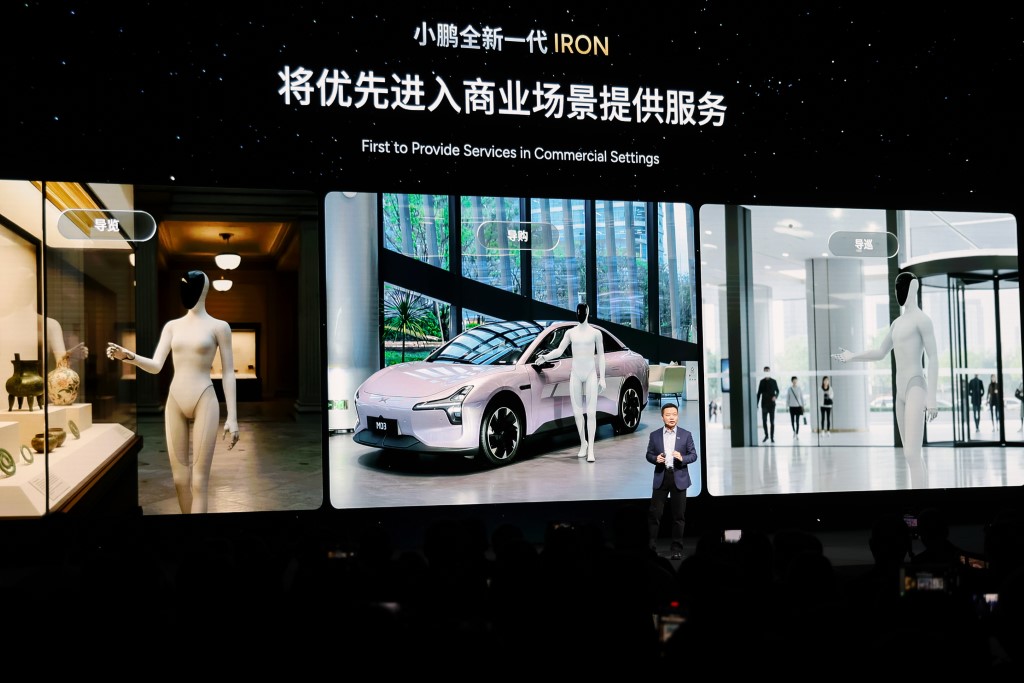
Meanwhile, the Xpeng next-generation Iron humanoid robot features 82 degrees of freedom throughout the body, and uses the industry's smallest "harmonic joint" to achieve 1:1 hand size, and the hand has 22 degrees of freedom.
The next-gen Iron also pioneered the application of all-solid-state batteries in the industry, achieving lightweight and ultra-high energy density.
He said, "By end-2026, Xpeng aims to achieve large-scale mass production of high-level humanoid robots."
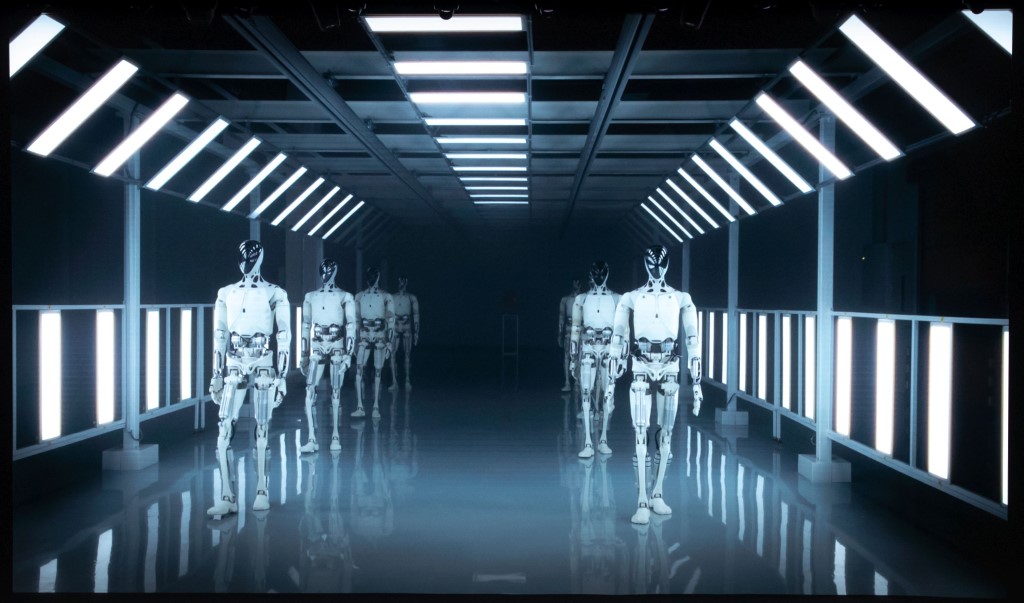
The humanoid robots will be commercialised to provide services such as guided tours, shopping guides, and traffic diversion.
Meanwhile, Xpeng Aridge is building two flight systems for low-altitude travel, namely the "Land Aircraft Carrier" for individual short-haul flights experience and the full tiltrotor hybrid flying car "A868" for multi-passenger long-haul travel.
Based on Xpeng's Kunpeng Super Extended-Range Architecture, the A868 has a six-seater cabin, uses a self-developed aviation-grade hybrid-electric core, and is expected to have a 500km range, with a 360kph cruising speed.
Currently, the A868 is at the critical stage of flight verification.
The Land Aircraft Carrier has received global orders exceeding 7,000 units, setting a new industry record.
Notably, the Land Aircraft Carrier is the first in the industry to introduce an intelligent air cockpit and the world's first "four-axis integrated" single-stick control system, enabling even novices to easily master it through training.
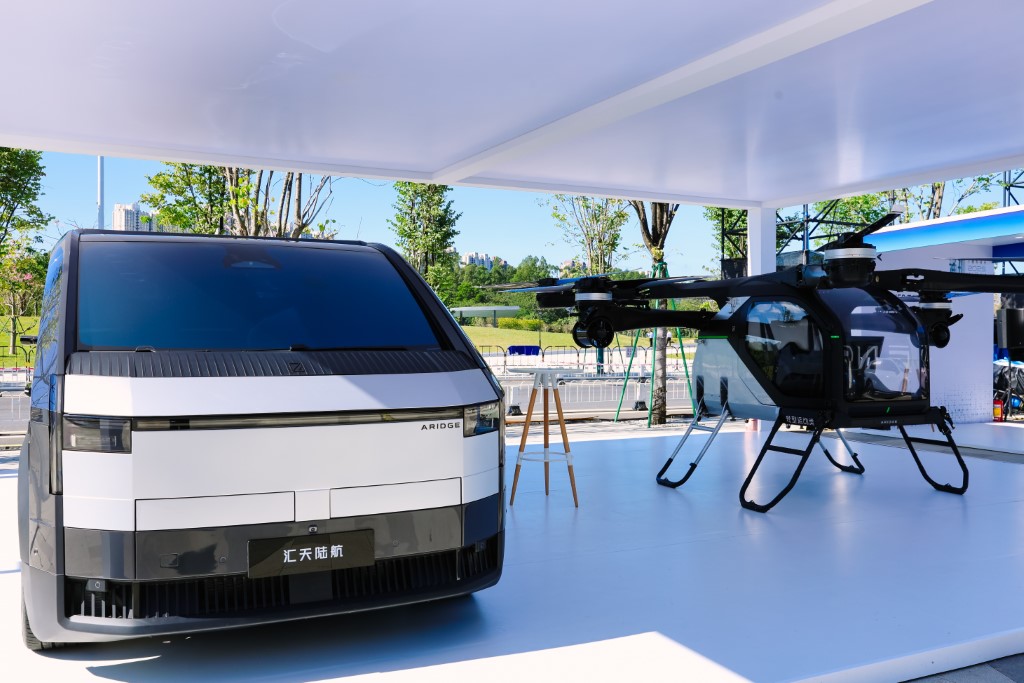
In terms of safety, it adopts a full-domain Safety Redundancy design, covering key systems such as power propulsion, power energy, high and low voltage power supply, flight control navigation, flight operation, and bus communication, and uses a six-axis, six-propeller dual-ducted configuration, ensuring safe flight and landing in case of two diagonal rotors failure.
Aridge flying cars' mass production plant started trial production in November, and has rolled out the first Land Aircraft Carrier aircraft.
The planned annual production capacity is 10,000 units, with an initial annual production capacity of 5,000 units.
Also, Aridge will join hands with the Dunhuang municipal government to launch the first low-altitude self-driving tourism route in Northwest China in 2026.